Hey all. It's been a while, but things have been busy!
Back in July I was able to video a wedding while my wife took the pictures. It was a great wedding and a fun reception!
Shot on the Panasonic GH2 with the Lumix 14-140mm lens, as well as the 20mm f/1.7 lens. Edited in Sony Vegas. Music is copyright it's original owner.
Wednesday, September 18, 2013

Friday, July 19, 2013
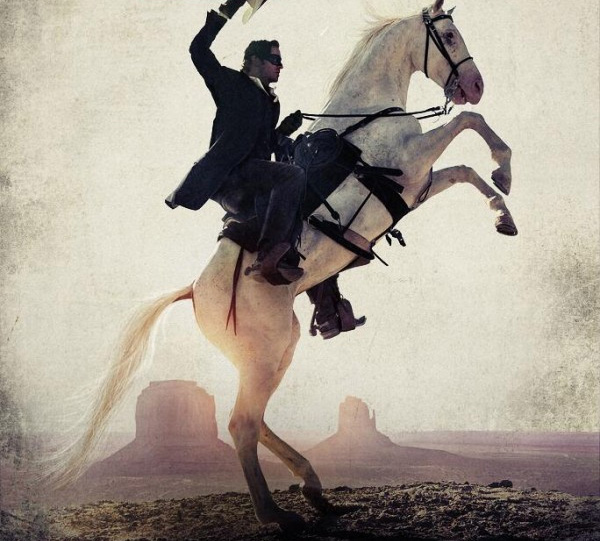
Movie Review: The Lone Ranger

What follows are my thoughts after seeing Disney's The Lone Ranger last night. Spoilers to follow.
Disney has tried to recreate a classic with their latest film, and, in my opinion, have failed miserably. Although I have only seen one episode of the classic TV series (which ran from 1949-1957 with 221 episodes), I can tell you that the similarities go only as far as the title and main characters.
One of the things that really put me off about this movie was the amount of violence that was in it. I knew going into the film that it was going to be a little darker than, say, Pirates of the Caribbean, but I was not expecting this amount of violence and gore from a Disney film. For instance, about 30 minutes into the film, the Dan Reid, one of the Rangers for the town of Colby, Texas, gets shot off his horse. They could have ended the scene right then and there, and the audience would have known that he was dead, as many classic Western films have done, but again, Bruckheimer and Verbinski didn't stop there. The antagonist, Butch Cavendish, proceeds to cut his heart out and eat it. He ate his heart. WTF Disney?! Judging from a few other moments in the film (Red's ivory leg), Butch got his name from butchering people and eating them. I digress.
Another thing. I totally understand John Reid's moral code of not killing anybody, and bringing them to justice in a court of law. It's one of those themes that the classic Western The Man Who Shot Liberty Valance is all about. But Rance Stoddard never donned a mask to fight his enemies. The Lone Ranger did. I'm not arguing for a double-standard of morality, I'm just saying that you live in the Wild West. There are no laws. There is no authority. The only justice there is is the 6-shooter on your side. USE IT.
The cinematography on the film was rather odd, actually. Some of the framing, particularly in the beginning of the film, frames some people who are talking so that their head is cut off. I'm not sure if this is because the filmmakers wanted us to feel uneasy about this particular character, or if they just got lazy, but either way, it worked. The film was shot in Colorado, southern Utah, New Mexico, and California. I loved the expansive landscape shots in the d. One of them in particular is during the end credit sequence, where it shows Tonto and The Lone Ranger riding off to bring justice to the wild west. Cinematographer Bojan Bazelli used a mixture of film and digital to capture the beautiful scenery. The daytime exteriors were shot on Kodak VISION3 50D 5203 35mm film, and the night time exteriors and interiors were shot on the Arri Alexa Studio camera. I actually liked how the film looked and felt in terms of it's grittiness, because the wild west was a gritty and dirty place.
The music was one of the few things in the film that I actually enjoyed. Once the film gets it's legs (at about 2 hours into the film), we finally hear the classic William Tell's Overture, as The Lone Ranger starts to do his thing. I wish there was more of that in this film.
One of my beefs with the film are the many times that Tonto somehow miraculously appears in the right place at the right time, or how he got out of jail, etc... Instead of showing us some tricky way of how he did it (ala Jack Sparrow style), the filmmakers cheapened the experience by cutting away to the older Tonto telling the story to the young boy at the fair, and having the boy ask the question that was on the audience's mind, only to be met with a cross-eyed gaze from the aging Tonto, who just proceeds with the story. Also, how did they know that the dynamite and the kerosene was in the vault at the bank? There were many other plot holes, and they make up the whole of the movie.
Oh, and Tonto is really Jack Sparrow in disguise.

I feel like this film was trying to be something that it wasn't. It was trying to be fun, but by the climax of the film, you're worn out and just want to leave anyway. The climax (the only real fun part of the show), reminded me of Buster Keaton's 1926 classic film The General. Except that everything that you see in The General is honest-to-goodness real. There were no bad CGI buffalos or disorienting camera moves, or cannaballistic rabbits in The General, either. But I definitely had more fun with that film. Oh, and did I mention that it's a black and white silent film?
I give The Lone Ranger a 4/10, and that's being generous.
Tuesday, May 28, 2013
Date Night with DoTERRA
DoTERRA, the internationally-known essential oils company, recently had a video contest, where the participants were asked to submit videos of how they use their DoTERRA products, and here is the finished video:
Well, my wife and I were with some friends at a baseball game when she had the idea of making it into a short, narrative style video about a couple who use DoTERRA products to get ready for a date that they're going on. That idea was bounced back and forth and went through many iterations before I actually sat down and wrote a script.
Pre Production
Well, my wife and I were with some friends at a baseball game when she had the idea of making it into a short, narrative style video about a couple who use DoTERRA products to get ready for a date that they're going on. That idea was bounced back and forth and went through many iterations before I actually sat down and wrote a script.
 |
| Does anyone know why scripts are always written in this font?? haha |
Writing the script was an interesting exercise, because there was to be no dialogue in the film. It was just going to be our actors acting out their roles. The script went through many revisions as well, as you can imagine. At one point, the ending was completely different. Austin went in for the kiss and Diana slapped him, and when he woke up, he was on the floor of an empty theater. I felt that that ending left us with a negative feeling, as a sort of "bad ending", and I really wanted it to be a happy ending, so Austin ended up getting the girl in the end.
Production
On our first day of shooting, we went to Water Gardens Cinema 6, who were nice enough to let us film (for free!!) before their business hours. Very special thanks goes out to those guys. They were very nice and easy to work with. Anyway, we filmed on one of their screens for about an hour and a half. I actually plugged my laptop into their Christie 2K Projector, and projected some footage that I had shot on my GH2 recently. It was so cool to see some of my work on a real movie screen! I think that that was one of the highlights of the whole shoot for me. The GH2 footage looked gorgeous on the big screen (and most of it was 720p that was upconverted to 1080p).
 |
| GH2 footage looked great on the big screen! |
 |
| Filming Austin & Diana while they watch their wedding video! |
Part of the second day of shooting consisted of filming Austin playing Xbox and getting a text from Diana. These were just filmed in their apartment with Austin acting like he was playing Xbox. I recorded the sounds of the game later when I was playing Halo 4, and I just dropped the sound in on the timeline, and I think it worked out well! The sound of the phone going off was added later as well. I had the idea for the floating text from the BBC show 'Sherlock'. I love that show and I really liked how they show the text on the screen when someone in the show gets a message. I simply tracked Austin's phone in After Effects and made a new null object, and applied the tracking data to that null object. I then parented the text to the null, and vwalla! Instant tracked text!
Another thing we shot on the second day was Austin getting ready for his date. In my opinion, this is one of the key sequences in the video, because it shows Austin actually using the DoTERRA products. I shot some of it handheld with the 24-70mm lens and then I got the cutaway shots with the 70-200mm zoom. I was standing all the way back in the bedroom and all the way zoomed in to get the money shot of him selecting which oil to use from the collection, so as to get the nice depth of field. This required a rack focus during the shot, so I think we had to do it a few times so that I could nail the focus. This is my favorite shot in the video.
We also shot the exterior of Diana's house that night. By the time we got there though, it was already pretty dark, and I didn't have any other lighting equipment with me, so I cranked the ISO up to 2500 and prayed it wouldn't be too noisy. To my surprise, when I was editing and looking at the footage, it looked pristine! I was amazed to see that there wasn't too much noise! There is a little bit of noise, but it looks very filmic and organic so it wasn't actually an issue in post.
We filmed the exterior of the theater that night and nailed it in two takes.
We did film some extra scenes that didn't end up making it into the video. One of the scenes that got cut was Austin pulling up to Diana's house and acting really nervous, so he pulled out some Lavender essential oil and took a few whiffs to calm himself down. I felt that this slowed the pacing of the video down too much, so it was cut out. The other scene that was cut was showing Diana getting ready for the date using her essential oils. The original idea was to intercut between Austin and Diana as they were both getting ready. I felt that that approach took the focus away from Austin, as he is the main character, and he's trying to impress the girl on their date, so that didn't make it into the video, either.
Another thing we shot on the second day was Austin getting ready for his date. In my opinion, this is one of the key sequences in the video, because it shows Austin actually using the DoTERRA products. I shot some of it handheld with the 24-70mm lens and then I got the cutaway shots with the 70-200mm zoom. I was standing all the way back in the bedroom and all the way zoomed in to get the money shot of him selecting which oil to use from the collection, so as to get the nice depth of field. This required a rack focus during the shot, so I think we had to do it a few times so that I could nail the focus. This is my favorite shot in the video.
We also shot the exterior of Diana's house that night. By the time we got there though, it was already pretty dark, and I didn't have any other lighting equipment with me, so I cranked the ISO up to 2500 and prayed it wouldn't be too noisy. To my surprise, when I was editing and looking at the footage, it looked pristine! I was amazed to see that there wasn't too much noise! There is a little bit of noise, but it looks very filmic and organic so it wasn't actually an issue in post.
 |
| Filming the door shot. 2500 ISO worked out great! |
 |
| Filming the exterior of the movie theater. Nailed it in two takes. |
 |
| One of the scenes that got cut: Diana getting ready for the date |

Post Production (Sculpting with Marble)
Editing the video was fairly straight forward. Allow me to pause for a second and talk about editing in greater detail. I recently finished taking an Advanced Avid Editing class, in which we were required to read Walter Murch's famous book about editing, entitled "In the Blink of an Eye". I had read this previously (probably about 6 years ago now), but I didn't really get anything out of it back then.
Anyway, one of Walter Murch’s many analogies that I
found interesting was where he was discussing the differences between a KEMediting machine, and a Moviola (on page 45 in the book). He writes, “Other than
the standing/sitting question, the differences between the Moviola system and
the KEM system boil down to sculptural ones…” He goes on to compare editing on
the two different systems to sculpting clay and sculpting marble. With the
Moviola, he says, you start with nothing and then gradually build or sculpt the
film as you would sculpt clay, piece by piece, until the finished film is
before your eyes. With the KEM, all of the material is there in front of you,
and Murch compares this to sculpting something out of marble. “The sculpture is
already there, hidden within the stone, and you reveal it by taking away,
rather than building it up piece by piece from nothing, as you would do with
clay.”
When I first read this, I had to
stop and think about what he had just said, as I had never approached editing a
film the way a sculptor would approach a block of marble. So, for this editing project, I took all of the footage that was shot and placed it in the
timeline, and I just started chipping away at it until there was a finished
product! It was a fun and different way of working than I had previously done
before, and one that I am definitely going to experiment with more in the
future.
You probably didn't notice the effects shot in the movie, did you? That's the way it's supposed to be though! The very last shot of the film, of Austin and Diana kissing with fireworks on the movie screen in the background, is the effects shot I'm talking about. On the day of the shoot, I didn't have any fireworks stock footage yet, and so what I did was to make a still frame in Photoshop with some tracking markers on it. In hindsight, it probably would have worked better if it was green, rather than white, so that it would have keyed out better, but I really didn't want to deal with the green-spill later. So I basically tracked the shot in After Effects and then applied that tracking data to a null object, and then made a garbage matte (one each for Austin and Diana), and rotoscoped around them for the duration of the shot. I then brought in the stock footage and parented that to the null object, so that it would move when the camera tilted up towards the screen. I then added the DoTERRA logo and parented that to the null as well. I added some grain as a finishing touch and vwalla! Money shot!
Below is an example of how it looked before and how it looked after.
 |
| Before |
 |
| After |
I purchased the royalty free music from premiumbeat.com, and the track worked perfectly with the feel that I was going for in this video.
Conclusion
All in all though, this video was a lot of fun to make. I love the process of trying to secure locations, and trying to align the stars so that everybody's schedules work out, and the filming and the outtakes, and the laughs, and the editing, and then looking at the final product and being proud of it! One of the main reasons why I love making movies is because of the experience that I have along the way. Yes, the final product is cool, but for me, it's really about the experiences I have along the way.
You'll notice that I didn't shoot in raw, or 4K, or have the most dynamic range, or have a kitted-out camera rig with lenses that cost more than my house, or matte-boxes with filters and wireless follow focus systems, or an external monitor for checking my focus. And the video still turned out great. At the end of the day it's about the story. Cameras and equipment are the tools you use to tell the story, and in my opinion, many of the doo-dads that camera companies are making nowadays are just eye-candy. Don't worry about all that extra stuff and just go out and make your movie.
Huge thanks to Austin and Diana Gunn for helping me out and acting in the video for me, and thanks to Kristina Bills for taking the behind the scenes pictures and helping to critique the edit. Very special thanks to Water Gardens Cinema 6 in Pleasant Grove, UT, for letting us shoot there early on a Saturday morning, and thanks to Emily for letting us borrow her DoTERRA products!
More BTS pics:
 |
| Yeah yeah, I know: the theater is empty! haha |
 |
| Alternate ending that wasn't used. |
 |
| Getting a close up of Austin watching the movie. |
 |
| Using my Steadicam for a shot that was ultimately cut from the film. |
 |
| I wanted a really compressed foreground and background, so I used the 70-200 @ 200mm. Worked like a charm! |
Kylie and Fayoz's Wedding Video
Kylie and Fayoz got married back in March, and I just realized that I forgot to post their wedding video here!
The process for this video was the same as the previous two. I used my Steadicam for most of the shots with my GH2 using a 14mm lens (28mm FF equivalent) and shooting at either 60 frames per second or 29.97, so that I had the option of slowing both of them down when I dropped the clips into a 24p timeline. We went back to the temple a few weeks after their wedding to get most of the pickup shots, and I'm happy with the way that they turned out! All of the lens flares, etc... in this are real. It was just that awesome of an evening. Perfect sunset, and a great couple! Editing was done in Sony Vegas.
Tuesday, May 7, 2013
Preston & Emilee's Wedding Video
I had the chance to film my friend's wedding on the 26th of April, and here's the video I made from it:
I filmed most of this at 29.97 frames per second, so that when I got to editing, I could slow it down 20% to 23.98 fps, thus creating a slightly slow-motion version of the clip. I think it worked well.
For the outdoor shots, I wanted to get as wide of an angle as I could, so I flew the Lumix 14-140mm @ 14mm. For the indoor stuff, I needed a fast lens, so I went with my 20mm f/1.7. I also left it wide open, which I was surprised to find out that it worked beautifully!
Gear used in this shoot: Lumix GH2, the Weildy HDV steadicam, Lumix 14-140mm lens, and the Lumix 20mm f/1.7 lens. Edited in Sony Vegas.
I filmed most of this at 29.97 frames per second, so that when I got to editing, I could slow it down 20% to 23.98 fps, thus creating a slightly slow-motion version of the clip. I think it worked well.
For the outdoor shots, I wanted to get as wide of an angle as I could, so I flew the Lumix 14-140mm @ 14mm. For the indoor stuff, I needed a fast lens, so I went with my 20mm f/1.7. I also left it wide open, which I was surprised to find out that it worked beautifully!
Gear used in this shoot: Lumix GH2, the Weildy HDV steadicam, Lumix 14-140mm lens, and the Lumix 20mm f/1.7 lens. Edited in Sony Vegas.
Friday, April 19, 2013
Austin & Diana's Wedding Video
I had the chance to attend my cousin's wedding back in February, and of course I brought my camera along! Here's the video I edited of their wedding:
I did a few things differently with this video. First, I filmed most of it at 29.97 frames per second, so that when I got to editing, I could slow it down 20% to 24 fps, thus creating a slightly slow-motion version of the clip. I think it worked well.
Another thing that I did differently was that this was the first time I used my steadicam for an event. I thought that it would get heavy or tiresome after a while, but it didn't. For the outdoor shots, I wanted to get as wide of an angle as I could, so I flew the Lumix 14-140mm @ 14mm. For the indoor stuff, I needed a fast lens, so I went with my 20mm f/1.7. I also left it wide open, which I was surprised to find out that it worked beautifully!
Gear used in this shoot: Lumix GH2, the Weildy HDV steadicam, Lumix 14-140mm lens, and the Lumix 20mm f/1.7 lens. Also used the Indie Slider Mini for the two slider shots. Edited in Sony Vegas.
I did a few things differently with this video. First, I filmed most of it at 29.97 frames per second, so that when I got to editing, I could slow it down 20% to 24 fps, thus creating a slightly slow-motion version of the clip. I think it worked well.
Another thing that I did differently was that this was the first time I used my steadicam for an event. I thought that it would get heavy or tiresome after a while, but it didn't. For the outdoor shots, I wanted to get as wide of an angle as I could, so I flew the Lumix 14-140mm @ 14mm. For the indoor stuff, I needed a fast lens, so I went with my 20mm f/1.7. I also left it wide open, which I was surprised to find out that it worked beautifully!
Gear used in this shoot: Lumix GH2, the Weildy HDV steadicam, Lumix 14-140mm lens, and the Lumix 20mm f/1.7 lens. Also used the Indie Slider Mini for the two slider shots. Edited in Sony Vegas.
Wednesday, April 10, 2013
The Cinematography of "The Empire Strikes Back" and "Return of the Jedi"
This was a post from a DP (ie: not myself) discussing the cinematography of "The Empire Strikes Back" and "Return of the Jedi".
Comparing Apples With Apples
A Comparison Between The Cinematography Of "The Empire Strikes Back" Against "Return of the Jedi"
Firstly I won't beat around the bush on this point. I love the photography and lighting of "The Empire Strikes Back" and a positively LOATHE the photography and lighting on "Return of the Jedi". I, along with several professional DOP's that I've met and worked with, feel the "Empire" is just one of the best shot movies ever made. In contrast, I think "Jedi" is - in photographic terms - a right old bore and incredibly blase dull, uninspiring, unoriginal and basically was put together in a "shoot by numbers" manner.
This is pure opinion of course. None of this is a matter of fact. I am fully aware that there are legions of fans and filmmakers who adore the photography of "JEDI" and that's perfectly fine. But what's great about this is that you end up with two films, shot relatively close to each other, with similar kinds of technology available, with very different looks, feel, mood and shooting philosophies.
This post isn't designed to convince you one way or another, but through my observation of the differences in the films, at least get people thinking about how they shoot and light their own films. Even if you are a fan of how "JEDI" was shot, I think it can be a very useful exercise to think about the differences in styles and philosophies so you know what you ARE doing and what you are NOT doing.
THE EMPIRE STRIKES BACK
"The Empire Strikes Back" was photographed by Peter Suschitzky, a relatively young (early 40's at the time) DOP who didn't have a huge filmography behind him, but has since gone on to shoot films such as "Dead Ringers", "Immortal Beloved", David Cronenberg's "Crash", "Mars Attacks" and "A History of Violence". The film was directed by the great Irvin Kershner whose credibility as a director isn't even worth establishing on forums like these. We all know he was firing on all cylinders on this project at least.
The photography and lighting of "The Empire Strikes Back" is an extreme change of gears from "Star Wars". Most laymen will say it was a "darker" film visually and they wouldn't be wrong in that assumption, however there is something still quite different about the "darkness" of "Empire" versus the "darkness" of "Jedi" and the prequels that have followed.
The first thing that really strikes me about the lighting is that, generally speaking, most of the light in the scenes come from light-sources established within that scene. In layman's term, the character's faces are lit by things that create light in the room, their faces are NOT lit up by some magical spotlight that follows them around. This I think is in stark contrast to both "Star Wars" and "Jedi" which have a much more traditional notion of lighting - light the room, then light the actors. It's not to say that the characters in "Empire" are solely lit by set-dressing light sources, but that the film lighting they use is cleverly disguised. The end result is that the film is very shadowy, heavily atmospheric and portrays a greater range of mood.
The next obvious thing about the lighting is the intensive use of color. "Empire" is the film in the OT that uses colored lighting more than any other film. Even in our memories we can quickly bring up the cold blues of Echo Base, the hot red glow of the Carbonite Chamber, the sickly cold atmosphere of Dagobah.
Thirdly, what makes "Empire's" photography so superior, is Suschitzky and Kershner's very dynamic framing and moving camera setups. The Echo Base segment is a perfect example of it - sweeping crane shots, rack-focusing during conversations, dynamic tilted and skewed angles and of course lots and lots of smoke. Even the framing in the film is exemplary with excessive usage of VERY wide lenses (almost 180 degree field of vision) and tight framing to construct beautiful pictures.
In short, "The Empire Strikes Back" seems to have a philosophy of making every shot in a movie into a beautiful picture, a work of art.
RETURN OF THE JEDI
"Return of the Jedi" was, of course, directed by Richard Marquand and veteran old-school cinematographer Alan Hume, who had a track record as long as a man's arm. Hume, since then, has had to take a back seat and shoot mostly B-films and low budget dramas, though he did shoot the "Supergirl" movie, the cult horror "LifeForce" and the comedy "A Fish Called Wanda" since working on "Jedi".
Not to disrespect the memory of Marquand, but whenever I watch "Jedi" I always see a very old-fashioned and assembly-line approach to their cinematography. While "Empire" was put together using carefully constructed concept-shots, "Jedi" has a strong feel of the old coverage system: establishing shot, master of the whole scene and then the closeups at the end. "Jedi" just seems to be riddled with scenes photographed in that same old formula with very little fresh ideas or risk-taking.
Likewise in terms of the lighting, the movie has a very old-school feel about it. Every scene in the movie seems to be dotted with very convenient, unnatural light that follows and floods the actors faces and robs the scene of its mood or atmosphere greatly (in my humble opinion). There also seems to be a great lacking in use of color in the lighting except on very rare occasions (Luke and Leia's Ewok Village conversation for instance) which is what I personally miss the most.
Even the quality of the framing isn't to my taste. Many of the shots have an uncinematic lacking of DOF and a lot of beauty of the framing seems lost because of narrower lenses and/or the shot is a little too wide, has boring composition or leaves a great deal of headroom. There is a GREAT lacking of crane-shots, moving dolly or steadicam shots. And many of the angles are shot at eye-level and rarely do we see something from a high or low-angle, unlike "Empire".
In short, I propose that the photography of "Empire" is one of many amazing elements about that film that made it such a great success while "Jedi's" by-the-book methods of shooting seems to have endowed the final chapter in the saga with a less than epic feel.
But let's have some examples shall we?
THE EVIDENCE


Let's see how they've lit up Vader across the two films. The ESB Vader (top image) has a very interesting lighting philosophy where they try to create the illusion that his shape and his lines are being lit up entirely by the room itself - lights from the computer consoles etc. The JEDI Vader (bottom image) while, admittedly, is in a larger room, seems to be less dynamically lit. Also the framing of the ESB Vader is - in my mind - a little more artistic, his placement in the frame, the amount of background behind him and the way it stretches across the canvas of the frame. The look for JEDI Vader doesn't seem all that flattering in his scene.


Two similar sort of images - one from ESB (top) and one from JEDI (bottom). Notice how, despite the illumination coming from space via the massive porthole windows, there is still a strange white light that is illuminating the floor and stairway that Luke and Vader climb. The whiteness of that light seems a little out of place in a room that has very little visible light sources and also establishes that the light from space is "blue". The image on the top, iconic as it is, suggests a far more threatening notion of a spider biding its time or a monster in its lair and feels far more aggressive than the Emperor ever feels in any of his shots. The ESB image has the illusion, again, to be lit only by the lighting in the room.


Here are a couple of comparison images of the interior of the Millennium Falcon from ESB (top) and JEDI (bottom). Notice how much brighter, more colorful and more atmospheric the lighting of the Falcon's interior is in the ESB shot. There even appears to be a slight diffusion applied to the image, possibly via a filter, to really bring out the lighting quality. Notice how the JEDI image is remarkably less interesting and dull, but also is again illuminated by a blank white light coming from "space" beyond. I personally prefer the ESB style again.


Here's a perfect example of the difference in quality of framing, composition and lens-sizes. Which is the more artistic and beautiful image? Which image really implies action, intensity and focus? ESB (top) or JEDI (bottom)? I know my pick is definitely for the top. The bottom image is a great example of poor, very boring framing in my mind.


Despite ESB being a much "shadowier" and "darker" film, its interesting to note the degrees and variations of lighting. ESB (on top) uses lighting to imply different layers and levels within the scene as the light grows, gradually, more intense as our eye follows the action from Luke to Boba Fett walking across the hallway. Compare that to the image from JEDI (below) which implies only two-tones of lighting at best and lacks subtly You can't even see what's in the foreground because much of it is either not lit, or the exposure of the camera is turned down too low.


Here's an example of what - in my opinion - is a similar idea done two ways: very well and very badly. The scene from ESB (above) is a carefully composed shot that not only imbues a sense of space, but also beautifully shows the ships in the background and has lots of interesting clutter in the foreground (the backs of the pilots heads). Notice how the expansive width of the lens and the arrangement of the actors naturally causes the eye to focus in on Princess Leia? It should be noted that this is also a crane-shot, it opens with a pilot running over to the huddle and then craning down to focus on Princess Leia. The shot from JEDI (bottom) is what happens when you don't have a specific idea on how to cover a conversation and just end up shooting everything from every angle. We're seeing an unflattering angle of the back of Bib Fortuna's head, 3PO and R2 are squashed onto the bottom left hand end of the frame (even though they are the focal point of the shot) and the back wall is lit up from a light source that is never established within the scene (and so is 3PO who is shining like a piece of jewelry in a supposed dark and dank tunnel). It should ALSO be noted that in the scene depicted in the ESB screenshot (above), after Princess Leia delivers her speech she is interrupted by a pilot asking "Two fighters against a Star Destroyer?". When he asks that question, the camera RACK-FOCUSES onto him over her shoulder and then RACKS BACK onto Princess Leia when she answers the question. ESB = dynamic, JEDI = paint by numbers. You decide which is better.


Here are a series of establishing shots. Notice how the ESB shots (top) use the entire width of the frame and the expansiveness, given by the lens, to show the room and the scenery? Also take note of the colors as well. Compare this with the JEDI shots (bottom) which force the eye to focus only on what's in the center of the frame, thereby deadening the impact of the shot in of itself? You barely have time to notice the shuttle landed in the background because you're too busy concentrating on the poorly framed Han Solo and Rebel Soldiers marching on the bottom of the frame. Would it have been too much to ask to pump some smoke into that forest shot? Have some light-beams filtering through those trees? Of course that was the Director and DOP's decision, but it seems a shame to me to waste such a beauty shot. Again keep in mind that the ESB shots are also dynamic, MOVING shots, while the JEDI ones are locked-off and standing still.


Although these are two very different scenes that are shot under very different circumstances (so perhaps judging the lighting may be moot), the framing is still uniquely interesting. In short notice how the framing in the ESB screenshot (top) isolates Luke on the far right hand side and leaves a huge gap of nothingness on frame-left, heightening his isolation and his sense of helplessness. In the JEDI screenshot (below), the frame is crowded with tonnes of actors all standing in a neat row (a classic "Hollywood Group Shot" from the 40's and 50's). This scene is, of course, meant to be about Luke walking the plank, but the shot doesn't focus on his face where his emotions are being played. It's too wide and has even been compositioned "up" to include Chewbacca in the frame, even though he's irrelevant to that "moment" in the drama. Luke doesn't seem isolated or in danger, he looks like he's waiting to get on a bus. A little harsh? Maybe, but I certainly am not a fan of this kind of framing at all.


So here's an interesting comparison. Notice the very subtle, but highly atmospheric lighting used to not only illuminate Luke and Yoda, but also the mist and tree trunks behind them. Note the eerie color and subtle, but effective use of shadows on Luke's face and the area surrounding them. Contrast that with the JEDI image below of Luke and Leia. Firstly I don't know WHY they're framed like that - i mean sure there's something way off in the distant background there, but I can't actually SEE what it is nor do I find it particularly interesting to boot. And whats with all that head space above Luke and Leia's head? It's not balanced by similar space below, so again its squashing both characters into the edge of a relatively boring and not very well-lit frame. In the ESB Yoda scene (above), he is actually talking ABOUT his size and the Force "around them" so a shot that wide works well with the dialogue. But the Luke and Leia scene is nothing about their surroundings, its about their emotions and really ought to be a lot tighter on their faces and really emphasizing Luke's turmoil and Leia's conflict.
IN CONCLUSION?
There's loads more examples I could cite, but basically these are just some illustrations to show the difference between being "dynamic" in how you shoot your film and being "by the book". One way isn't actually harder than the other, in terms of the advice that I've been given, it's just that one way is what you'll always find in the film books while the other requires experimentation, vision and being willing to go that step further and have more patience with your shot construction.
Just like in storytelling, concepts and other aspects of production like acting, production design, art, wardrobe, makeup and everything else, cinematography is something that people only give a "certain amount of thought to" before dropping it and moving on. But what you do end up with is a film making style that doesn't evolve, doesn't improve and, frankly, ends up looking like everyone else's. If you're not going willing to push yourself further in how you shoot a film your movie will end up looking like a costume drama, which is (in MY OPINION) exactly what "Return of the Jedi" looks like.
Comparing Apples With Apples
A Comparison Between The Cinematography Of "The Empire Strikes Back" Against "Return of the Jedi"
Firstly I won't beat around the bush on this point. I love the photography and lighting of "The Empire Strikes Back" and a positively LOATHE the photography and lighting on "Return of the Jedi". I, along with several professional DOP's that I've met and worked with, feel the "Empire" is just one of the best shot movies ever made. In contrast, I think "Jedi" is - in photographic terms - a right old bore and incredibly blase dull, uninspiring, unoriginal and basically was put together in a "shoot by numbers" manner.
This is pure opinion of course. None of this is a matter of fact. I am fully aware that there are legions of fans and filmmakers who adore the photography of "JEDI" and that's perfectly fine. But what's great about this is that you end up with two films, shot relatively close to each other, with similar kinds of technology available, with very different looks, feel, mood and shooting philosophies.
This post isn't designed to convince you one way or another, but through my observation of the differences in the films, at least get people thinking about how they shoot and light their own films. Even if you are a fan of how "JEDI" was shot, I think it can be a very useful exercise to think about the differences in styles and philosophies so you know what you ARE doing and what you are NOT doing.
THE EMPIRE STRIKES BACK
"The Empire Strikes Back" was photographed by Peter Suschitzky, a relatively young (early 40's at the time) DOP who didn't have a huge filmography behind him, but has since gone on to shoot films such as "Dead Ringers", "Immortal Beloved", David Cronenberg's "Crash", "Mars Attacks" and "A History of Violence". The film was directed by the great Irvin Kershner whose credibility as a director isn't even worth establishing on forums like these. We all know he was firing on all cylinders on this project at least.
The photography and lighting of "The Empire Strikes Back" is an extreme change of gears from "Star Wars". Most laymen will say it was a "darker" film visually and they wouldn't be wrong in that assumption, however there is something still quite different about the "darkness" of "Empire" versus the "darkness" of "Jedi" and the prequels that have followed.
The first thing that really strikes me about the lighting is that, generally speaking, most of the light in the scenes come from light-sources established within that scene. In layman's term, the character's faces are lit by things that create light in the room, their faces are NOT lit up by some magical spotlight that follows them around. This I think is in stark contrast to both "Star Wars" and "Jedi" which have a much more traditional notion of lighting - light the room, then light the actors. It's not to say that the characters in "Empire" are solely lit by set-dressing light sources, but that the film lighting they use is cleverly disguised. The end result is that the film is very shadowy, heavily atmospheric and portrays a greater range of mood.
The next obvious thing about the lighting is the intensive use of color. "Empire" is the film in the OT that uses colored lighting more than any other film. Even in our memories we can quickly bring up the cold blues of Echo Base, the hot red glow of the Carbonite Chamber, the sickly cold atmosphere of Dagobah.
Thirdly, what makes "Empire's" photography so superior, is Suschitzky and Kershner's very dynamic framing and moving camera setups. The Echo Base segment is a perfect example of it - sweeping crane shots, rack-focusing during conversations, dynamic tilted and skewed angles and of course lots and lots of smoke. Even the framing in the film is exemplary with excessive usage of VERY wide lenses (almost 180 degree field of vision) and tight framing to construct beautiful pictures.
In short, "The Empire Strikes Back" seems to have a philosophy of making every shot in a movie into a beautiful picture, a work of art.
RETURN OF THE JEDI
"Return of the Jedi" was, of course, directed by Richard Marquand and veteran old-school cinematographer Alan Hume, who had a track record as long as a man's arm. Hume, since then, has had to take a back seat and shoot mostly B-films and low budget dramas, though he did shoot the "Supergirl" movie, the cult horror "LifeForce" and the comedy "A Fish Called Wanda" since working on "Jedi".
Not to disrespect the memory of Marquand, but whenever I watch "Jedi" I always see a very old-fashioned and assembly-line approach to their cinematography. While "Empire" was put together using carefully constructed concept-shots, "Jedi" has a strong feel of the old coverage system: establishing shot, master of the whole scene and then the closeups at the end. "Jedi" just seems to be riddled with scenes photographed in that same old formula with very little fresh ideas or risk-taking.
Likewise in terms of the lighting, the movie has a very old-school feel about it. Every scene in the movie seems to be dotted with very convenient, unnatural light that follows and floods the actors faces and robs the scene of its mood or atmosphere greatly (in my humble opinion). There also seems to be a great lacking in use of color in the lighting except on very rare occasions (Luke and Leia's Ewok Village conversation for instance) which is what I personally miss the most.
Even the quality of the framing isn't to my taste. Many of the shots have an uncinematic lacking of DOF and a lot of beauty of the framing seems lost because of narrower lenses and/or the shot is a little too wide, has boring composition or leaves a great deal of headroom. There is a GREAT lacking of crane-shots, moving dolly or steadicam shots. And many of the angles are shot at eye-level and rarely do we see something from a high or low-angle, unlike "Empire".
In short, I propose that the photography of "Empire" is one of many amazing elements about that film that made it such a great success while "Jedi's" by-the-book methods of shooting seems to have endowed the final chapter in the saga with a less than epic feel.
But let's have some examples shall we?
THE EVIDENCE
Let's see how they've lit up Vader across the two films. The ESB Vader (top image) has a very interesting lighting philosophy where they try to create the illusion that his shape and his lines are being lit up entirely by the room itself - lights from the computer consoles etc. The JEDI Vader (bottom image) while, admittedly, is in a larger room, seems to be less dynamically lit. Also the framing of the ESB Vader is - in my mind - a little more artistic, his placement in the frame, the amount of background behind him and the way it stretches across the canvas of the frame. The look for JEDI Vader doesn't seem all that flattering in his scene.
Two similar sort of images - one from ESB (top) and one from JEDI (bottom). Notice how, despite the illumination coming from space via the massive porthole windows, there is still a strange white light that is illuminating the floor and stairway that Luke and Vader climb. The whiteness of that light seems a little out of place in a room that has very little visible light sources and also establishes that the light from space is "blue". The image on the top, iconic as it is, suggests a far more threatening notion of a spider biding its time or a monster in its lair and feels far more aggressive than the Emperor ever feels in any of his shots. The ESB image has the illusion, again, to be lit only by the lighting in the room.
Here are a couple of comparison images of the interior of the Millennium Falcon from ESB (top) and JEDI (bottom). Notice how much brighter, more colorful and more atmospheric the lighting of the Falcon's interior is in the ESB shot. There even appears to be a slight diffusion applied to the image, possibly via a filter, to really bring out the lighting quality. Notice how the JEDI image is remarkably less interesting and dull, but also is again illuminated by a blank white light coming from "space" beyond. I personally prefer the ESB style again.
Here's a perfect example of the difference in quality of framing, composition and lens-sizes. Which is the more artistic and beautiful image? Which image really implies action, intensity and focus? ESB (top) or JEDI (bottom)? I know my pick is definitely for the top. The bottom image is a great example of poor, very boring framing in my mind.
Despite ESB being a much "shadowier" and "darker" film, its interesting to note the degrees and variations of lighting. ESB (on top) uses lighting to imply different layers and levels within the scene as the light grows, gradually, more intense as our eye follows the action from Luke to Boba Fett walking across the hallway. Compare that to the image from JEDI (below) which implies only two-tones of lighting at best and lacks subtly You can't even see what's in the foreground because much of it is either not lit, or the exposure of the camera is turned down too low.
Here's an example of what - in my opinion - is a similar idea done two ways: very well and very badly. The scene from ESB (above) is a carefully composed shot that not only imbues a sense of space, but also beautifully shows the ships in the background and has lots of interesting clutter in the foreground (the backs of the pilots heads). Notice how the expansive width of the lens and the arrangement of the actors naturally causes the eye to focus in on Princess Leia? It should be noted that this is also a crane-shot, it opens with a pilot running over to the huddle and then craning down to focus on Princess Leia. The shot from JEDI (bottom) is what happens when you don't have a specific idea on how to cover a conversation and just end up shooting everything from every angle. We're seeing an unflattering angle of the back of Bib Fortuna's head, 3PO and R2 are squashed onto the bottom left hand end of the frame (even though they are the focal point of the shot) and the back wall is lit up from a light source that is never established within the scene (and so is 3PO who is shining like a piece of jewelry in a supposed dark and dank tunnel). It should ALSO be noted that in the scene depicted in the ESB screenshot (above), after Princess Leia delivers her speech she is interrupted by a pilot asking "Two fighters against a Star Destroyer?". When he asks that question, the camera RACK-FOCUSES onto him over her shoulder and then RACKS BACK onto Princess Leia when she answers the question. ESB = dynamic, JEDI = paint by numbers. You decide which is better.
Here are a series of establishing shots. Notice how the ESB shots (top) use the entire width of the frame and the expansiveness, given by the lens, to show the room and the scenery? Also take note of the colors as well. Compare this with the JEDI shots (bottom) which force the eye to focus only on what's in the center of the frame, thereby deadening the impact of the shot in of itself? You barely have time to notice the shuttle landed in the background because you're too busy concentrating on the poorly framed Han Solo and Rebel Soldiers marching on the bottom of the frame. Would it have been too much to ask to pump some smoke into that forest shot? Have some light-beams filtering through those trees? Of course that was the Director and DOP's decision, but it seems a shame to me to waste such a beauty shot. Again keep in mind that the ESB shots are also dynamic, MOVING shots, while the JEDI ones are locked-off and standing still.
Although these are two very different scenes that are shot under very different circumstances (so perhaps judging the lighting may be moot), the framing is still uniquely interesting. In short notice how the framing in the ESB screenshot (top) isolates Luke on the far right hand side and leaves a huge gap of nothingness on frame-left, heightening his isolation and his sense of helplessness. In the JEDI screenshot (below), the frame is crowded with tonnes of actors all standing in a neat row (a classic "Hollywood Group Shot" from the 40's and 50's). This scene is, of course, meant to be about Luke walking the plank, but the shot doesn't focus on his face where his emotions are being played. It's too wide and has even been compositioned "up" to include Chewbacca in the frame, even though he's irrelevant to that "moment" in the drama. Luke doesn't seem isolated or in danger, he looks like he's waiting to get on a bus. A little harsh? Maybe, but I certainly am not a fan of this kind of framing at all.
So here's an interesting comparison. Notice the very subtle, but highly atmospheric lighting used to not only illuminate Luke and Yoda, but also the mist and tree trunks behind them. Note the eerie color and subtle, but effective use of shadows on Luke's face and the area surrounding them. Contrast that with the JEDI image below of Luke and Leia. Firstly I don't know WHY they're framed like that - i mean sure there's something way off in the distant background there, but I can't actually SEE what it is nor do I find it particularly interesting to boot. And whats with all that head space above Luke and Leia's head? It's not balanced by similar space below, so again its squashing both characters into the edge of a relatively boring and not very well-lit frame. In the ESB Yoda scene (above), he is actually talking ABOUT his size and the Force "around them" so a shot that wide works well with the dialogue. But the Luke and Leia scene is nothing about their surroundings, its about their emotions and really ought to be a lot tighter on their faces and really emphasizing Luke's turmoil and Leia's conflict.
IN CONCLUSION?
There's loads more examples I could cite, but basically these are just some illustrations to show the difference between being "dynamic" in how you shoot your film and being "by the book". One way isn't actually harder than the other, in terms of the advice that I've been given, it's just that one way is what you'll always find in the film books while the other requires experimentation, vision and being willing to go that step further and have more patience with your shot construction.
Just like in storytelling, concepts and other aspects of production like acting, production design, art, wardrobe, makeup and everything else, cinematography is something that people only give a "certain amount of thought to" before dropping it and moving on. But what you do end up with is a film making style that doesn't evolve, doesn't improve and, frankly, ends up looking like everyone else's. If you're not going willing to push yourself further in how you shoot a film your movie will end up looking like a costume drama, which is (in MY OPINION) exactly what "Return of the Jedi" looks like.
Friday, March 29, 2013
Utah Lake at Dusk
Went down to Utah Lake to capture the sunset with a buddy last night. We got there a bit too late, but still got some good ones!


The next set I wanted to practice doing long exposures (30 seconds) to see how that affected the lake and the clouds. I really like the results.


The next set I wanted to practice doing long exposures (30 seconds) to see how that affected the lake and the clouds. I really like the results.


Saturday, February 16, 2013
Steadicam Work in Return of the Jedi...
I read this earlier today and thought I'd post it here, courtesy of American Cinematographer Magazine, talking about the making of the steadicam background plates used in the speeder bike chase in Return of the Jedi, as told through the word of Garrett Brown, the camera operator, but first, some concept art by Ralph MzQuarrie:


One consideration which might have ruled out the Steadicam from the beginning, was the weight of the VistaVision cameras. However, the possibility of lightening one of the small "butterfly" versions sufficiently was discussed, and finally Dennis suggested to George Lucas that since it is "easy" to walk through the woods, the possibility of using extremely undercranked Steadicam footage should be investigated. George said, "maybe, why not" etc. and I was called soon after and consulted as to whether I thought it was possible to produce results steady enough for matting. My initial, private reaction was the usual fear-of-failure etc., but honor and greed dictated a cautiously optimistic response to Warren Franklin, sequence producer, and the suggestion arouse that perhaps we could test the concept inexpensively by shooting spherical 35mm with my IIc Arri running at 3/4 frame per second.
Dennis Muren pointed out that he wasn't necessarily after the usual perfectly smooth tracking shots, as seen in the space sequences for Empire. He had been half looking for a new, less rigid, more realistic style; and he indicated that a small amount of roughness would perhaps be desirable in a chase near the ground, which might then feel as though it was shot from a pursuing aircraft. This was encouraging. I had once before, on the ill-fated Heretic, produced a 38-frame hold of sufficient stillness for an effect matted over the open mouth of James Earle Jones even after a violent 100 yard running shot. I began to think that it could be done. One of the early Steadicam prototypes actually incorporated a Kenyon gyro stabilizer, which is an amazing device, but which was ultimately dropped from my plans due to noise and power problems and because it tended to resist rapid panning moves. In this case, however, it could be used to artificially increase the inertia of the system in at least two axis, and would perhaps make the difference between success and failure. I suggested that we acquire at least one Kenyon gyro and attach it to the spar of the Steadicam.
April 12, 1982 found us chugging along the corridors of ILM, gyro humming, with my camera being run by a little outside motor at roughly 3/4 fps, and with 100 feet aboard of a test stock that could be processed and viewed immediately right in the building. The results were instantly encouraging, and by the end of the following day, we were testing large-scale shots within a local redwood forest, having worked out nearly all of the curious requirements for producing acceptable plates with the Steadicam.
All that is necessary for perfectly smooth results on this or any other Steadicam assignment, is the elimination of all of the six kinds of motion that plague say, the hand-held camera. We must avoid any angular deviations in pan, tilt and roll; and any unwarranted moves in the spatial planes of up-and-down, side-to-side and back-and-forth (here meaning variations in walking speed). Nothing to it!—Of course, this would be the all time mother of a Steadicam shot and virtually no errors would be tolerable. I am happy to say that the three of us—G.B., Dennis and Michael Owens, managed to blast through the problem and come up with schemes for each of these worries which eventually produced the usable footage in the final sequence.
To deal with the angular deviations, we mounted a side-finder video camera with a long lens, figuring that if I could acquire a distant target, such as a sunlit leaf or a piece of hand-kerchief tied to a branch, and hold a telephoto image of it on the cross hairs for the entire walk, then pan and tilt accuracy would be good enough for the VistaVision negative, especially considering that the big camera was carrying a wide-angle lens which would forgive small errors visible on the telephoto video. the problem of "roll," which is equally troublesome no matter what the focal length of the lens, was to be dealt with by continuously checking a very precise bubble level mounted next to the monitor.
To handle the spatial motions, we came up with what we modestly agree was the brilliant expedient of stretching a taut thread through the woods beside the chosen course, and making a straight dotted line of chalk directly along the ground, both of which would be invisible to the camera at speed, and which would positively guide us to the correct camera height and the straight and true path. Bear in mind that even a slow deviation in any of these directions occurring over the course of many yards, would produce a violent bump in the shot when seen at projection speed. I suppose we planned to have someone count cadence to keep my speed constant, but this turned out to be no problem and in the heat of the moment, we gave the cadence-counter the elbow.
The weight of the VistaVision camera was still a worry. I had learned that the prototype of the newest model of the Steadicam, the so-called Universal III, would be available in time for the shoot. This would be its first use on a feature, which was timely, since the III is lighter than previous models and much more flexible as to monitor positions and the distribution of its components. In addition, it provides for the display of level and adjustable frame-lines directly on the monitor screen. I hoped that the electronic level indicator would help with our critical roll axis, since it is more sensitive than bubble levels and easier to see. However Cinema Products was unable to finish this gadget in time for the shoot, and I was forced to rely on the old bubble throughout. Gene Whiteman, ILM's talented master of the machine shop, was given our careful estimate of the maximum weight allowable for the butterfly camera, (with about eight pounds of gyro and video gear already subtracted from the figure). We had found during the test that the gyro made enough of a difference to be worth carrying along. In fact, we ordered a second unit from Kenyon, so that when they were mounted at a 90 degree angle from each other, we would have double the effect in the critical pan axis and single in tilt and roll. If we ever do this again, we'll probably get a third unit and festoon the thing with gyros. (With any more than three, I might even be able to drop out of the harness and sneak away unnoticed. By the way, they take about five minutes to come up to speed, and at least ten minutes to stop, so don't try to drive away from the location right after the wrap. Your car won't be able to turn left or right for the first couple of miles!)
During the next two months, I kept in touch with Michael Owens regarding the weight problem, and his progress with a new wrinkle which had come up in the meantime. Dennis had decided that we must also have a remote-controlled "roll cage" on the camera, so that he could follow along and dial in smooth banking moves as I made the turns, to be used for certain POVs required in the chase. This however meant more weight and the need for the camera to stay exactly balanced as it pivoted around the lens axis. Whiteman and company did a fantastic job, since, as of the first shooting day, the camera/gyro/electronics/roll-cage/video-finder/motors/film/lens etc. totaled no more than our maximum limit of 26 pounds!
On June 14th, I flew to San Francisco, stopping at ILM to check the last minute arrangements, and on to Humboldt Redwoods State Park, to commence shooting in the "Avenue of the Giants." The crew had come prepared with lightweight aluminum ramps which could be placed over the odd ravine and disguised with tons of potted plants, rubber leaf-mats, ferns, etc., which they also brought, along with tools for clearing a navigable route, reels of green thread, green wands to suspend same, and squirt cans of chalk to indicate the True Path. Dennis had previously selected the courses he wanted to use, and the crew had them roughed-in by the morning of our first shot.
For the next three days, we made about five or six "official" shots per day. Michael Owens and I winged a number of other shots, just walking through the trees, burning all of 45 frames of raw stock per minute, but I must say that most of that stuff was merely exciting rubbish. With perhaps one exception, only the prepared shots ended up in the sequence. Even with Michael holding back and boresighting a line for the camera, and shouting instructions to me to raise it, lower it, move right, etc.,; these attempts lacked the last few percent of precision necessary to be usable. We made several refinements in the technique for the regular shots. It turns out that you can't just stroll along squirting the chalk line for the path without the risk of it wandering from side to side, even if it looks true to the eye. We actually had to stretch a string along the ground, to get a straight path, and then go over it with the chalk. In two visits to the big trees, we used up many pounds of chalk and a mile of thread and string. I admit that as statistics go in the movie business, these are less impressive than say, the quantity of cement in the chariot race set on Ben Hur, but they're all we've got. Obviously we won't impress anyone with the amount of raw stock expended.
I gradually acquired the knack of shooting curves as well as straight-ahead shots. It's hard to make thread stretch in a curve, so I had to get used to less help from that quarter. In addition, as soon as I started a turn (ever so slowly), I had to give up my video target, and let the lens drift across the terrain until a suitable new target swam into telephoto view along the next straight leg of the course. We even tried a scheme in which I would ease the target onto the trailing frame edge of the video camera, and then zoom slowly out, keeping the target thereon, and then zooming quickly in when a new target arrived at center screen, and so carrying on, I must report however, for purists still following the technicalities, that as I got fully wide, the angular resolution diminished to the point that my shooting was no longer as precise. We made a number of these long curved shots, and the best ones were done by just letting the landscape drift at a constant rate, until the straight bits came along.
The roll-cage got a workout during these curving shots, and we made at least one take with banked turns for each pass which was kept level. It proved extremely difficult for Dennis to judge the correct slow rate of banking with his remote control, and when you consider that his moves are to be seen at 30 times the shooting speed, I think he did amazingly well. Certainly his years of laying out motion-control timings helped in this regard.
On the first location I was in some pain from a minor bit of surgery on my left foot, but dealing with all of these complications was so absorbing, that I literally felt nothing until the end of each take. It was the only time in my career during which the walk back to the start was worse than the event itself. Owens is terrific, schlepping the rig back for me each time to cut down on the wear and tear. In addition, he had to practically dismantle the camera to reload the special daylight-hundred-foot spools, plus keep track of the footage expended by means of a stopwatch, since we had no frame or footage counter onboard not to mention calculating exposure at 3/4 frame. The forest was so dark much of the time, that we were exposing at T.4 notwithstanding an effective ASA of 2560!
I enjoyed watching these two "indoor" guys deal with the realities of "outdoor" shooting. Dennis and Michael are accustomed to the timeless air-conditioned confines of the stages of ILM. Shooting in the real world provided them with a number of surprises. We could not locate the thermostat for regulating the temperature of the forest, nor the dimmers for adjusting the amount of light, which itself seemed to constantly shift direction from morning to night. Dennis was also annoyed by hordes of the local "Mini-flyers of Endor" strange biting small craft which stubbornly refused to attack him at any speed other than 24 frames per second. (Since I was undercranking, I was of course immune!)
The final shoot commenced on September 20, and was designed to give us a chance to get any remaining shots which were needed for the cut version, and to re-do any that didn't work the first time. One of these latter involved a rapid move under a fallen log which was useless because the original course was too short. As I recall, we remade this one, but scrapped another experiment that actually involved a live person, our amiable and talented second assistant Randy Johnson, who was in costume to double Luke Skywalker, brandishing a sword at 1/30th speed as we roared down at him at a simulated 90mph. (He eerily resembles Mark Hamill, so the scheme should have worked, except that once again it is difficult to judge moves appropriate to this degree of time compression. I am told that in dailies it looked like we were running down a hyperactive puppet grandmother.)
This second adventure in the forest gave us an opportunity to experiment with the fearsome "sideways" version, in which the Steadicam is allowed to float horizontally, and the camera is re-erected by turning the roll-cage 90 degrees. I made this ill-advised suggestion in response to a request from Dennis Muren for some shots that would appear to fly directly over the ragged undergrowth. It worked beautifully but proved to be difficult to tune, since the camera was aimed off to one side, and somewhat above vertical, and therefore any balance adjustment to the straight-ahead-looking Steadicam caused the camera to assume a different angle. The new model III proved its worth by permitting a much larger number of adjustable components to actually adjust!
There you have it! A tour de force, if not a tour detour. From the standpoint of cost, it was clearly effective. Dennis informs me that the miniature model scheme would have gone at least five times as much, and even the restricted dolly version would have cost 50 percent over our final budget, despite the large sums spent upon lightening the VistaVision camera. It has certainly been a very gratifying assignment for me. I don't think I have permanently harmed my brain, and having just passed my 40th birthday at the time, I was happy to find that I could still get the old legs up over 100 mph. I look forward to the opportunity to shoot even faster plates, perhaps breaking the sound barrier. As soon as I can remember my address, I will collect some clean socks and I'll be ready."
"Just 100 more yards. My left hand is slippery with sweat. Legs tired. Brain hurts most of all. I wonder if really intense concentration produces any lingering harmful effects...look at Bobby Fisher! (At a camera speed of only 3/4 frame per second, a thousand feet of precise walking gets you just 16 feet of VistaVision in the can, and every take you forget a few more important phone numbers, or a family birthday.) Is it worth it? At this rate I will be illiterate in a week and a vegetable in two.
75 yards to go. The physical part should be easy. I've made hundreds of walking shots as long as this. The body appears to be merely strolling through the woods, carrying what looks like a portable X-ray machine. The mind, however, feels like Franz Klammer's on the downhill... One must rapidly cycle the attention between five discrete matters: navigating along the path, framing a distant target exactly on the cross hairs of the monitor, keeping the camera level, maintaining the correct camera height, and not straying side-to-side. The latter two tasks are only made possible by flying the camera directly alongside the thread and above the line!... (I'll pass on "above-the-line-jokes... more later about thread and line.)

My companions, Dennis Muren (recent Oscar winner for visual effects on "E.T.") and ace assistant-cameraman Michael Owens, are attempting to help me stay on course, each with his own deeply meaningful monologue, i.e. "Higher!, lower! perfect, no!...too much, good" etc. (I must remember that Dennis' voice refers to height, and Michael's to matters lateral.) Perhaps frail mankind was not meant by the Creator to imitate Prussian blue-steel motion-control machines. Her punishment for my impertinence seems to me quite adequate— the repeated electric shocks in the old forebrain as I cycle around my mental checkpoints, only to find each going ruinously astray: 1. "Step over the log, 2. Target! you're losing it!, 3. Level!! (How long has it been off, is it correctable?) 4. Whoa, the camera is a foot below the string, 5. Stay on the line!" etc. etc. All while lugging a VistaVision camera and two gyro stabilizers on the new Model III Steadicam. I think my EKG at the moment must look like a seismograph reading in Java.
A good take is of course proportionately exhilarating. As I am carried back to the start mark in a pillowcase, I reflect on the fact that this is quite a phenomenon a first. Lucasfilm, through its Industrial Light and Magic facility, has gambled over a week of shooting and a lot of engineering—dough that the Steadicam can deliver acceptable VistaVision background plates for the straight-ahead and straight-back views, over which will be matted one of the most exciting action sequences in The Return of the Jedi. In combination with Mike McAllister's side-looking camera car shots, and short dolly moves for "passby's," the scene will be constructed to run about two and one half minutes, with perhaps one hundred cuts. Mark Hamill, as Luke, and Carrie Fisher, as Leia, are pursued on their flying Speeder Bikes through the forests of the planet Endor by a horde of similarly mounted Imperial Storm Troopers. At 120 miles per hour! Wow. The effect on screen will be sensational. Speeder Bikes are a cross between motorcycle and rocket. The chase swoops at incredible speed through narrow openings between trees, with the battling participants and the lens clearing obstacles by inches.
In the beginning, during the planning stages, there was a certain amount of head-scratching on the part of the producers as to how the Speeder Bike chase—should best be executed. Dennis Muren, in charge of visual effects for the film, originally considered acquiring these shots by means of miniature stop-motion photography. A small model was built in order to determine the minimum acceptable scale, however Dennis concluded that the final "forest" model would have to be over 100 feet long, with a sky backing 100 feet wide at the end.
Then, on a trip to the redwood forest location for the live action part of the sequence, Muren was struck by the fact that the only really difficult plates to acquire by live shooting would be of course the straight-ahead shots and straight-behind shots. ILM produced a budget for getting perhaps one shot a day by laying a "hell-of-a-lot" of Elemack track, straight and curved, plus disguising the rails with ferns which would then be swept aside as the dolly progressed. These runs were contemplated to be about 300 feet long each, and Dennis figured that about five different setups would suffice, given the options to flip or reverse the film. Still, one can walk through a redwood forest. Muren even attempted a hand-held stop motion test with an undercranked Bolex, which, he reports, was terrible to behold. In the meantime, it was considered that a camera might be mounted to a motorcycle which could race at high speed over a road or path disguised with undergrowth, but this idea was ultimately dropped.
75 yards to go. The physical part should be easy. I've made hundreds of walking shots as long as this. The body appears to be merely strolling through the woods, carrying what looks like a portable X-ray machine. The mind, however, feels like Franz Klammer's on the downhill... One must rapidly cycle the attention between five discrete matters: navigating along the path, framing a distant target exactly on the cross hairs of the monitor, keeping the camera level, maintaining the correct camera height, and not straying side-to-side. The latter two tasks are only made possible by flying the camera directly alongside the thread and above the line!... (I'll pass on "above-the-line-jokes... more later about thread and line.)

A good take is of course proportionately exhilarating. As I am carried back to the start mark in a pillowcase, I reflect on the fact that this is quite a phenomenon a first. Lucasfilm, through its Industrial Light and Magic facility, has gambled over a week of shooting and a lot of engineering—dough that the Steadicam can deliver acceptable VistaVision background plates for the straight-ahead and straight-back views, over which will be matted one of the most exciting action sequences in The Return of the Jedi. In combination with Mike McAllister's side-looking camera car shots, and short dolly moves for "passby's," the scene will be constructed to run about two and one half minutes, with perhaps one hundred cuts. Mark Hamill, as Luke, and Carrie Fisher, as Leia, are pursued on their flying Speeder Bikes through the forests of the planet Endor by a horde of similarly mounted Imperial Storm Troopers. At 120 miles per hour! Wow. The effect on screen will be sensational. Speeder Bikes are a cross between motorcycle and rocket. The chase swoops at incredible speed through narrow openings between trees, with the battling participants and the lens clearing obstacles by inches.
In the beginning, during the planning stages, there was a certain amount of head-scratching on the part of the producers as to how the Speeder Bike chase—should best be executed. Dennis Muren, in charge of visual effects for the film, originally considered acquiring these shots by means of miniature stop-motion photography. A small model was built in order to determine the minimum acceptable scale, however Dennis concluded that the final "forest" model would have to be over 100 feet long, with a sky backing 100 feet wide at the end.
Then, on a trip to the redwood forest location for the live action part of the sequence, Muren was struck by the fact that the only really difficult plates to acquire by live shooting would be of course the straight-ahead shots and straight-behind shots. ILM produced a budget for getting perhaps one shot a day by laying a "hell-of-a-lot" of Elemack track, straight and curved, plus disguising the rails with ferns which would then be swept aside as the dolly progressed. These runs were contemplated to be about 300 feet long each, and Dennis figured that about five different setups would suffice, given the options to flip or reverse the film. Still, one can walk through a redwood forest. Muren even attempted a hand-held stop motion test with an undercranked Bolex, which, he reports, was terrible to behold. In the meantime, it was considered that a camera might be mounted to a motorcycle which could race at high speed over a road or path disguised with undergrowth, but this idea was ultimately dropped.
Dennis Muren pointed out that he wasn't necessarily after the usual perfectly smooth tracking shots, as seen in the space sequences for Empire. He had been half looking for a new, less rigid, more realistic style; and he indicated that a small amount of roughness would perhaps be desirable in a chase near the ground, which might then feel as though it was shot from a pursuing aircraft. This was encouraging. I had once before, on the ill-fated Heretic, produced a 38-frame hold of sufficient stillness for an effect matted over the open mouth of James Earle Jones even after a violent 100 yard running shot. I began to think that it could be done. One of the early Steadicam prototypes actually incorporated a Kenyon gyro stabilizer, which is an amazing device, but which was ultimately dropped from my plans due to noise and power problems and because it tended to resist rapid panning moves. In this case, however, it could be used to artificially increase the inertia of the system in at least two axis, and would perhaps make the difference between success and failure. I suggested that we acquire at least one Kenyon gyro and attach it to the spar of the Steadicam.
April 12, 1982 found us chugging along the corridors of ILM, gyro humming, with my camera being run by a little outside motor at roughly 3/4 fps, and with 100 feet aboard of a test stock that could be processed and viewed immediately right in the building. The results were instantly encouraging, and by the end of the following day, we were testing large-scale shots within a local redwood forest, having worked out nearly all of the curious requirements for producing acceptable plates with the Steadicam.
All that is necessary for perfectly smooth results on this or any other Steadicam assignment, is the elimination of all of the six kinds of motion that plague say, the hand-held camera. We must avoid any angular deviations in pan, tilt and roll; and any unwarranted moves in the spatial planes of up-and-down, side-to-side and back-and-forth (here meaning variations in walking speed). Nothing to it!—Of course, this would be the all time mother of a Steadicam shot and virtually no errors would be tolerable. I am happy to say that the three of us—G.B., Dennis and Michael Owens, managed to blast through the problem and come up with schemes for each of these worries which eventually produced the usable footage in the final sequence.
To deal with the angular deviations, we mounted a side-finder video camera with a long lens, figuring that if I could acquire a distant target, such as a sunlit leaf or a piece of hand-kerchief tied to a branch, and hold a telephoto image of it on the cross hairs for the entire walk, then pan and tilt accuracy would be good enough for the VistaVision negative, especially considering that the big camera was carrying a wide-angle lens which would forgive small errors visible on the telephoto video. the problem of "roll," which is equally troublesome no matter what the focal length of the lens, was to be dealt with by continuously checking a very precise bubble level mounted next to the monitor.
To handle the spatial motions, we came up with what we modestly agree was the brilliant expedient of stretching a taut thread through the woods beside the chosen course, and making a straight dotted line of chalk directly along the ground, both of which would be invisible to the camera at speed, and which would positively guide us to the correct camera height and the straight and true path. Bear in mind that even a slow deviation in any of these directions occurring over the course of many yards, would produce a violent bump in the shot when seen at projection speed. I suppose we planned to have someone count cadence to keep my speed constant, but this turned out to be no problem and in the heat of the moment, we gave the cadence-counter the elbow.
During the next two months, I kept in touch with Michael Owens regarding the weight problem, and his progress with a new wrinkle which had come up in the meantime. Dennis had decided that we must also have a remote-controlled "roll cage" on the camera, so that he could follow along and dial in smooth banking moves as I made the turns, to be used for certain POVs required in the chase. This however meant more weight and the need for the camera to stay exactly balanced as it pivoted around the lens axis. Whiteman and company did a fantastic job, since, as of the first shooting day, the camera/gyro/electronics/roll-cage/video-finder/motors/film/lens etc. totaled no more than our maximum limit of 26 pounds!
On June 14th, I flew to San Francisco, stopping at ILM to check the last minute arrangements, and on to Humboldt Redwoods State Park, to commence shooting in the "Avenue of the Giants." The crew had come prepared with lightweight aluminum ramps which could be placed over the odd ravine and disguised with tons of potted plants, rubber leaf-mats, ferns, etc., which they also brought, along with tools for clearing a navigable route, reels of green thread, green wands to suspend same, and squirt cans of chalk to indicate the True Path. Dennis had previously selected the courses he wanted to use, and the crew had them roughed-in by the morning of our first shot.
For the next three days, we made about five or six "official" shots per day. Michael Owens and I winged a number of other shots, just walking through the trees, burning all of 45 frames of raw stock per minute, but I must say that most of that stuff was merely exciting rubbish. With perhaps one exception, only the prepared shots ended up in the sequence. Even with Michael holding back and boresighting a line for the camera, and shouting instructions to me to raise it, lower it, move right, etc.,; these attempts lacked the last few percent of precision necessary to be usable. We made several refinements in the technique for the regular shots. It turns out that you can't just stroll along squirting the chalk line for the path without the risk of it wandering from side to side, even if it looks true to the eye. We actually had to stretch a string along the ground, to get a straight path, and then go over it with the chalk. In two visits to the big trees, we used up many pounds of chalk and a mile of thread and string. I admit that as statistics go in the movie business, these are less impressive than say, the quantity of cement in the chariot race set on Ben Hur, but they're all we've got. Obviously we won't impress anyone with the amount of raw stock expended.
I gradually acquired the knack of shooting curves as well as straight-ahead shots. It's hard to make thread stretch in a curve, so I had to get used to less help from that quarter. In addition, as soon as I started a turn (ever so slowly), I had to give up my video target, and let the lens drift across the terrain until a suitable new target swam into telephoto view along the next straight leg of the course. We even tried a scheme in which I would ease the target onto the trailing frame edge of the video camera, and then zoom slowly out, keeping the target thereon, and then zooming quickly in when a new target arrived at center screen, and so carrying on, I must report however, for purists still following the technicalities, that as I got fully wide, the angular resolution diminished to the point that my shooting was no longer as precise. We made a number of these long curved shots, and the best ones were done by just letting the landscape drift at a constant rate, until the straight bits came along.
On the first location I was in some pain from a minor bit of surgery on my left foot, but dealing with all of these complications was so absorbing, that I literally felt nothing until the end of each take. It was the only time in my career during which the walk back to the start was worse than the event itself. Owens is terrific, schlepping the rig back for me each time to cut down on the wear and tear. In addition, he had to practically dismantle the camera to reload the special daylight-hundred-foot spools, plus keep track of the footage expended by means of a stopwatch, since we had no frame or footage counter onboard not to mention calculating exposure at 3/4 frame. The forest was so dark much of the time, that we were exposing at T.4 notwithstanding an effective ASA of 2560!
I enjoyed watching these two "indoor" guys deal with the realities of "outdoor" shooting. Dennis and Michael are accustomed to the timeless air-conditioned confines of the stages of ILM. Shooting in the real world provided them with a number of surprises. We could not locate the thermostat for regulating the temperature of the forest, nor the dimmers for adjusting the amount of light, which itself seemed to constantly shift direction from morning to night. Dennis was also annoyed by hordes of the local "Mini-flyers of Endor" strange biting small craft which stubbornly refused to attack him at any speed other than 24 frames per second. (Since I was undercranking, I was of course immune!)
The final shoot commenced on September 20, and was designed to give us a chance to get any remaining shots which were needed for the cut version, and to re-do any that didn't work the first time. One of these latter involved a rapid move under a fallen log which was useless because the original course was too short. As I recall, we remade this one, but scrapped another experiment that actually involved a live person, our amiable and talented second assistant Randy Johnson, who was in costume to double Luke Skywalker, brandishing a sword at 1/30th speed as we roared down at him at a simulated 90mph. (He eerily resembles Mark Hamill, so the scheme should have worked, except that once again it is difficult to judge moves appropriate to this degree of time compression. I am told that in dailies it looked like we were running down a hyperactive puppet grandmother.)
This second adventure in the forest gave us an opportunity to experiment with the fearsome "sideways" version, in which the Steadicam is allowed to float horizontally, and the camera is re-erected by turning the roll-cage 90 degrees. I made this ill-advised suggestion in response to a request from Dennis Muren for some shots that would appear to fly directly over the ragged undergrowth. It worked beautifully but proved to be difficult to tune, since the camera was aimed off to one side, and somewhat above vertical, and therefore any balance adjustment to the straight-ahead-looking Steadicam caused the camera to assume a different angle. The new model III proved its worth by permitting a much larger number of adjustable components to actually adjust!
There you have it! A tour de force, if not a tour detour. From the standpoint of cost, it was clearly effective. Dennis informs me that the miniature model scheme would have gone at least five times as much, and even the restricted dolly version would have cost 50 percent over our final budget, despite the large sums spent upon lightening the VistaVision camera. It has certainly been a very gratifying assignment for me. I don't think I have permanently harmed my brain, and having just passed my 40th birthday at the time, I was happy to find that I could still get the old legs up over 100 mph. I look forward to the opportunity to shoot even faster plates, perhaps breaking the sound barrier. As soon as I can remember my address, I will collect some clean socks and I'll be ready."
Thursday, January 31, 2013
Concept Art and Storyboarding
Not everything revolves around post-production, as much as I would like it to. In fact, most films spend the majority of their time pre-production, or the development stage. This is where lots of fun stuff (an some not-so-fun stuff) happens, and one of those things is storyboarding. Used more often in the "old" days of making movies, drawing storyboards is the process of drawing what each shot will look like, so as to convey the director's vision to the rest of the crew.
George Lucas did this in the 1970's when nobody knew what he was talking about when he discussed his big ideas for the Star Wars Universe. He contracted Ralph McQuarrie to paint some concept art so he could convince the studio execs at Fox what he was talking about. Below are some examples of his first concept paintings from Star Wars:


George Lucas did this in the 1970's when nobody knew what he was talking about when he discussed his big ideas for the Star Wars Universe. He contracted Ralph McQuarrie to paint some concept art so he could convince the studio execs at Fox what he was talking about. Below are some examples of his first concept paintings from Star Wars:
Very cool stuff. Obviously, it worked for George Lucas.
Now on to some storyboard examples:
Anyway. I am taking a storyboarding class right now and we have to storyboard a scene for our final project, and so I went into Adobe Illustrator and created a 9.4"x4" storyboard template (which is a 2.35:1 aspect ratio) with room for a scene number and some lines for a description. And that's free for you to download and use in the production of your film! It's on an 8.5"x11" piece of paper to make it easy. So just right-click, and save image as...
Subscribe to:
Posts (Atom)