Showing posts with label Media Arts Program. Show all posts

Thursday, October 29, 2015

The Influence of Steven Spielberg on JJ Abrams [Film School Paper Series]

Included below is a paper that I co-wrote with some fellow students for TMA 292: Media Arts History II. This class essentially covered the history of film from 1945 until the present, and was a great treasure-trove of knowledge for me, personally. This topic came to our group as a way to look deeper at both Spielberg's and Abrams' films, and to compare and contrast them. Anyway, on to the paper...


Steven Spielberg is undoubtedly one of the most influential filmmakers ever to grace the medium. He has, perhaps, become the face of filmmaking as the most well-known director of his time. It is not Scorsese or Coppola or Polanski that the layman will recognize, but Spielberg. This, notes Stephen Rowley, has sadly been Spielberg’s bane. Says Rowley, “He is, in box-office terms, the most successful director ever, and there are few things quite so damaging to the reputation of an artist than extreme popularity.” But, as we see with Chaplin, Hitchcock, and others, popularity does not mean an absence of substance. His breadth and depth of work is impressive enough to rival the above-mentioned legends. And influence (especially to the lengths that Spielberg has achieved), is a byproduct of substance. For Shakespeare continues to inspire artists across the mediums not for his high-profile murders and crowd-pleasing stories of royalty but because he delves to the intricacies of the human experience. And Gaudi is remembered, and studied, in part for his extravagance but ultimately for the universality of his architecture. Contemporarily, will anyone be aspiring to the merits of Michael Bay forty years from now? Probably not.
Spielberg’s professional work began back in 1970 when he started out in television. After impressing the executives he made his first feature, Sugarland Express, in 1974 and became a household name only a year later with the history-altering success of Jaws. Forty years after Spielberg’s breakout, his influence is beginning to reveal itself in the work of emerging filmmakers who grew up with his hits of the 70’s and 80’s. J.J. Abrams is one such filmmaker. Bryan Burk, the producer of Super 8, as well as one of Abrams’ childhood friends with whom he made films, stated that, “Steven Spielberg was at the epicenter of everything that we dreamed of doing when we grew up” (Abrams). And Abrams himself acknowledges Spielberg’s influence on him, saying that, “It’s hard to separate the experience of growing up in the mid-70s and early-80s from the influence of Steven Spielberg’s films” (Abrams). Thus Abrams entire body of work is strewn about with Spielbergian influences. But his “passion project” Super 8, which Abrams both wrote and directed, is so heavily Spielbergian that, we argue, along with Peter Debruge, that the entire film is an homage to Spielberg and essentially a “Spielberg-era nostalgia trip” (Debruge).  Even to the point that were it directed by Spielberg himself it would not lose a single beat in terms of its style, themes, characters, etc; and in essence be the exact same film, except without the lens flares perhaps.
In tracking Spielberg’s success one will find that much of his initial popularity, and admittedly part of what attracted Abrams to his work, stems from his mastery of spectacle. Close Encounters of the Third Kind (1977) pushed the limits of special effects. The Sugarland Express includes various car chases. And nothing need be said of Jaws, the Indiana Jones films (1981-89), and Jurassic Park (1993). But his brilliance comes not only superficially in the set pieces, but in the deep grounding of his characters in reality. Says Rowley of Sugarland Express (but it could be easily said of his filmography in general), “Given Spielberg’s reputation as a master of spectacle, it is easy to be distracted by the dizzy choreography of the many vehicles in the film, and overlook the assurance with which he handles the character drama” (Rowley). Abrams too notes this, “One of the things about Steven is his ability to tell stories about people who are real and relatable and grounded, who are going through something insane” (Abrams). Thus we see Hook (1991), a story with fantastic elements and special effects, really focusing on Peter’s (Robin Williams) profoundly human experience of accepting and/or rejecting one’s past; E.T. (1982) centering on the effects of an alien not on collective society but on intimate family relations; and Schindler’s List (1993) targeting the emotional journey of one man rather than the extensive horrors of World War II, although the film gives justice to these as well. Ultimately, as AMC notes, this combination of spectacle and character forms the “rework[ing of] the genre crowd-pleasers of his youth into the modern blockbusters” (“The 50 Greatest Directors”).  The spectacle perks up his audience initially, but his characters pull them in close.
Emulating the master, young Abrams loved to experiment with special effects and magic.  On one visit to a particular magic store in New York City, he came across a product that would sculpt the rest of his life and career and retrospectively help him understand why he admired Spielberg’s work. This influential product was a “Tannen’s Mystery Magic Box,” about the size of a shoebox with a giant question mark on the packaging. The box supposedly contained (and still contains) all sorts of magic tricks, but Abrams has never opened it (TED). Why? To him, the box represents infinite possibility and is a symbol of mystery that he keeps to remind him of the power of the unknown. Abrams thinks so highly of mystery, in fact, that he states, “Mystery is more important than knowledge” (TED).  From this impetus, Abrams imbues his films with added suspense through the element of mystery. It is what made Alias and Lost successful, it is the driving point of Mission Impossible III and Star Trek. But it is perhaps in Super 8 where Abrams employs the element of mystery to his greatest advantage. Harkening back to Spielberg’s Jaws, the monster is never physically shown until the end of the film. In Jaws, of course, this was unintentional because of the consistently malfunctioning mechanical shark. Ultimately these technical limitations imposed on Spielberg during the production of Jaws turned out to be for the better by adding suspense to the film. Similarly in Super 8, we see the destruction and havoc the monster wreaks, but we only catch glimpses of it here and there. It isn’t until the suspenseful climax when we get to see it in full. Abrams was in fact so adamant about promoting suspense through mystery in Super 8 that he never even let the cast know what the alien looked like and forbade them from mentioning details about the secretive parts of the film.  
The spectacle in Super 8 is similarly Spielbergian. As noted above, Spielberg’s work continuously pushed the boundaries of special effects for ‘70s and ‘80s audiences and Abrams, in turn, pays homage to Spielberg by including the proper amount of spectacle for his 21st century viewers. Thus, his main set piece of the film, the train wreck, is done in a way that is obviously over the top but definitely dazzles the screen. Dennis Muren, one of the visual effects supervisors on Super 8 as well as a frequent Spielberg collaborator (Close Encounters, Indiana Jones and the Temple of Doom, and Jurassic Park among his credits) notes this explicit connection between Super 8 and Spielberg’s films, “It was pretty interesting coming onto the film, since I worked on a lot of the movies that this film was trying to remind people of. I really knew the type of feeling that JJ was going for because I had done similar sorts of shots for Steven” (Failes). Muren knew exactly the sort of pizazz that Abrams wanted to add into the film, as he had done the same for Spielberg in the ‘70s and ‘80s. Thus Muren’s visual effects combine in Super 8 in a way that is reminiscent of Spielberg’s visually striking films from the past.
But even though Abrams is, like his idol, a fan of elaborate special effects, he actually prefers to describe his style as focusing more on the character depth than sheer spectacle, again like Spielberg. In fact, in an interview with the British Academy of Film and Television Arts, he states:
“I love larger than life spectacle moments but what is important to me is that the characters are at the center; that emotionally you know where you are and you’re tracking characters that are taking you through those spectacular moments.  That is the most important thing to me, that balance of the intimacy with the spectacle and sort of hyper reality.”  (BAFTA)
Likewise in a TED talk in 2007, Abrams stated: “When people do sequels or rip-off movies of a genre, they’re ripping off the wrong thing.  You are not supposed to rip off the shark or the monster . . . if you are going to rip something off, rip off the character, the stuff the matters” (TED). So just like Spielberg, Abrams doesn’t simply want to make a spectacle movie about aliens but rather a film about coping with parental problems in which the alien becomes an integral, but secondary, part of the film. E.T., Abrams says, “[Is] a film, really, about divorce, not about an alien” (Boucher); that Jaws isn’t really about a shark, it’s about a man trying to fit into a new city and job; and A.I. (2001) isn’t about the dawn of robots, it’s about a boy trying to find his identity and belonging (TED). Ultimately, for Spielberg and Abrams, it is not the spectacle, but the characters that make the movie.
For Spielberg, often these characters appear in the form of a child or as a father having parental issues. The list is exhausting. In Close Encounters we see Roy (Richard Dreyfuss) neglect his family for his internal, perhaps spiritual, obsession. E.T. is seen masterfully from the point of view of a child in a divorced family. War of the Worlds (2005) depicts Ray’s (Tom Cruise) parental problems set in front of, and given precedence over, a hostile alien invasion. Both Indiana Jones and the Last Crusade (1989) and Catch Me if You Can (2002) involve father-son tensions. Hook’s main character is both child and parent with fatherly woes. And even Dr. Grant (Sam Neill) in Jurassic Park is preemptively afraid of parental responsibility. As TIME magazine writer Gilbert Cruz notes, in Spielberg’s films “fatherhood is something to be feared, avoided and run away from…until it isn’t,” a theme that is probably, if not undoubtedly, connected to the divorce of Spielberg’s parents when he was nineteen.
The concept of identity mentioned above in regards to A.I. forms a wider undercurrent in much of Spielberg’s work than in simply that single film. Spielberg himself admitted to going through similar conflicts as a kid as he grappled with his identity as an Orthodox Jew, with which he struggled accepting, says Spielberg,


“It isn’t something I enjoy admitting, but when I was seven, eight, nine years old, God forgive me, I was embarrassed because we were Orthodox Jews. I was embarrassed by the outward perception of my parents’ Jewish practices. I was never really ashamed to be Jewish, but I was uneasy at times. My grandfather always wore a long black coat, black hat and long white beard. I was embarrassed to invite my friends over to the house, because he might be in a corner davening [praying].” (Smith)
Besides A.I., similar wrestles with identity show up in Hook as Peter is presented as needing to accept his childhood identity. And the protagonists in E.T. come to know who they are better throughout their interactions with the alien visitor.
Similarly, Super 8 is a story that is grounded in its characters, centers on strained or broken familial relations, and explores the concept of personal identity set among elaborate, “insane,” events. Joe Lamb is a 10 year old kid whose mother was killed in an industrial accident, and whose father, the small town’s deputy, doesn’t necessarily know how to raise a young child. Joe, however, copes by helping his friends make a zombie movie, much to the chagrin of his father. Similarly, Joe’s love interest in the film (if you can call a 12 year old a love interest), is Alice Dainard, whose mother is absent from her life and whose father is the one responsible for the death of Joe’s mother. Both children, therefore, come from broken homes and are suddenly thrown into a Spielberg-like “insane” situation where they must use their wits and child-like innocence to stay alive. Here there is another connection to Spielberg’s E.T. in particular in that the adults contribute to the antagonism. Yes, they, like the kids, try to figure things out as they unfold, but the kids are already one or two steps ahead of them, and if the adults would just get out of the way then the kids would be able to solve the problem. Ultimately, Abrams reveals the true meaning of Super 8 in his comment about E.T., “I discovered later that E.T. was never an alien movie for [Spielberg], it was a story about a divorced family, and only later had he discovered that it had become an alien movie. So it was cool to see that even he had done something like that before” (Abrams).
And so, Spielberg’s films thus provide an intimate look into the real life familial conflicts of his own life, mingled with his childhood struggles with identity, set among impressive set pieces from the films of his youth, in the end providing, in a sense, a meshing together of his personal struggles and the elaborate special effects from the films he loved, ultimately forming a fully complete portrait of his own childhood. And similarly, Abrams’ Super 8 too gives us child characters within broken families, in conflict with their parents, searching for identity, all amidst a situation, conveyed by special effects, that is bigger than they are. Thus, it could be said that Super 8 is an homage to Spielberg, which is true. But furthermore, it can be argued that Abrams, through the Spielbergian influence of his youth, will continue, in essence, to rework Spielberg as Spielberg reworked the genre classics of his day, perhaps ultimately providing us with spectacle film with a level of substance that surpasses even the mastery of Spielberg.
           
           
Works Cited
Abrams, J.J., dir. Super 8. Paramount Pictures, 2011. Film.
Cruz, Gilbert. "The Five Ways To Know You're Watching a Spielberg Movie." Time. Time, 3 Jan. 2012. Web. 4 Apr. 2015.
Dawn, Randee. "TV Exerts Remote Control on Abrams." Variety Nov 19 2013: 76. ProQuest. Web. 26 Feb. 2015 .
DeBruge, Peter. "Super 8." Variety. 4 June 2011. Web. 9 Apr. 2015.
"Directors' Trademarks: J.J. Abrams." Directors' Trademarks: J.J. Abrams. 13 May 2013. Web. 27 Feb. 2015.
Failes, Ian. "Super 8: ILM’s Production Value on Screen." FXGuide. 21 June 2011. Web. 9 Mar. 2015.
"J. J. Abrams Biography." Encyclopedia of World Biography. Advameg, Inc., n.d. Web. 10 Apr. 2015.
Rowley, Stephen. “Steven Spielberg.” Senses of Cinema. Senses of Cinema Journal, Feb. 2006. Web. 26 Feb. 2015.
Smith, Emily. "The Sally Field Handbook - Everything You Need to Know about Sally Field."Google Books. Emereo Publishing, 4 Feb. 2013. Web. 9 Apr. 2015.
"The 50 Greatest Directors of All Time." Amc.com. Web. 9 Apr. 2015.
TED. "J.J. Abrams: The Mystery Box." TED. N.p., Mar. 2007. Web. 9 Apr. 2015.

Monday, March 3, 2014

In-Depth Blog Coverage of New Short Film


I am proud to present my latest short film that I've been working on for the past few months! So without further ado, please enjoy! (And by "enjoy," I mean watch it in HD in full screen with the sound turned way up!)

TMA Creative Sample - Steven Bills from Bills Films on Vimeo.

It all Started with an Idea

So the idea for this film came to me one morning while I was working on my 1:48 scale P-40 Warhawk model. I was sanding some puddy from the joint where the wing meets the fuselage, and I thought, "What if I filmed this crashing and blowing up?" Then my next thought was, "I would need an actual reason to do that!" Well, as my luck would have it, I DID have a reason to do that. I am applying to the Media Arts program at BYU, and as part of the application, they require you to submit a "creative sample," a video which you have made recently. Anyway, this was back in the early part of January, and the application is due on March 3rd at midnight. So I had some time.

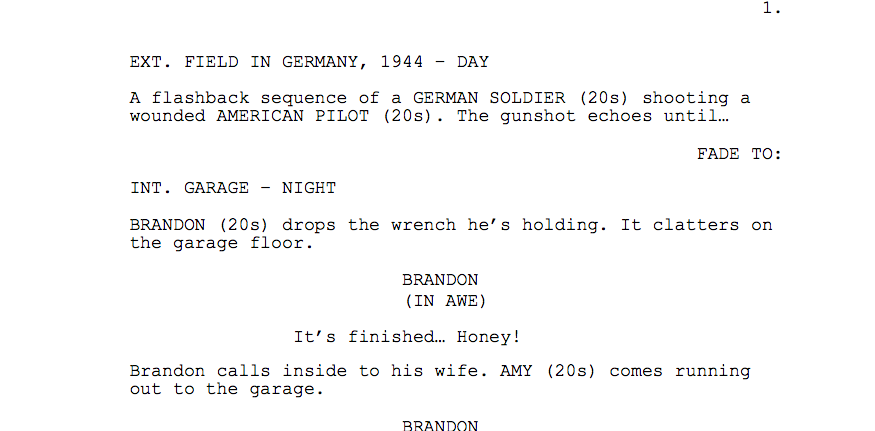
I had recently taken a Production Management class, where I learned about all of the details and the logistics that the producer deals with when making a film, and I knew that it all began with a script. So I sat down for a few days (in early January) and wrote the script. The sixth revision of the script became the shooting script that I marked up and used for the breakdown.


An excerpt from the sixth revision of the script
I did a script breakdown and made a shotlist as well:


Pre-Production

The script called for a lot of things that I wasn't sure I'd be able to pull off, one of them being a few shots of a P-40 flying through the air and crashing. I also knew that I wanted to do as many of the effects practically as I could, rather than in the computer (think ILM in the late 1970s). So instead of finding a CG model of a P-40 airplane and going through the process of animating it, lighting it, etc..., I went onto eBay and found a 1:32 scale plastic model (which, I came to find out, was originally released in 1967, and had been sitting in a guy's basement for 47 years! Also, another note about the model being from 1967: The normal process for applying the declas is to let them sit in a bowl of water for a few minutes, then put them onto the model. Well, I put them into the bowl of water and then went to apply them, and they literally disintegrated in my fingers! So I actually ended up using the decals from the 1:48 scale model on the 1:32 scale model, but I don't think anyone will mind). All the pieces were there, and it turned out to be a very quality model! Pics of the building process are below.

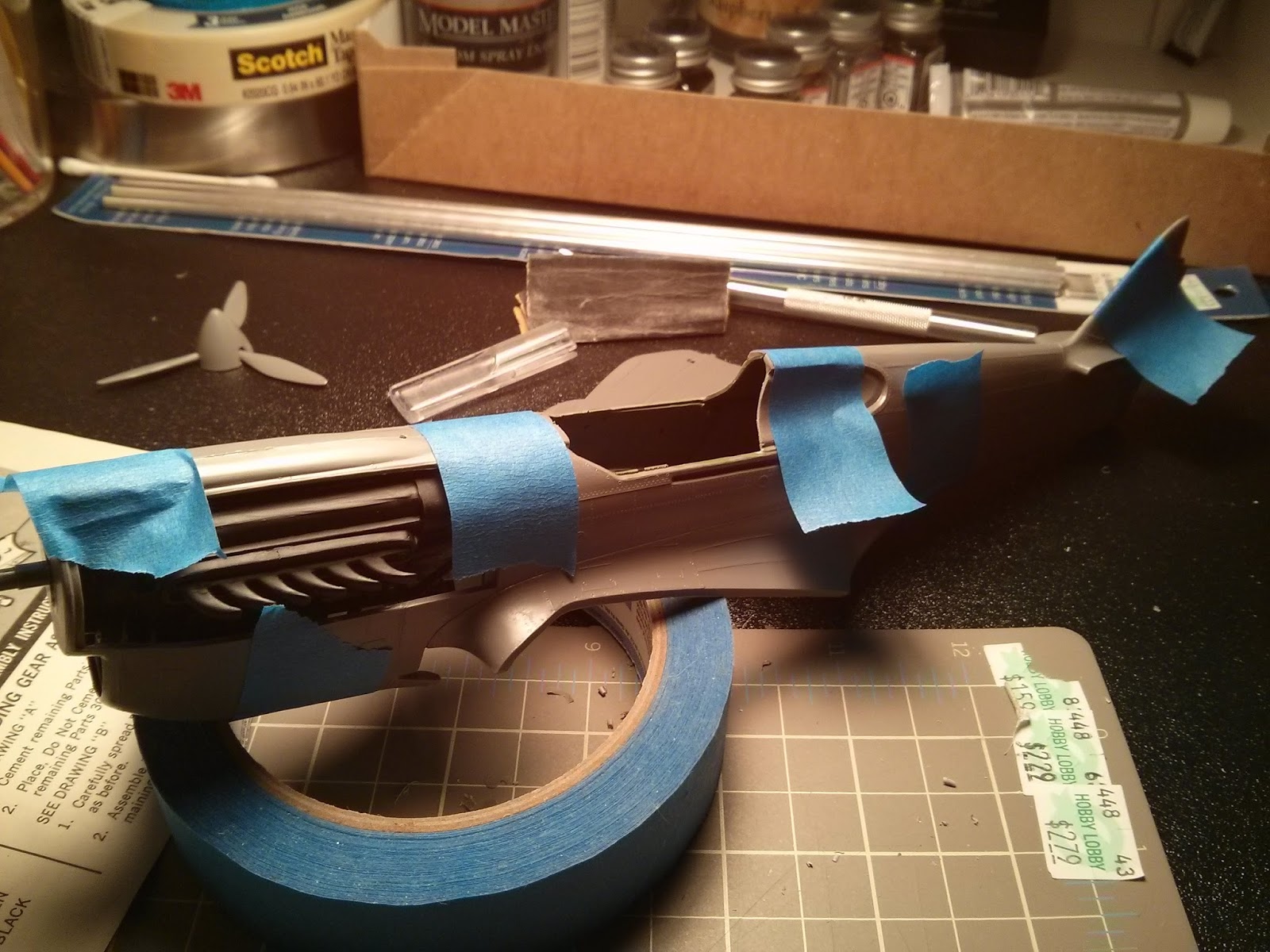
Tape holds the fuselage together while the glue dries


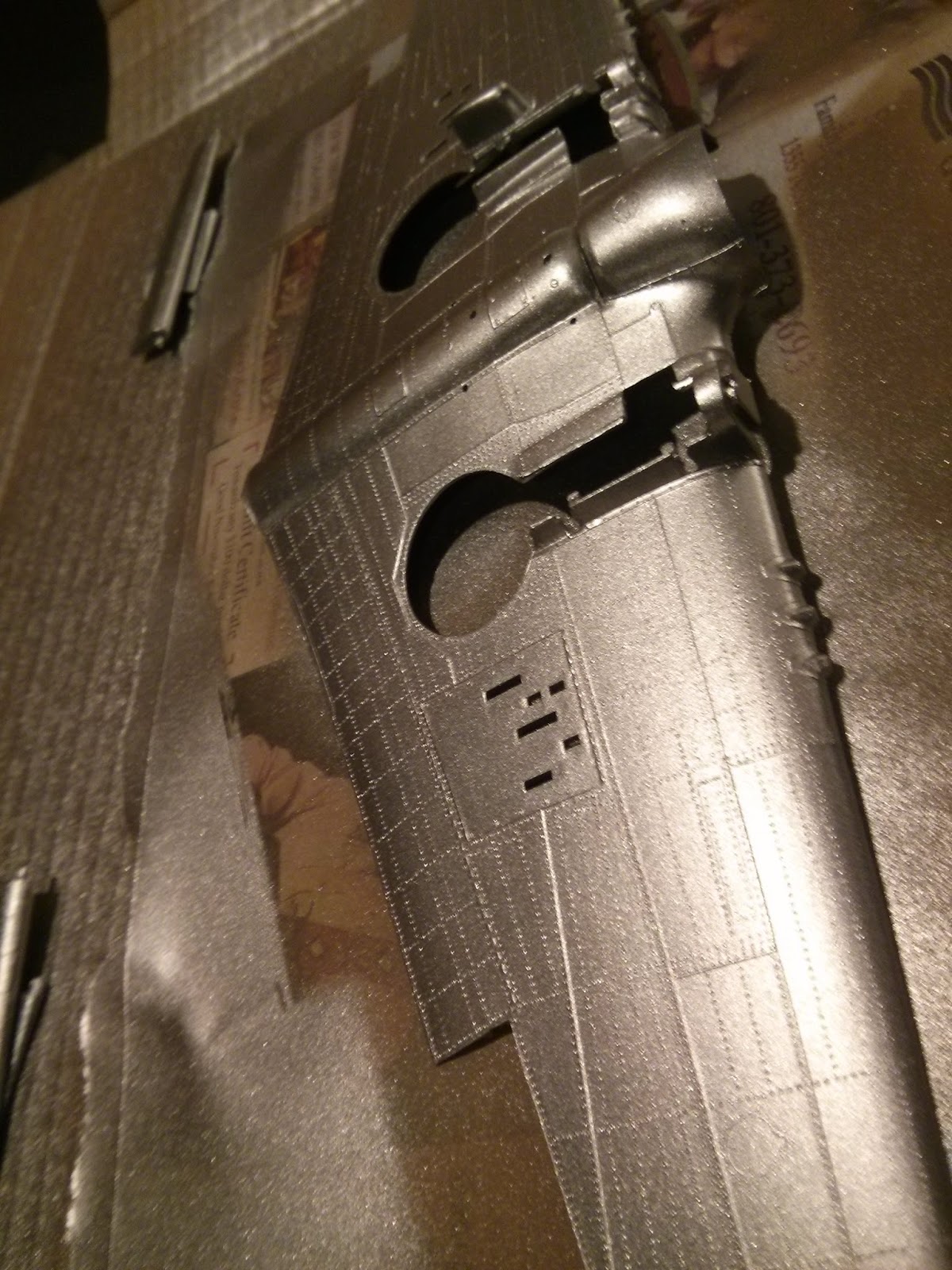
I painted everything silver first, so when I got to weathering the plane later the silver would show through the top coat of paint

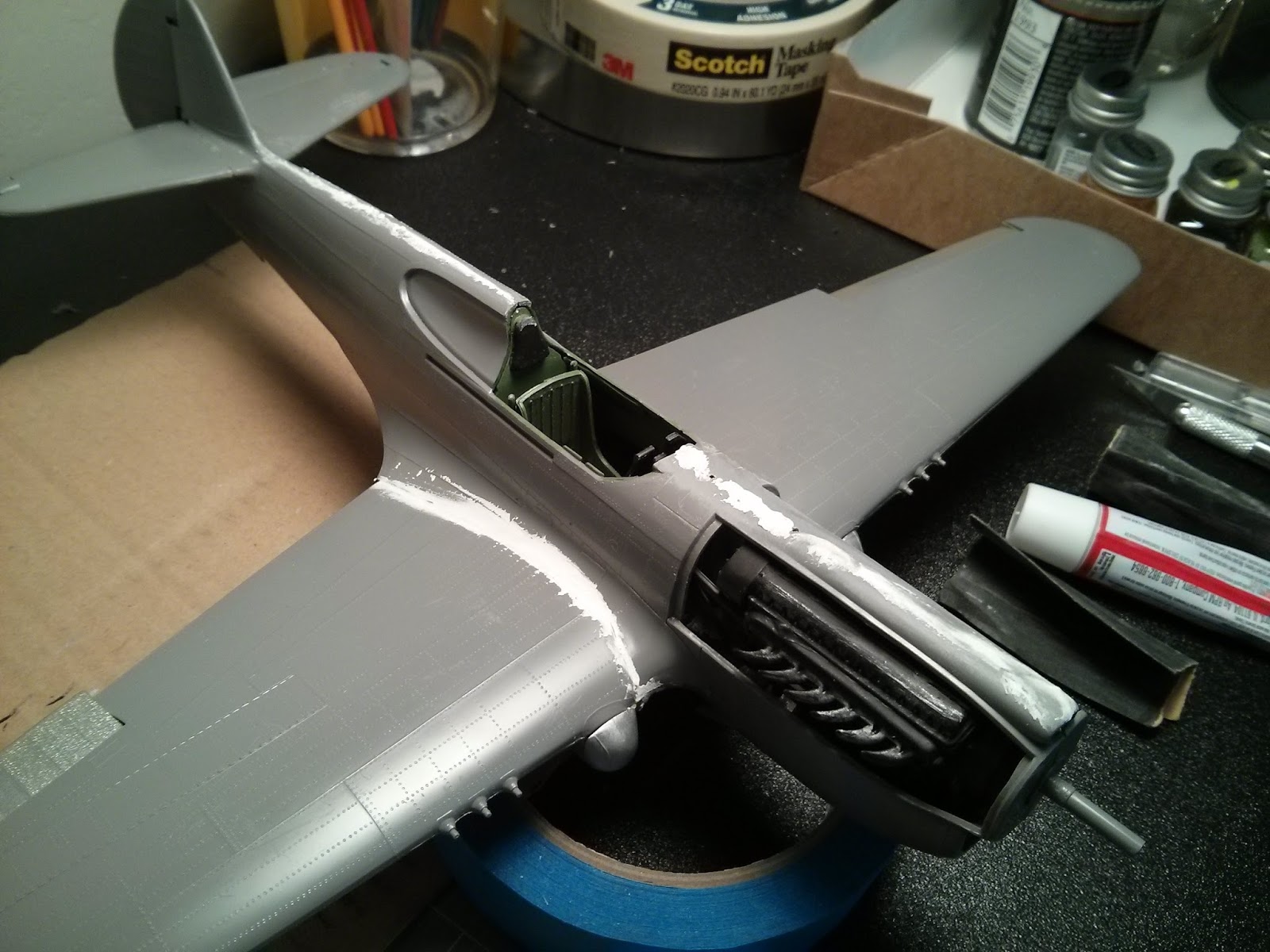
Adding puddy to the wing/fuselage joint, and along other joints that didn't glue together smoothly

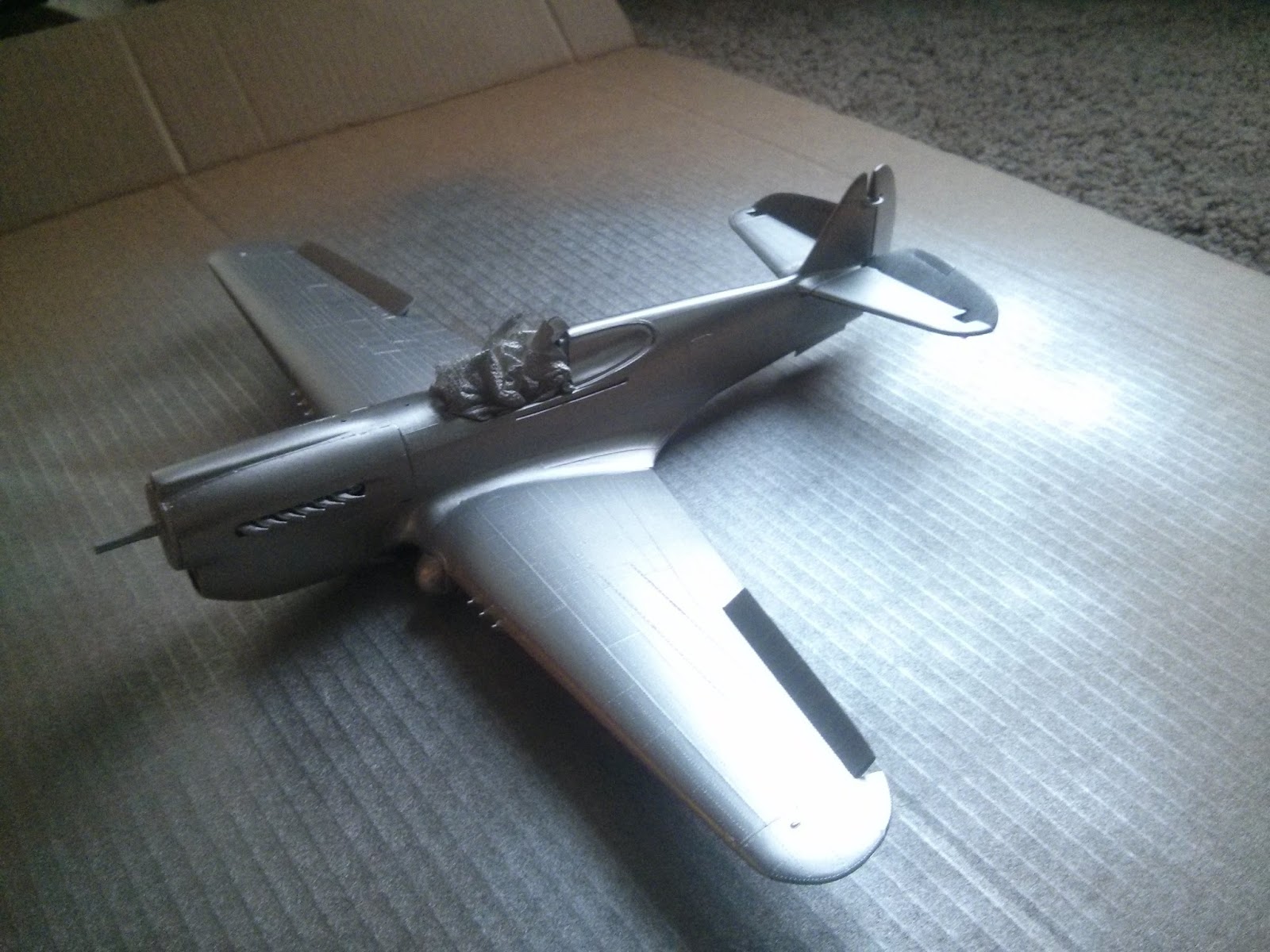
Painted the whole plane silver for weathering purposes

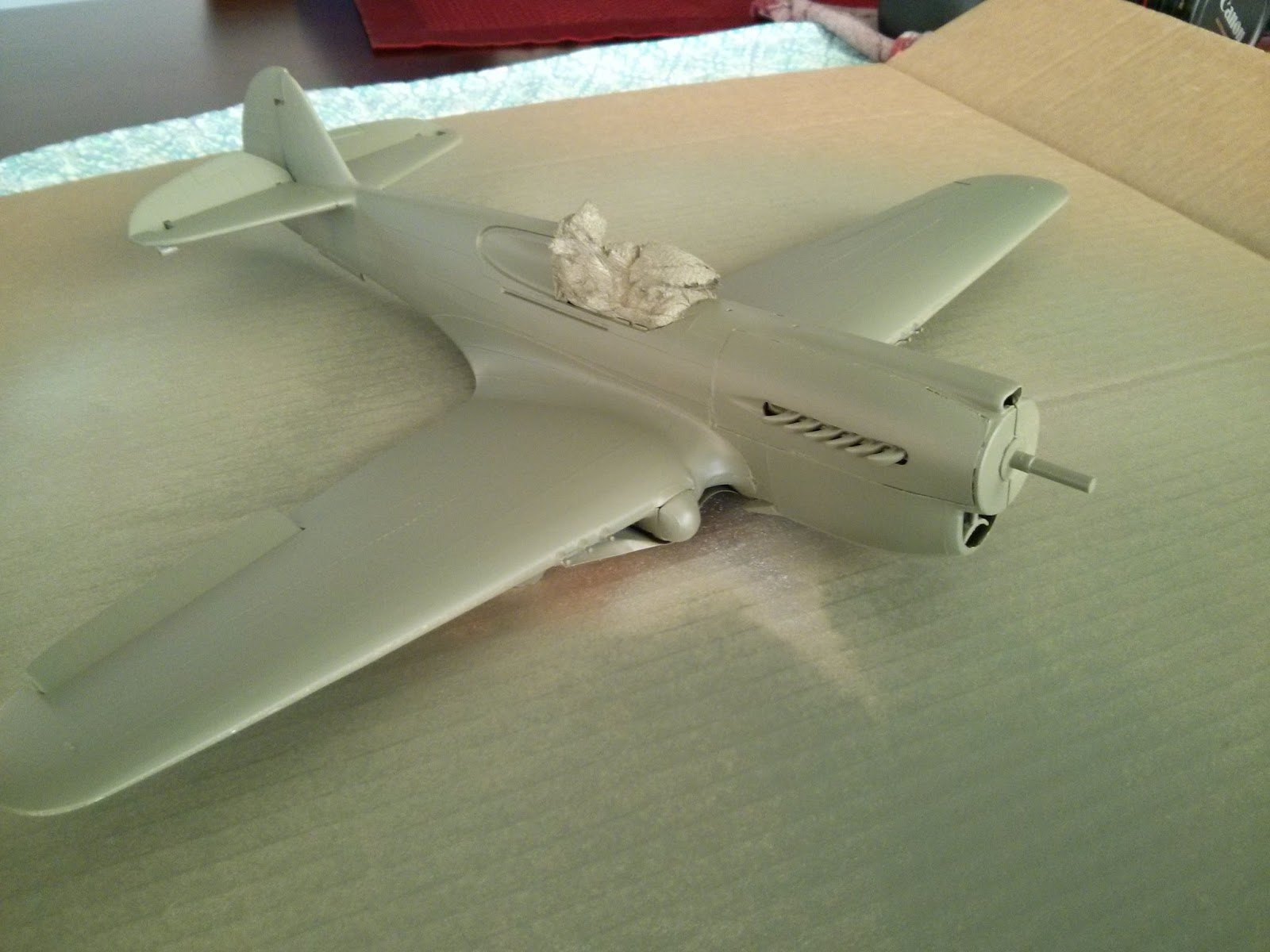
I decided to paint the topcoat a "bomber green" color, even though it's not historically accurate.

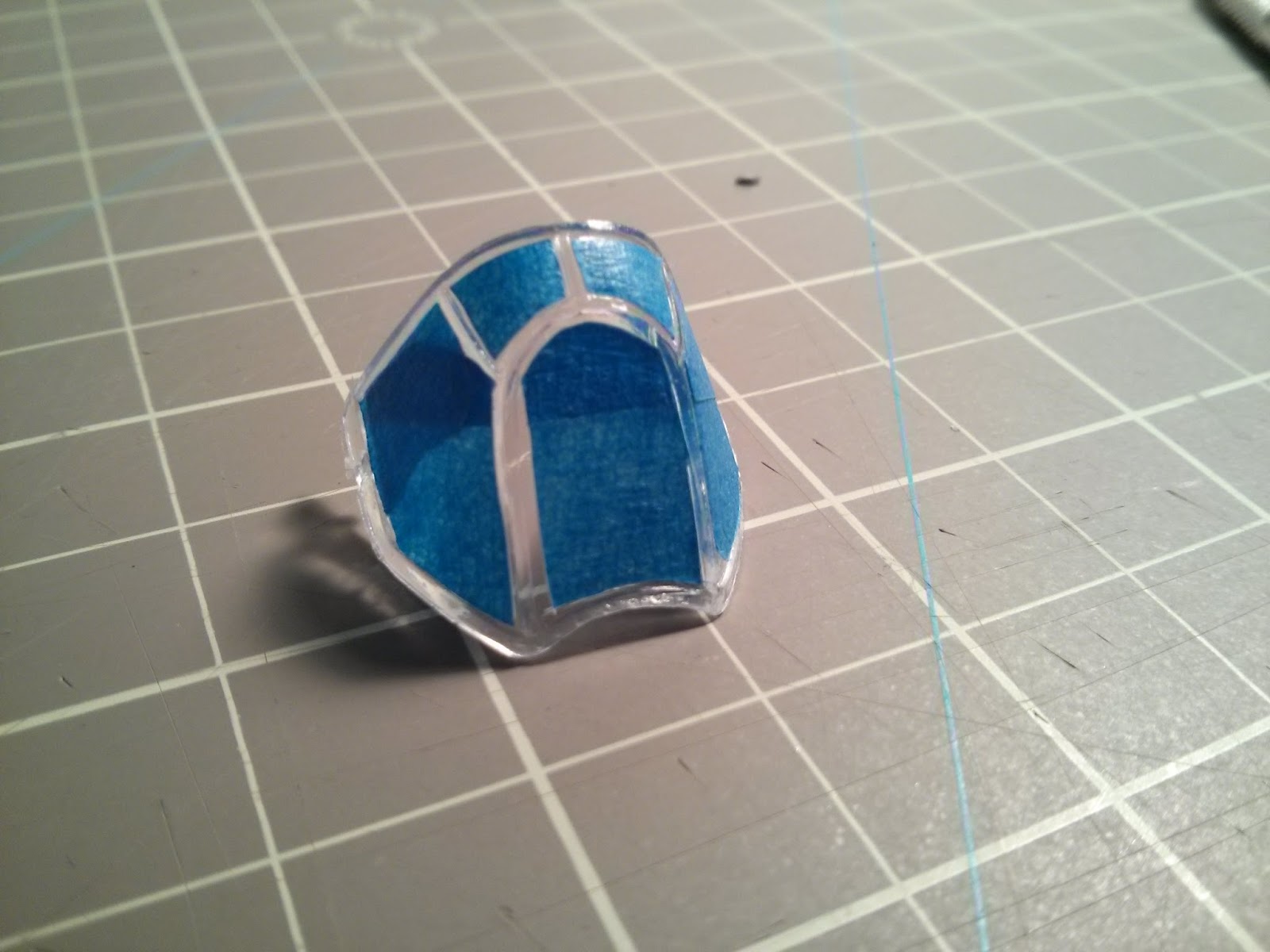
Masking off the canopy is tricky!

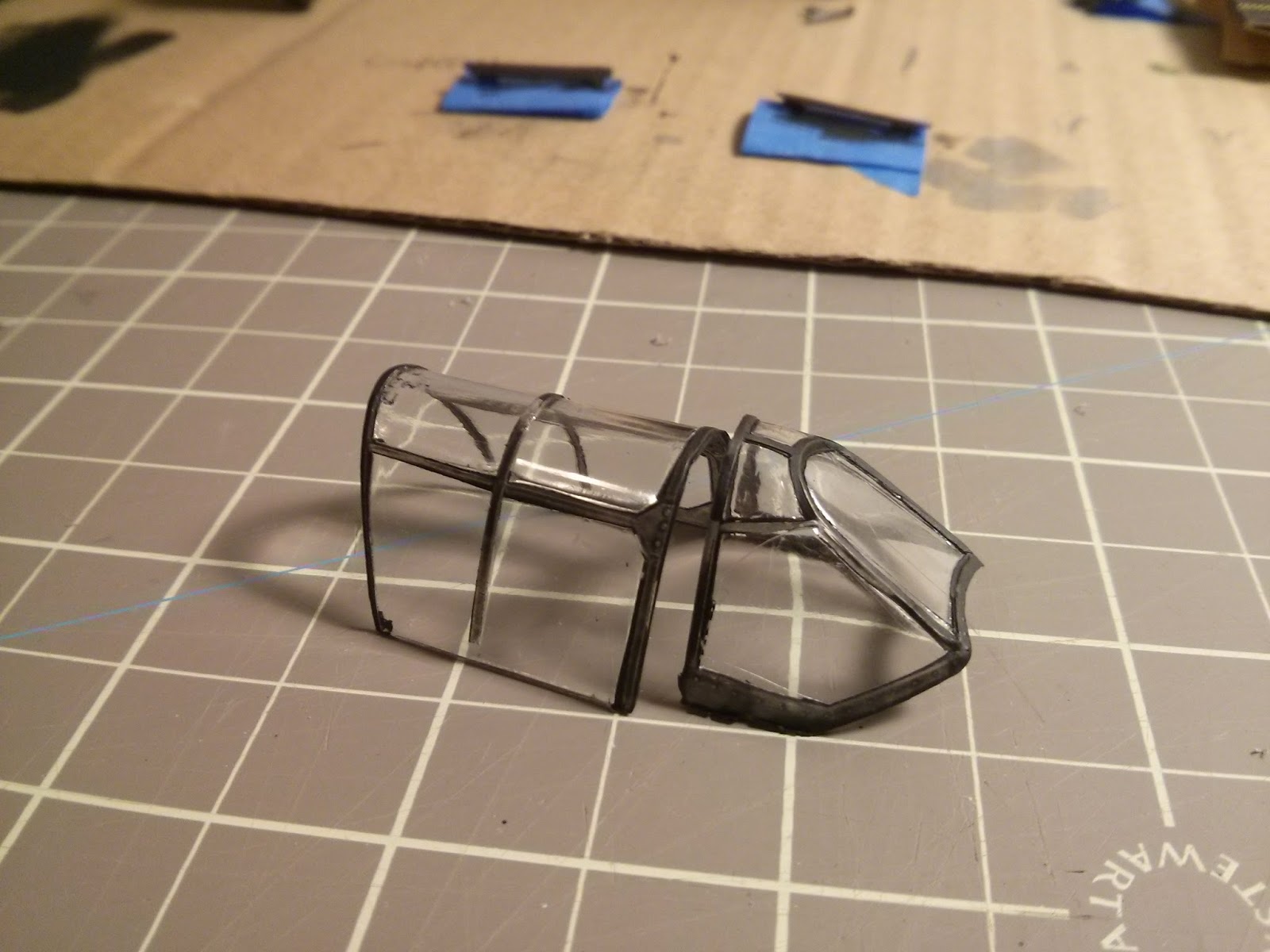
The painted canopy

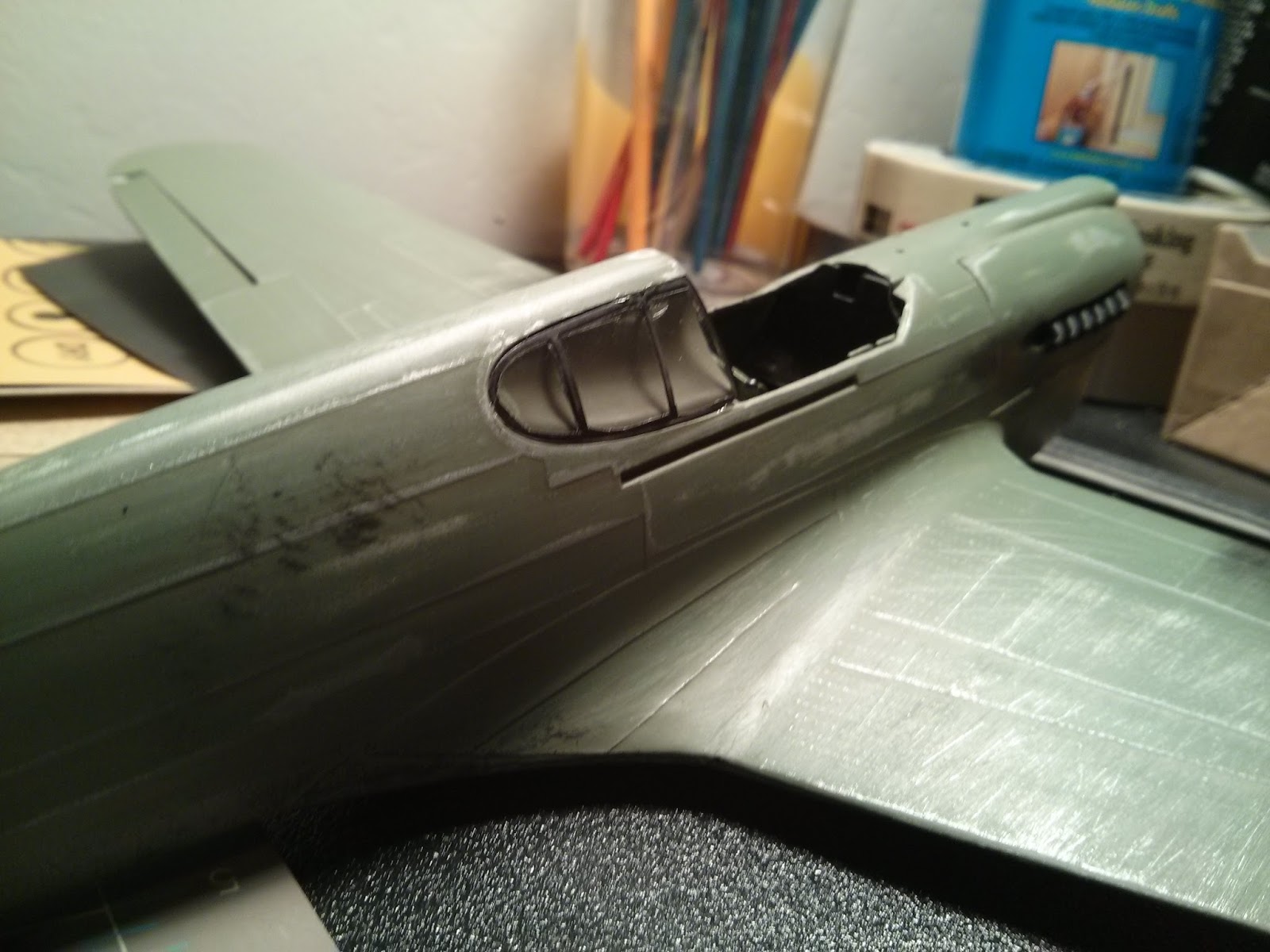
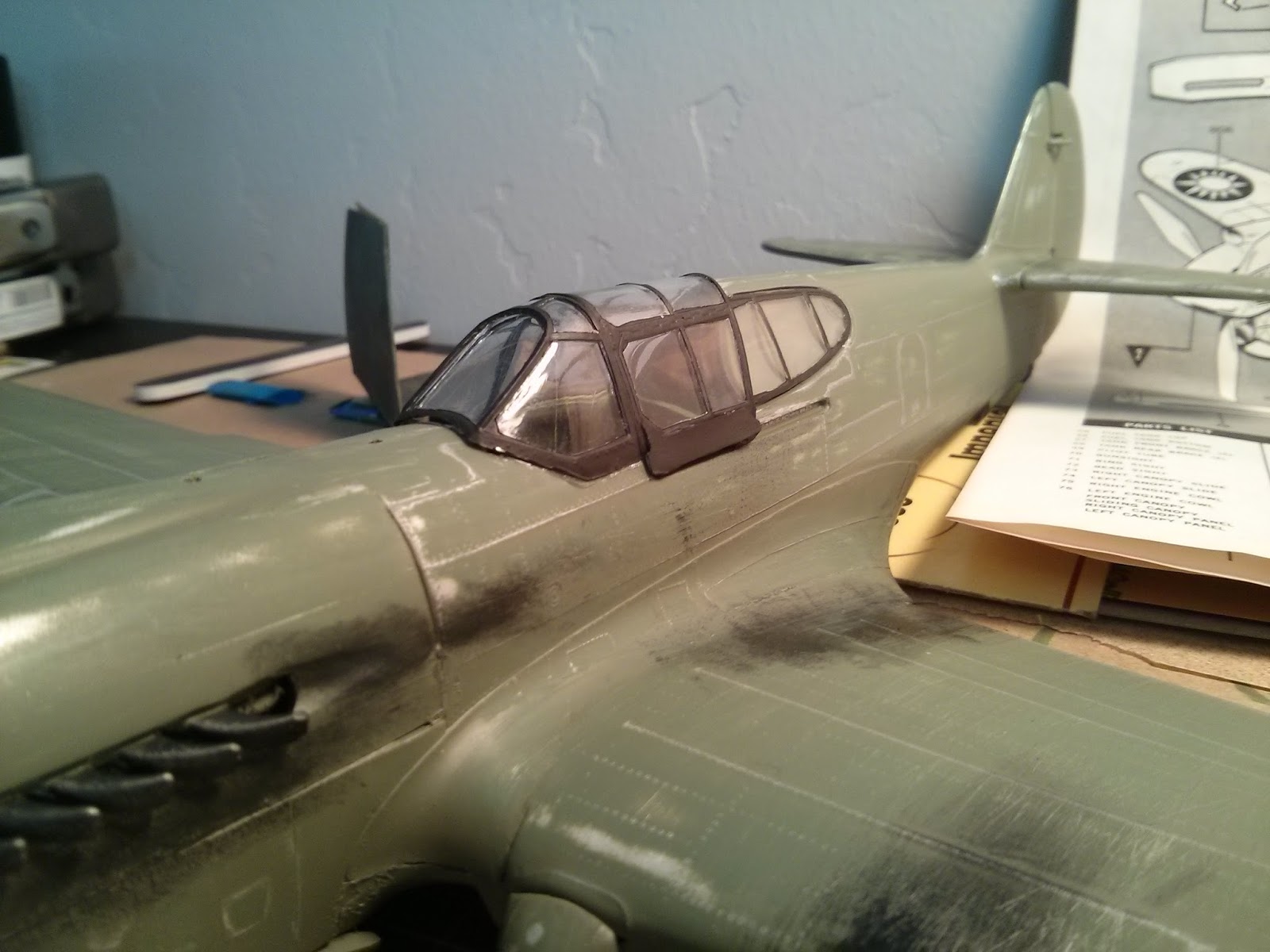
You can see some of the weathering in this photo (the exhaust, the guns, etc...)

The attached canopy with weathering. I also added decals (which add a LOT to the look of the plane), but I didn't take a picture of them...
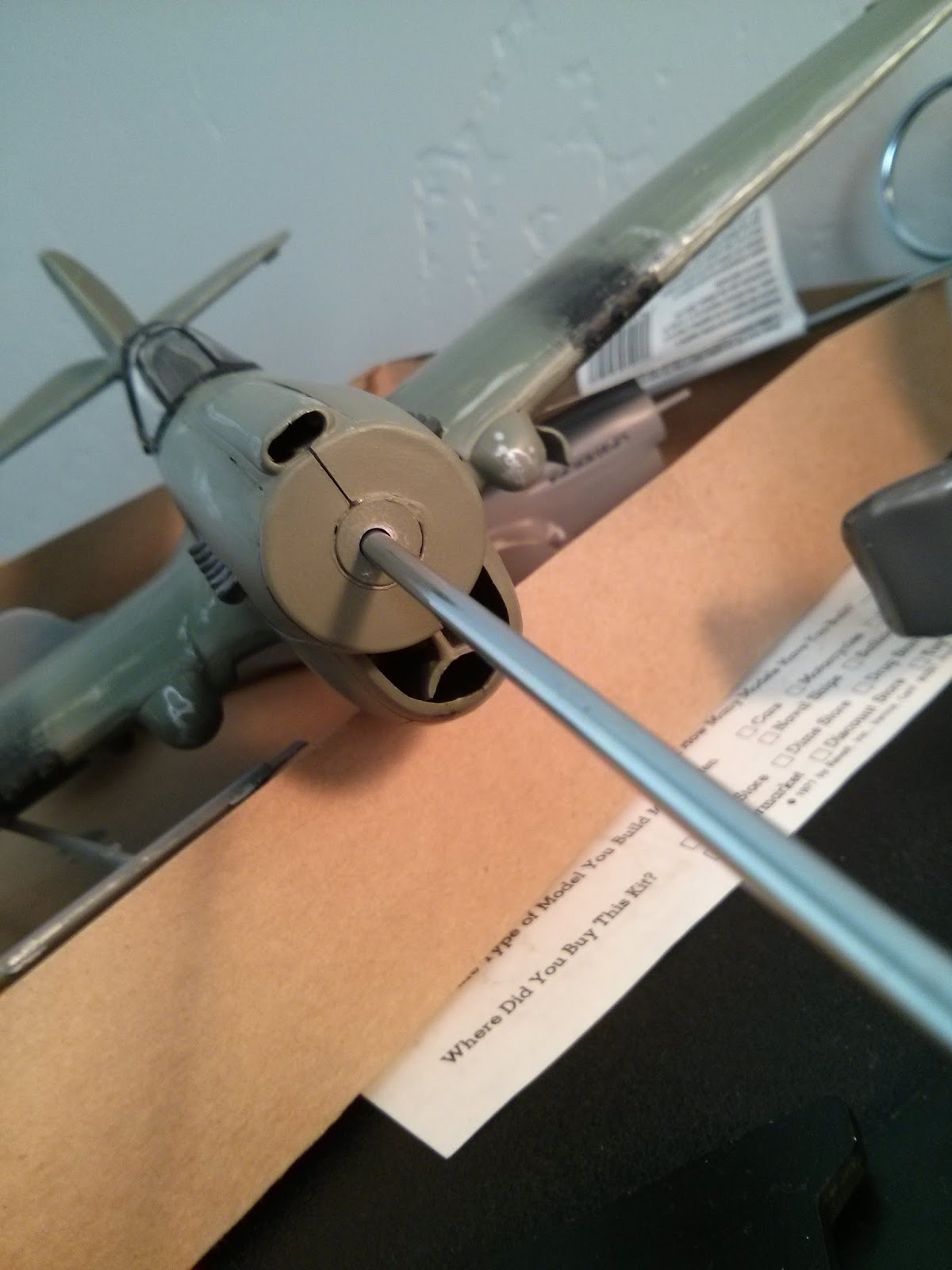
The propeller. I ended up gluing a 1/8" drill bit into the propeller so that it would spin evenly on it's axis when I was filming it.
Glued a 1/8" steel rod into the plane so that I could control it when I was filming.

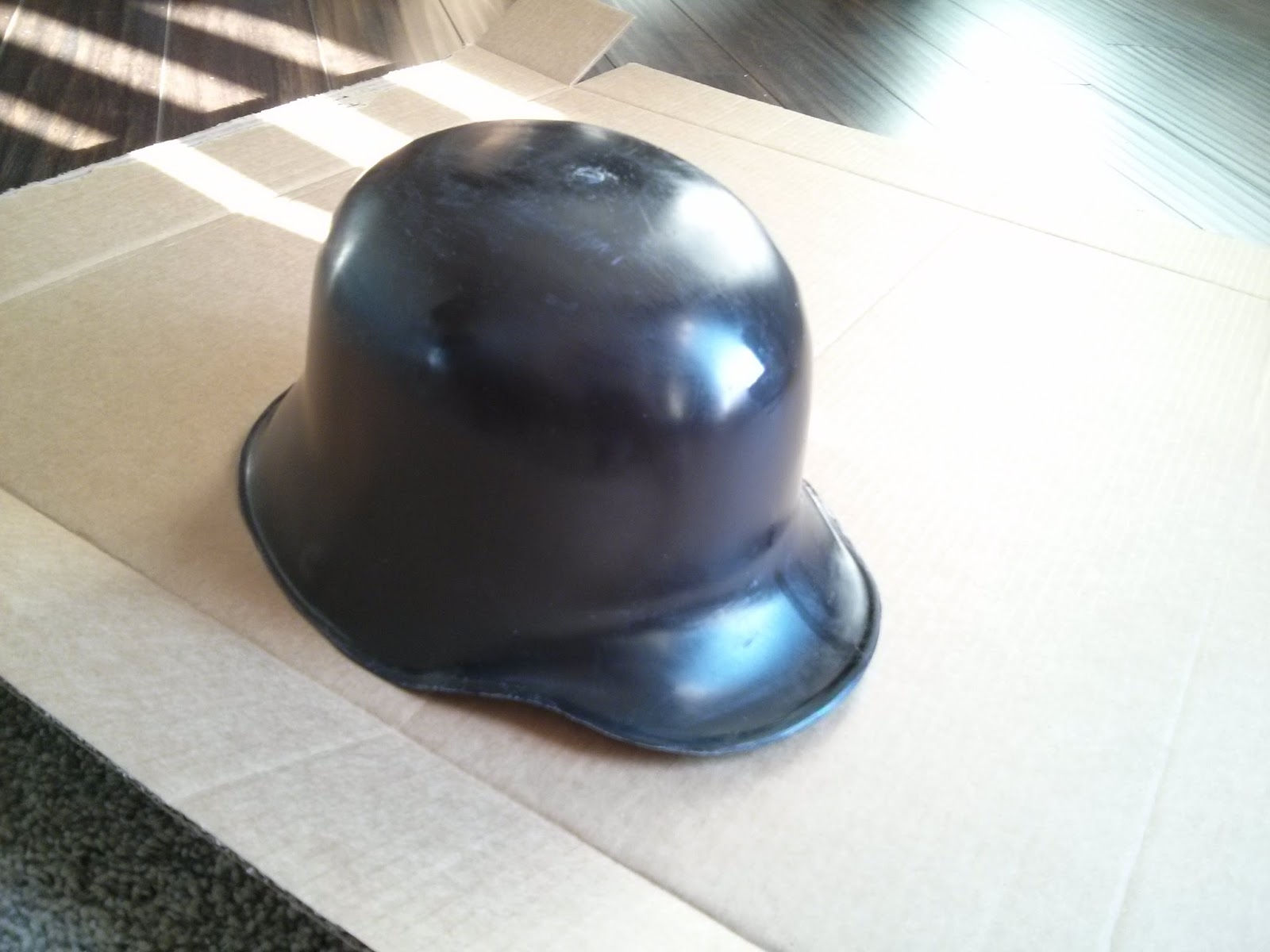
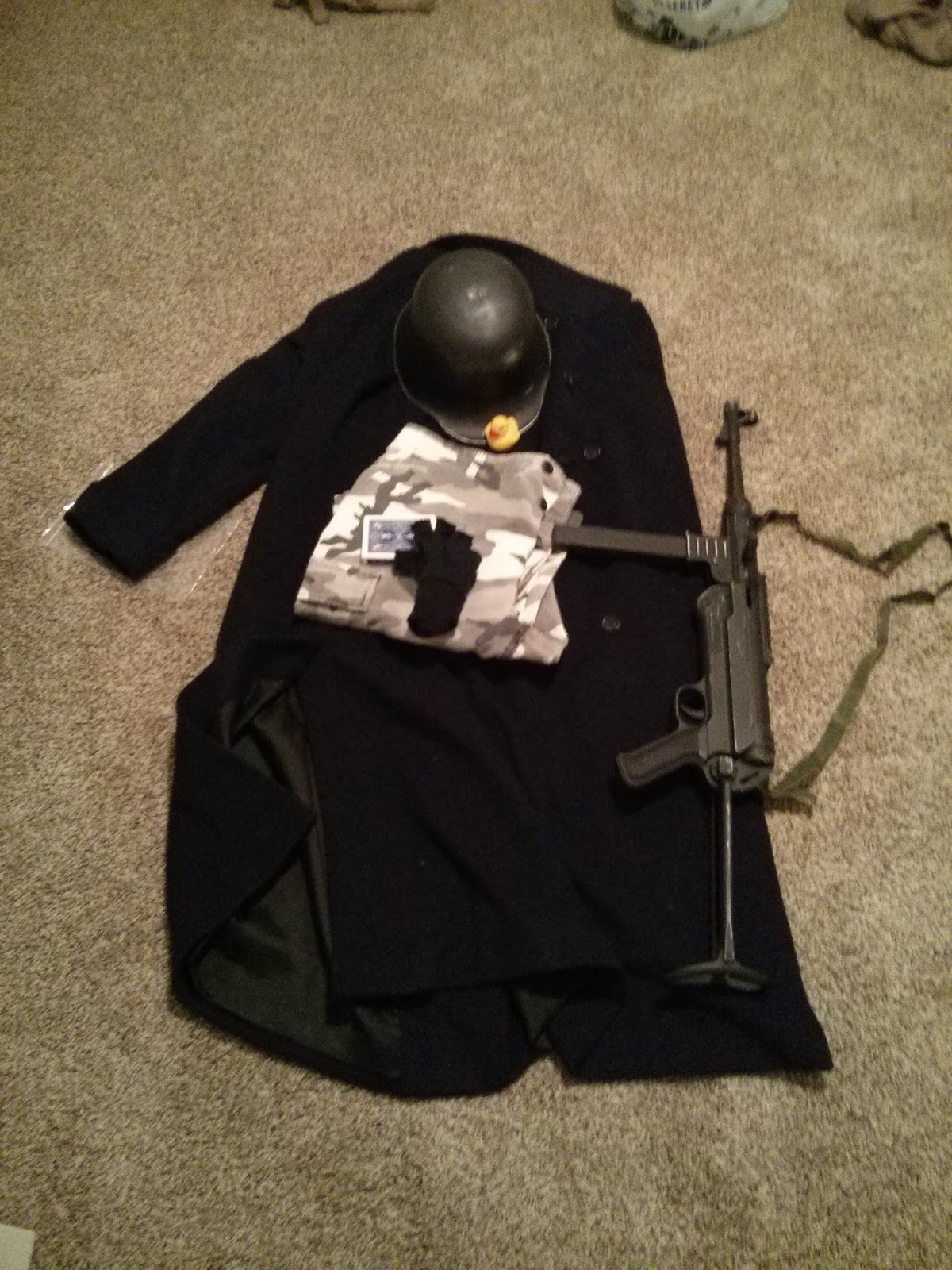
The model went together pretty quickly, as I was aiming for an early-February shooting date. While I was building the model though, I was also on the lookout for costumes for the German soldier and the American pilot. I was checking Goodwill and eBay constantly, and found some pretty decent props and wardrobe for pretty cheap. I found the German's helmet on Amazon for a few bucks, but when I got it, it looked like this:

German helmet, before painting/weathering

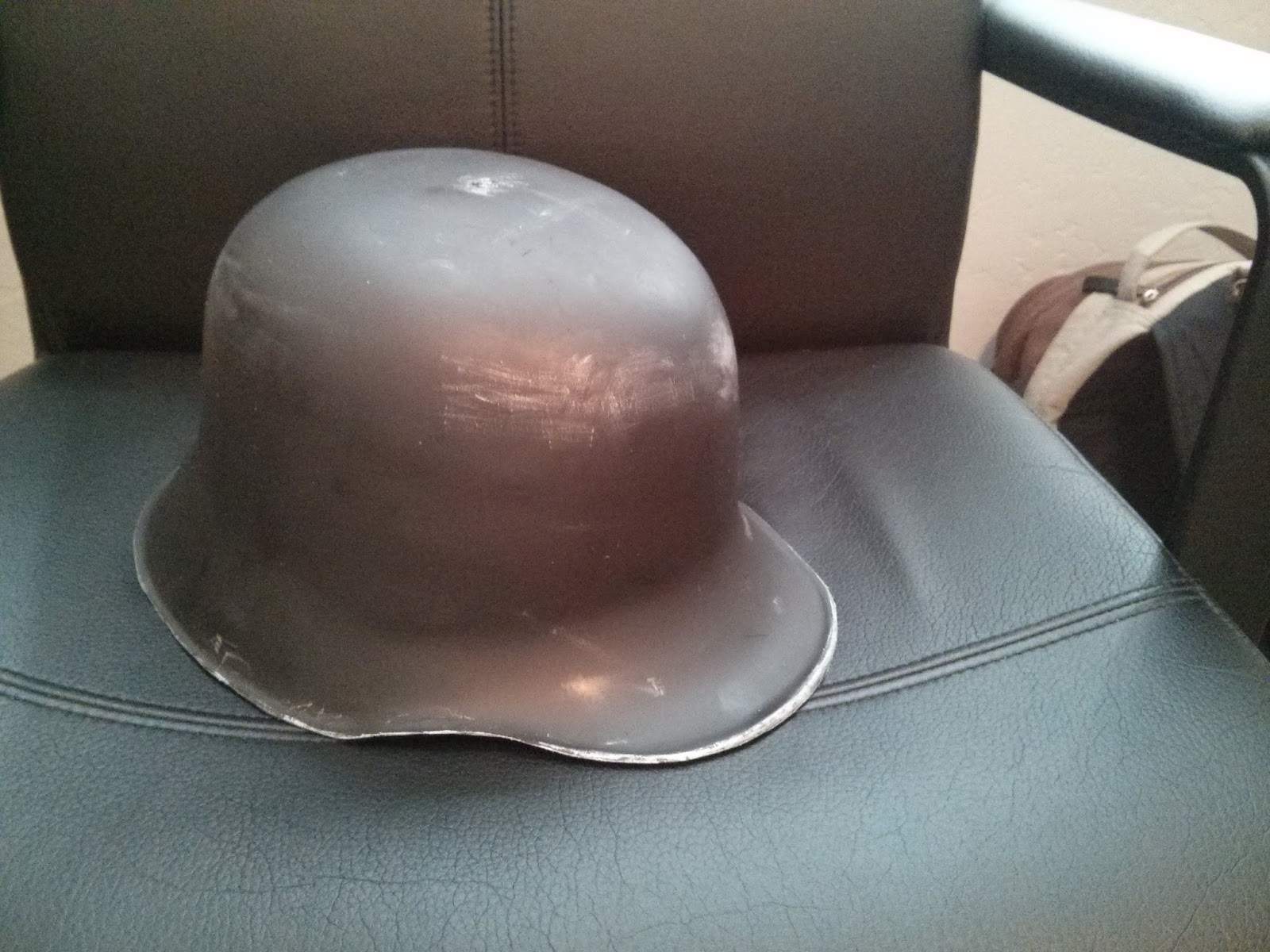
So I trimmed around the edges with my knife to clean it up, and then painted it flat black, and then added some silver weathering to it to make it look old and beat up:

German helmet, after painting and weathering
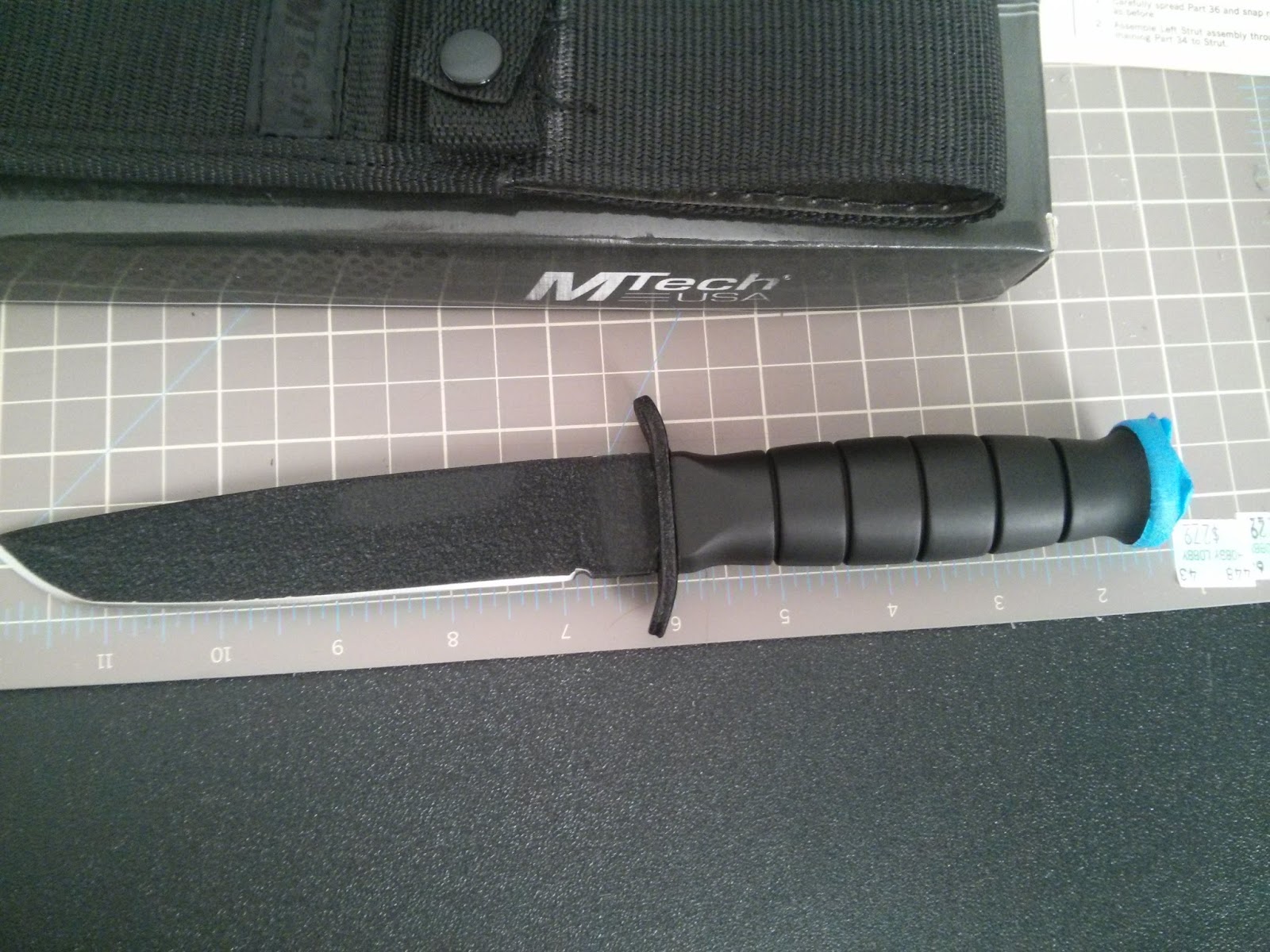
I was also wondering where I was going to get the WWII combat knife that the pilot is carrying. Thankfully, I found this guy on Amazon for a couple bucks:


Knife before the Dremel tool...

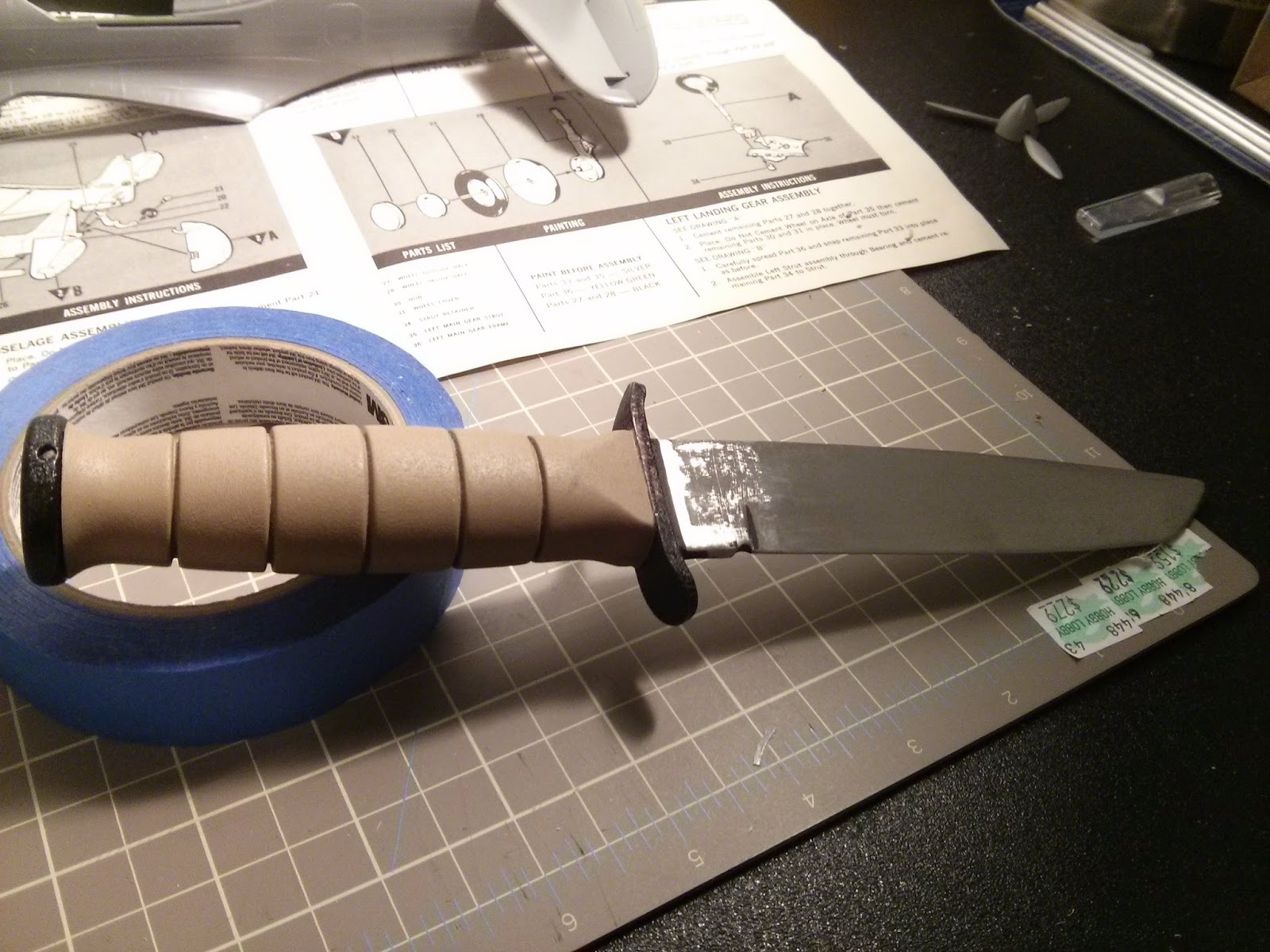
I then took the Dremel tool to the blade and made it dull (ie: safe for filming!), and then took the black texture and paint off the blade as well. I also painted the handle a "wood" color (I know it doesn't really look like wood, but it worked!):

The knife after the Dremel tool and paint

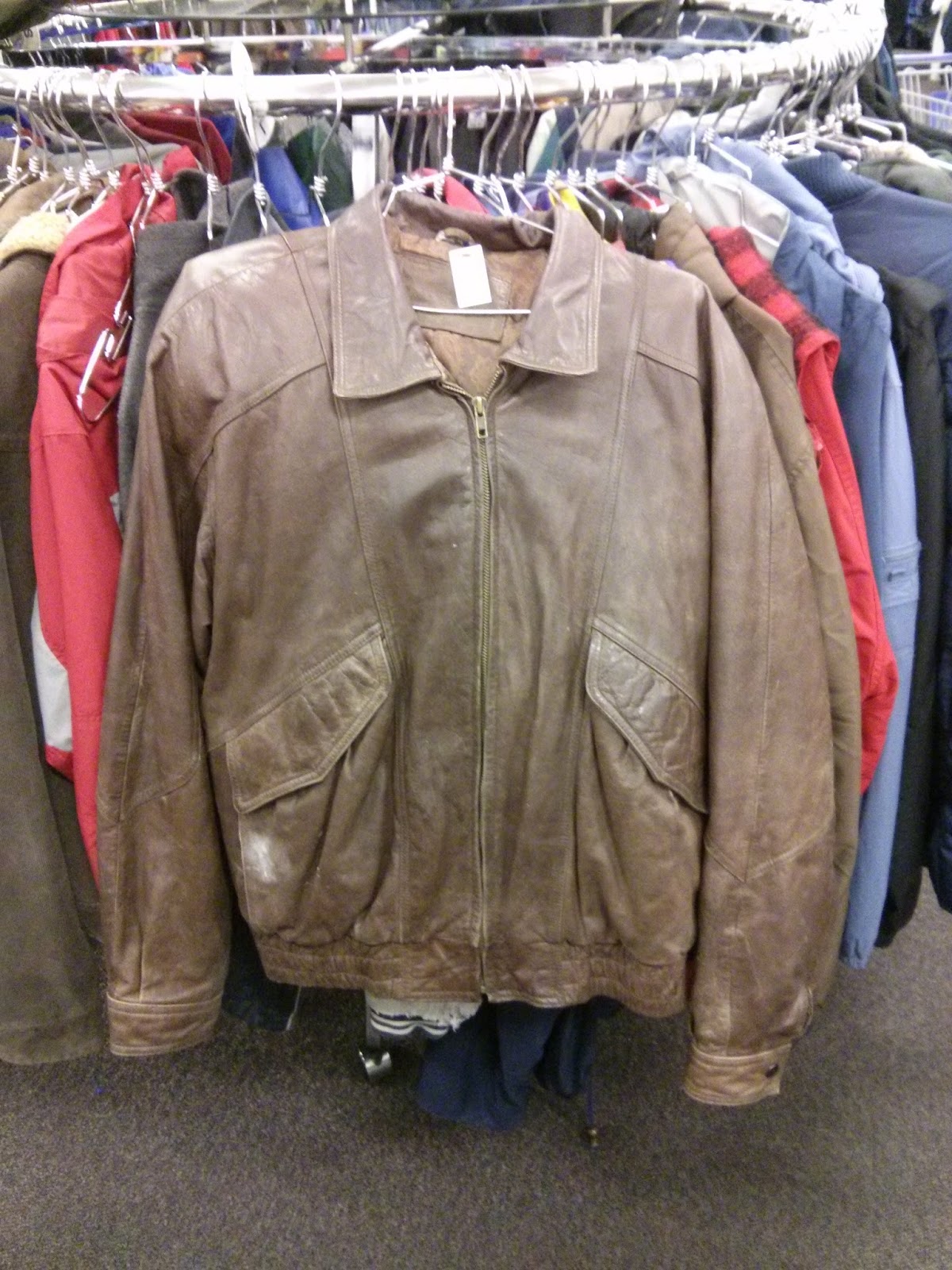
I found the Pilot's costume at Goodwill:

Leather Jacket for the pilot. 

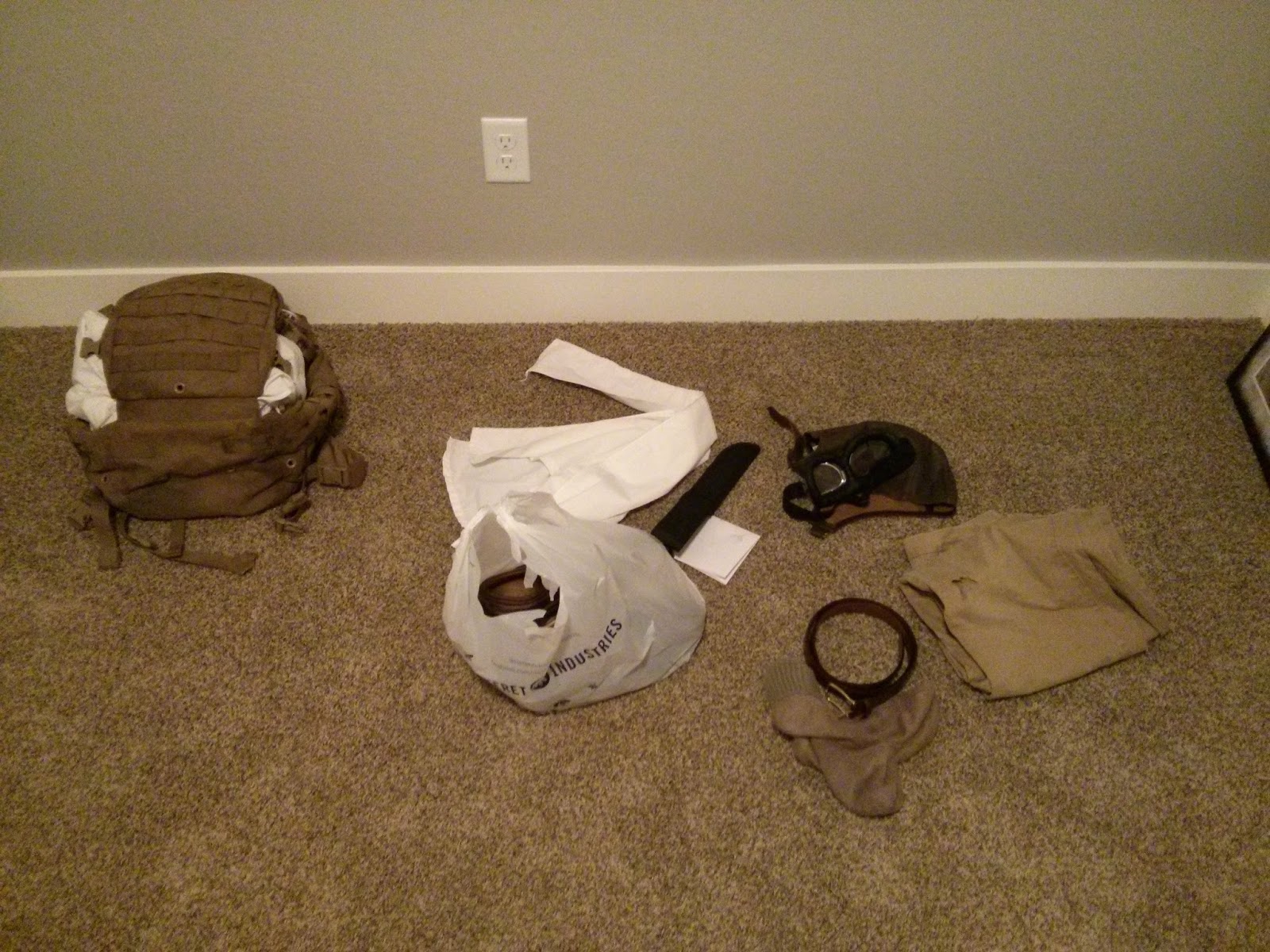
The leather skull cap and goggles were found on eBay for just a few dollars. I'll get to the parachute in a moment.

I also found the German's costume (the jacket, pants, boots and gloves) at Goodwill:

Found the MP-38 airsoft gun on eBay and painted it and weathered it so that it looked more authentic.

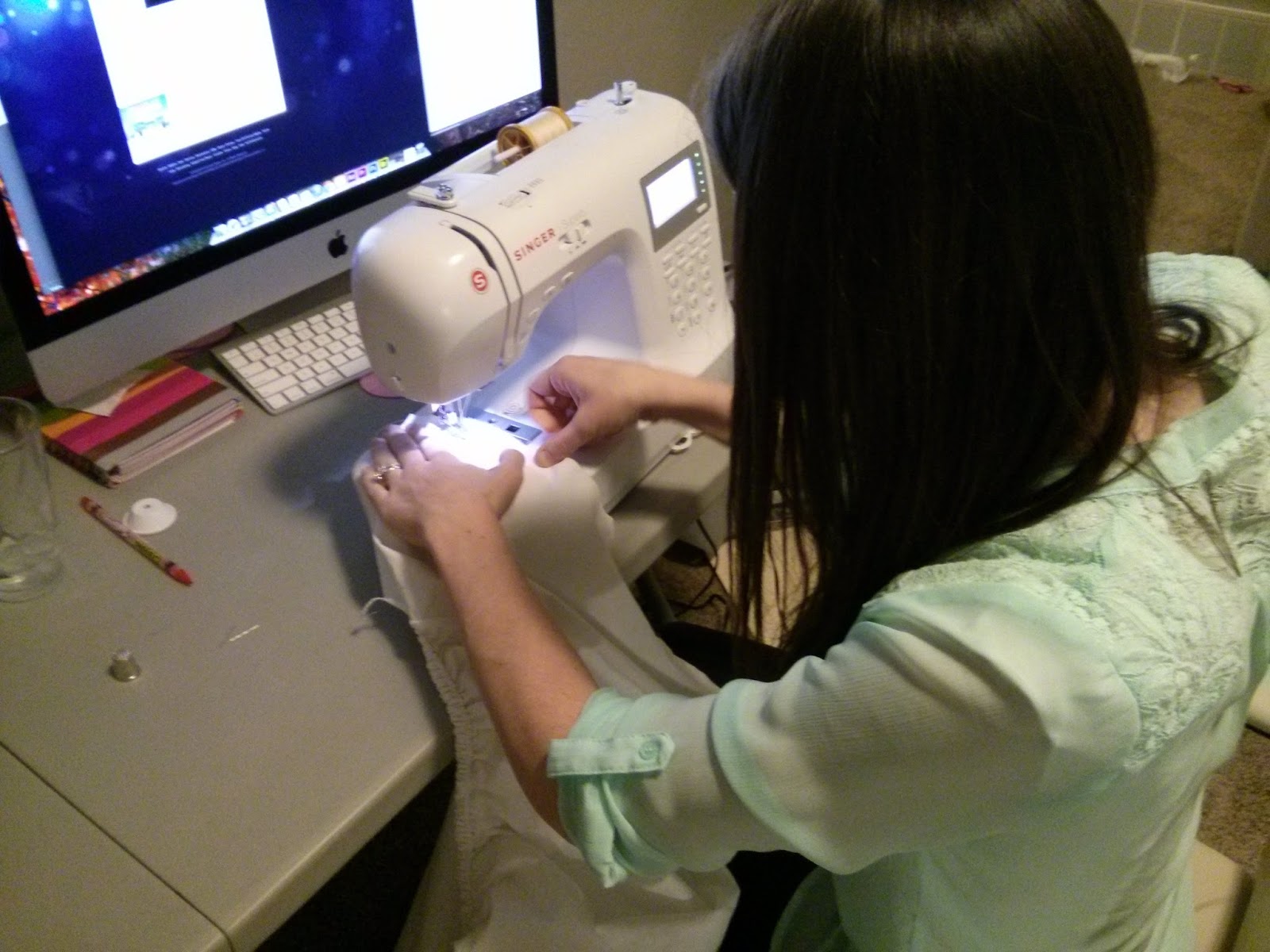
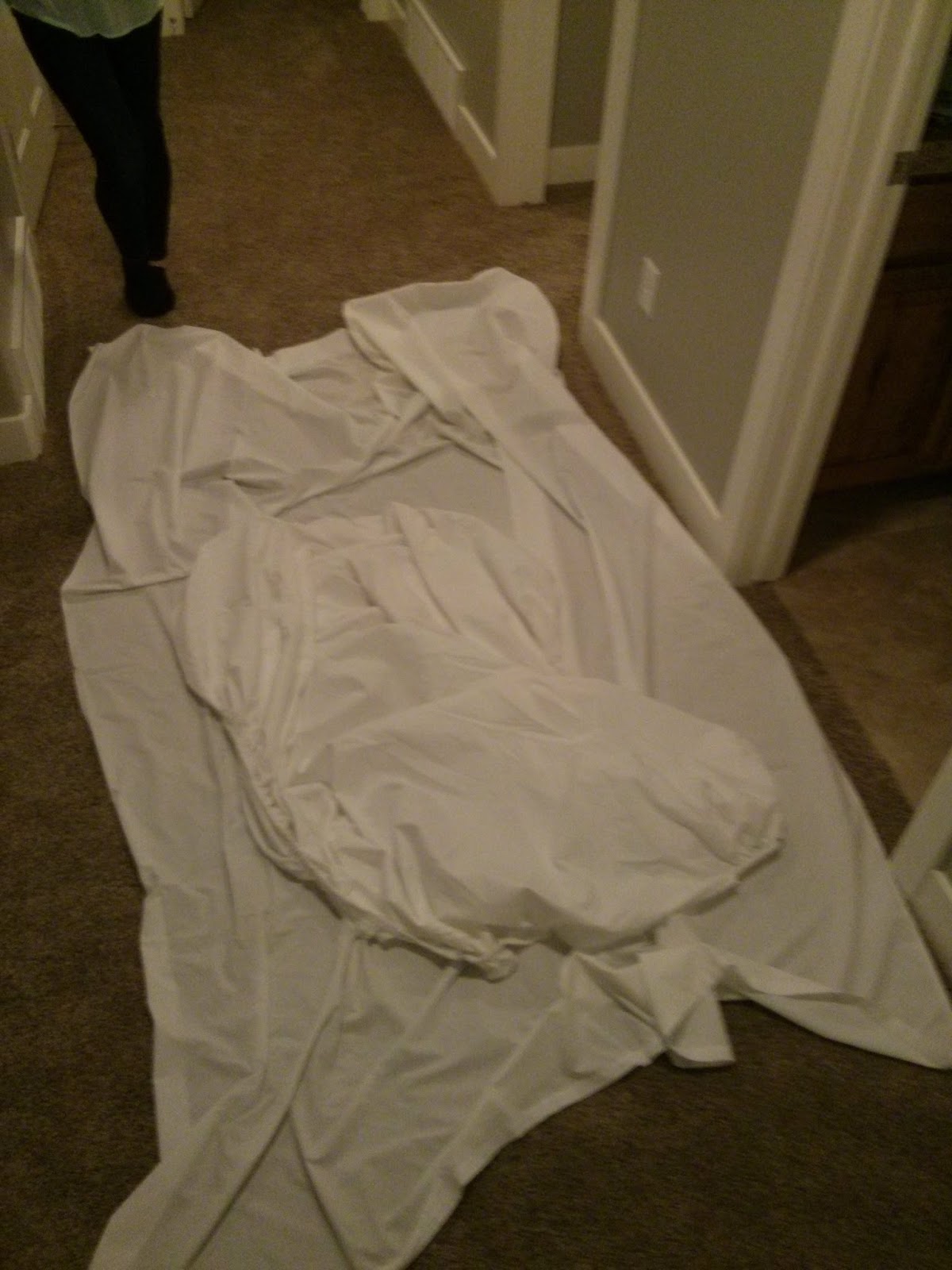
The parachute was an interesting challenge. The script called for the American Pilot to bail-out of his crashing P-40, and to parachute to the ground. Where was I going to get a parachute? Well, I found an Army Surplus store locally who rented out parachutes for events (like weddings), so I went in and asked them how much it would cost to rent a parachute for a day. They said $79 per parachute, with a $200 deposit. I didn't have that sort of budget for this short film, so I thanked them and went back to Goodwill! I ended up getting two queen-sized white bedsheets for a few dollars a piece, along with 100' of paracord. I went home and bribed my wife into sewing these two sheets together into something that slightly resembled a parachute:

My wife is the best! AND she knows how to sew!

Just looks like a big white mess of fabric.
I cut eight lengths of 10' paracord, and attached them to the parachute using simple knots I learned back in Boy Scouts, and vwalla!! There's my $10 parachute!

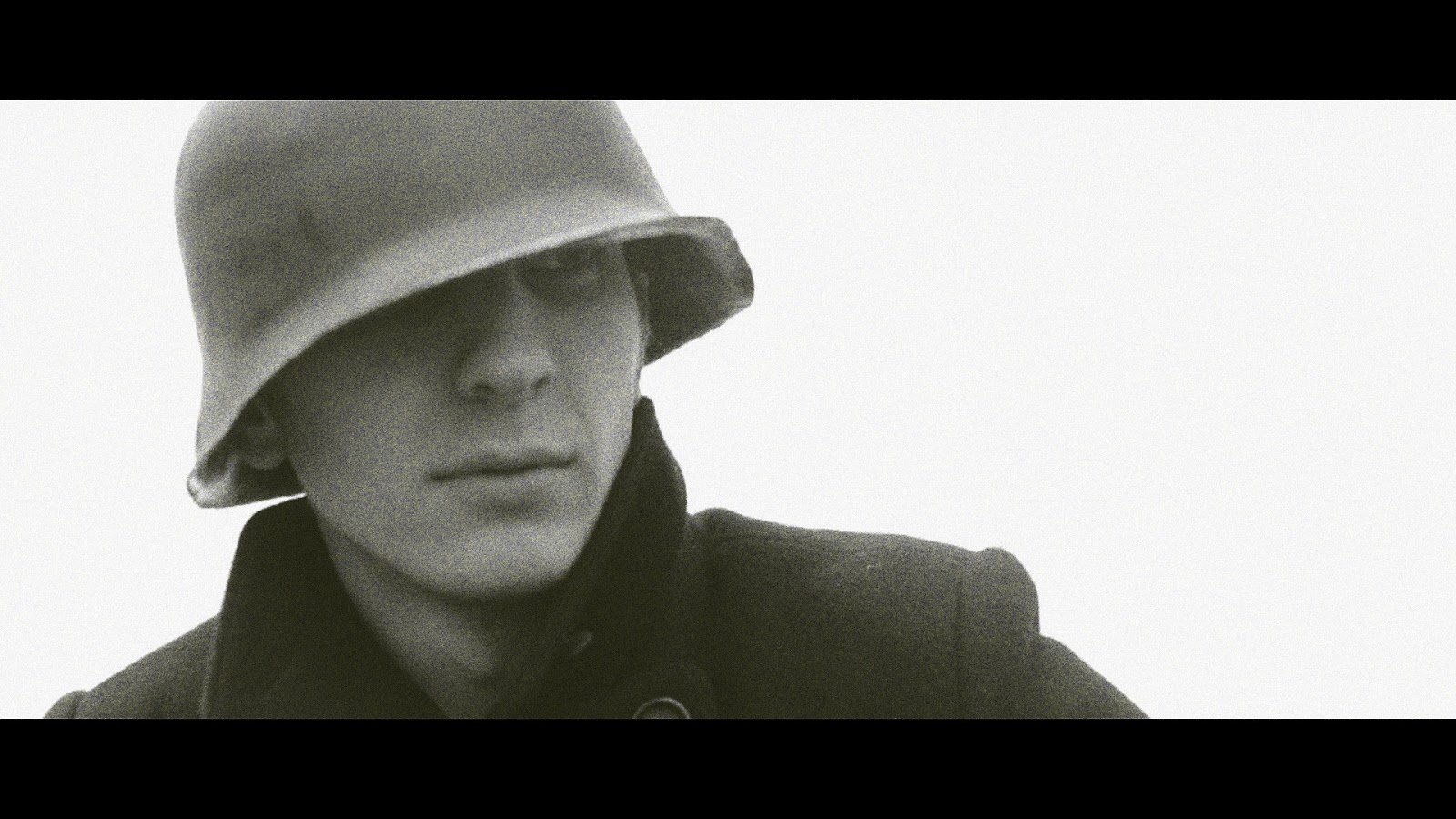
So I had most everything ready for the shooting day, which was just over a week away, but I didn't have any actors cast yet. Yeah, I might need actors if I am going to make a short film! I really wanted the German to be somebody who had that German "look," and someone who spoke the language fluently (because I feel that you just can't fake it!). Luckily, my wife knew a friend from High School who fit both of those categories, and he was ready and willing to help me out:

Josh both looked and acted the part
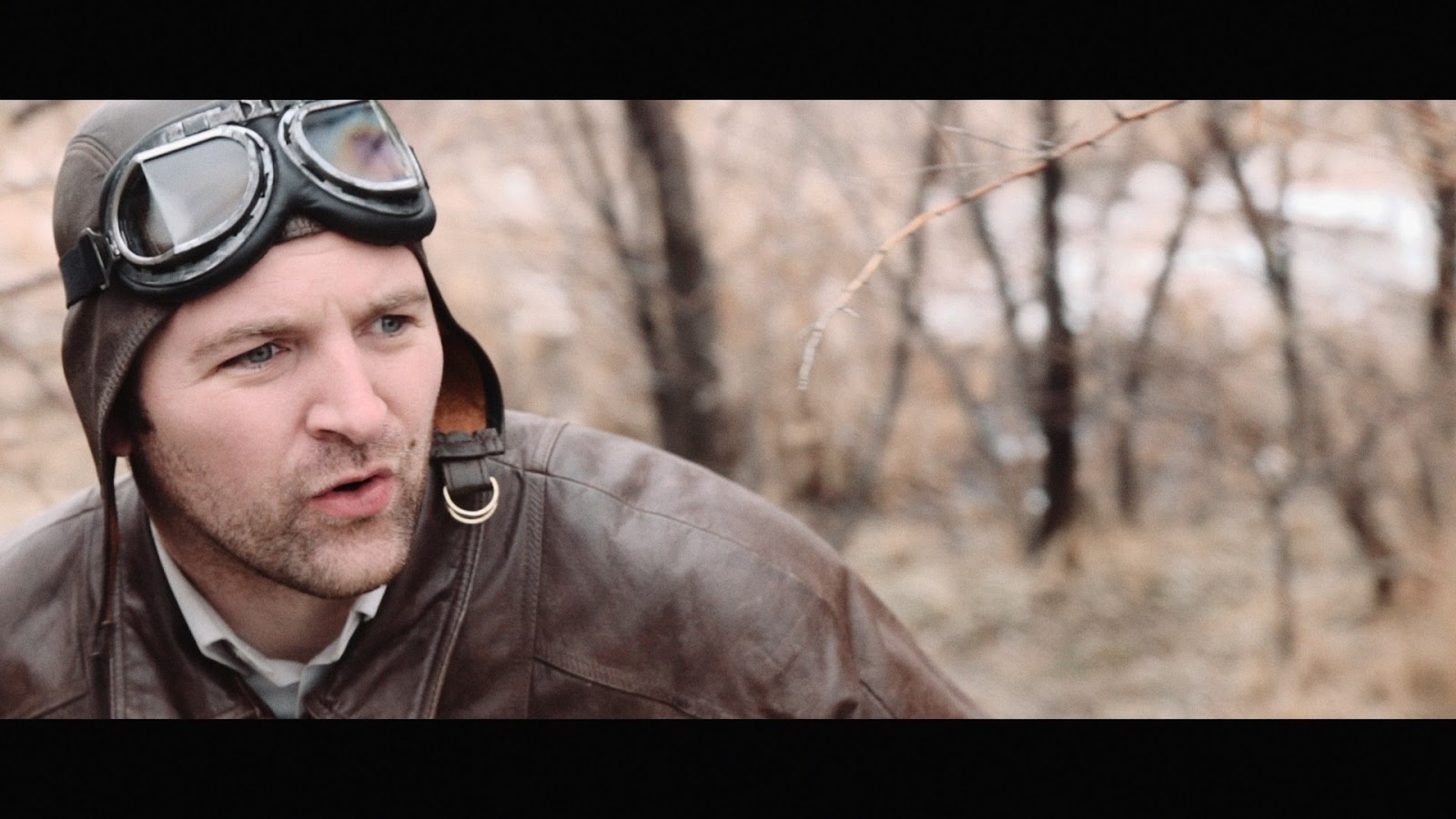
For the American Pilot, I cast my cousin, who I've collaborated with in the past:

Austin as the American Pilot


Production

We shot the "Field in Germany" scene on an overcast Saturday morning. Overcast was perfect for this scene, as it added nicely to the mood.

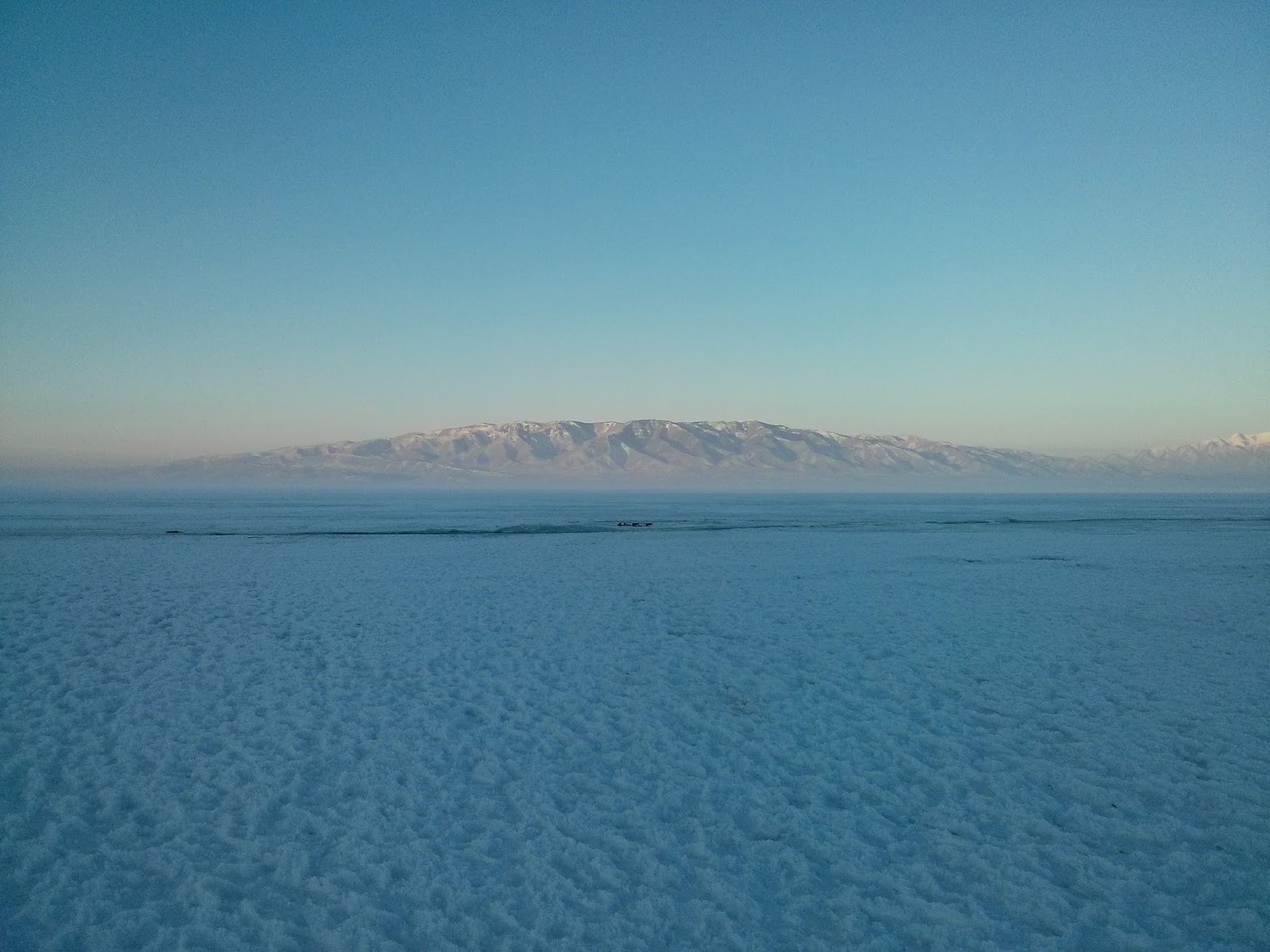
I had originally scouted a location for the field, and it was actually a frozen-over Utah Lake:

Frozen-over Utah Lake. The low-hanging fog would have added perfectly to the scene.


I wanted it to look barren and desolate, and this fit the bill perfectly! Unfortunately, I scouted this location in late January, and we didn't actually end up filming until the middle of February, and so on the morning of shooting, we went out to the Lake and it was all melted! I couldn't believe it! There was my perfect location (what I had in mind while writing the script), and now it was a lake.

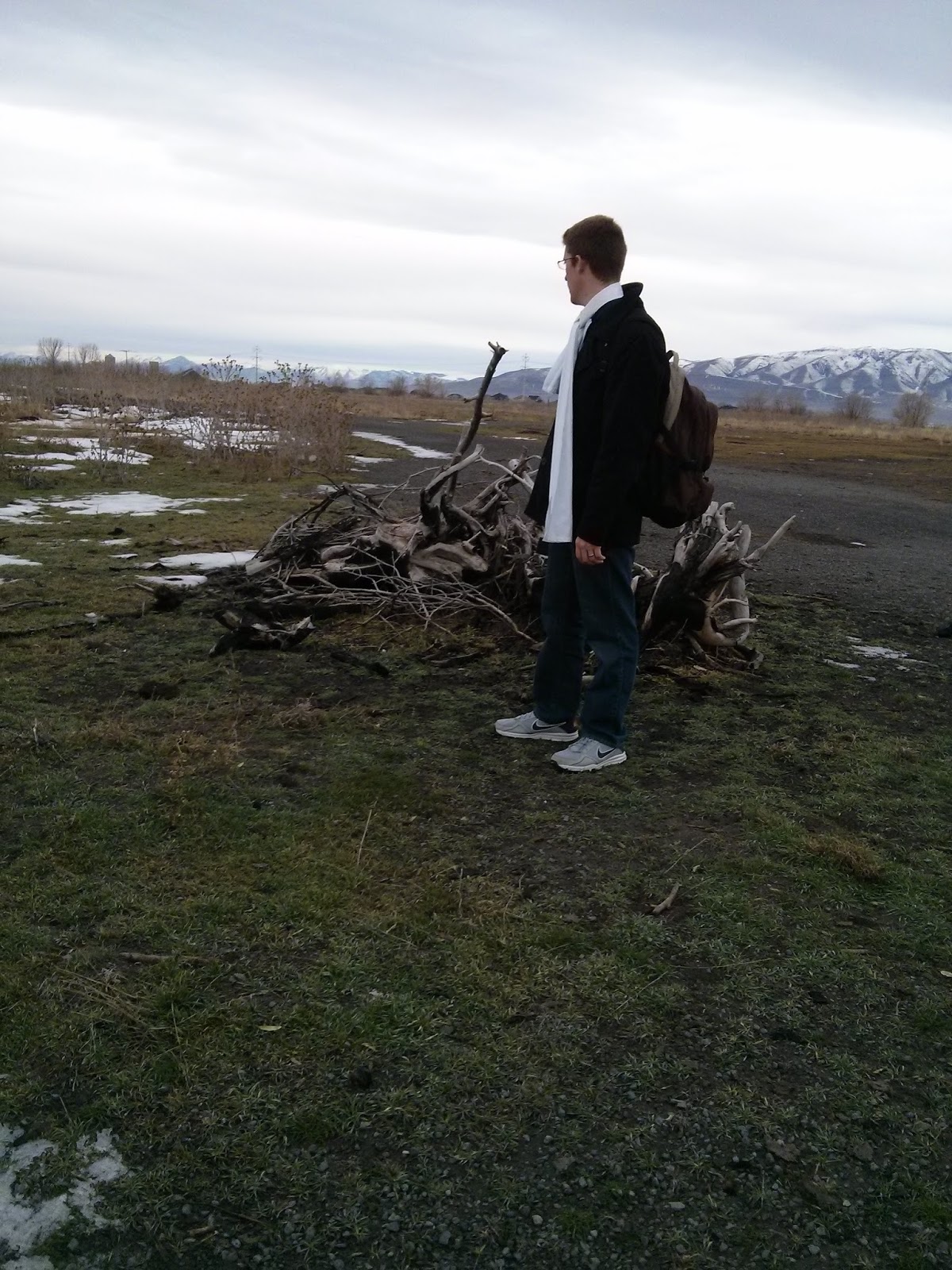
On the way back to my house to think about some other options, we drove by a field that looked like it would work, so we stopped and scouted it out. This is the location that we eventually used, and it worked out great! It wasn't the frozen lake, but it was the next best thing!

Scouting out the alternate location...
We decided to shoot there, as we were running out of time. Everyone has a schedule, it seems...

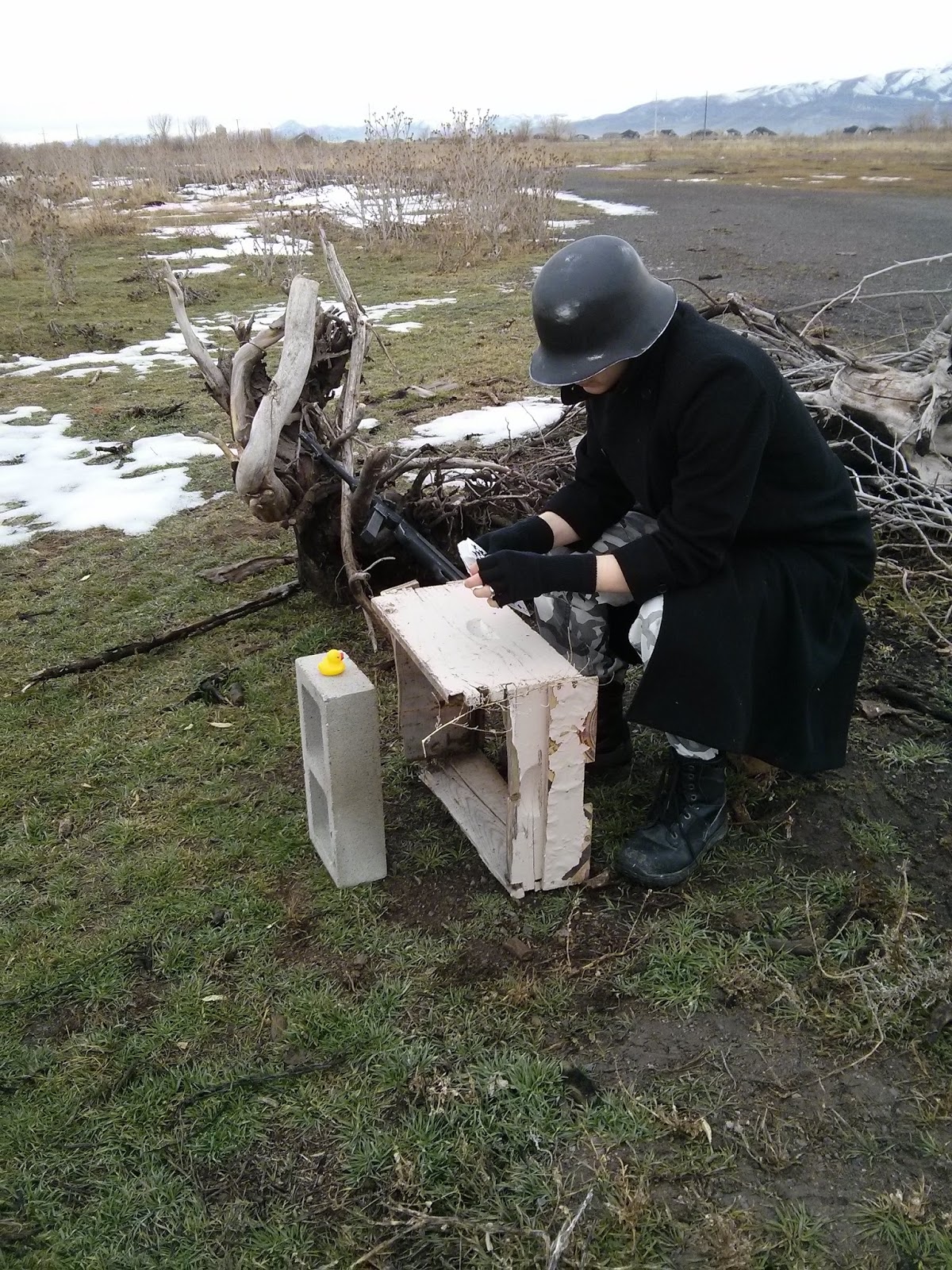
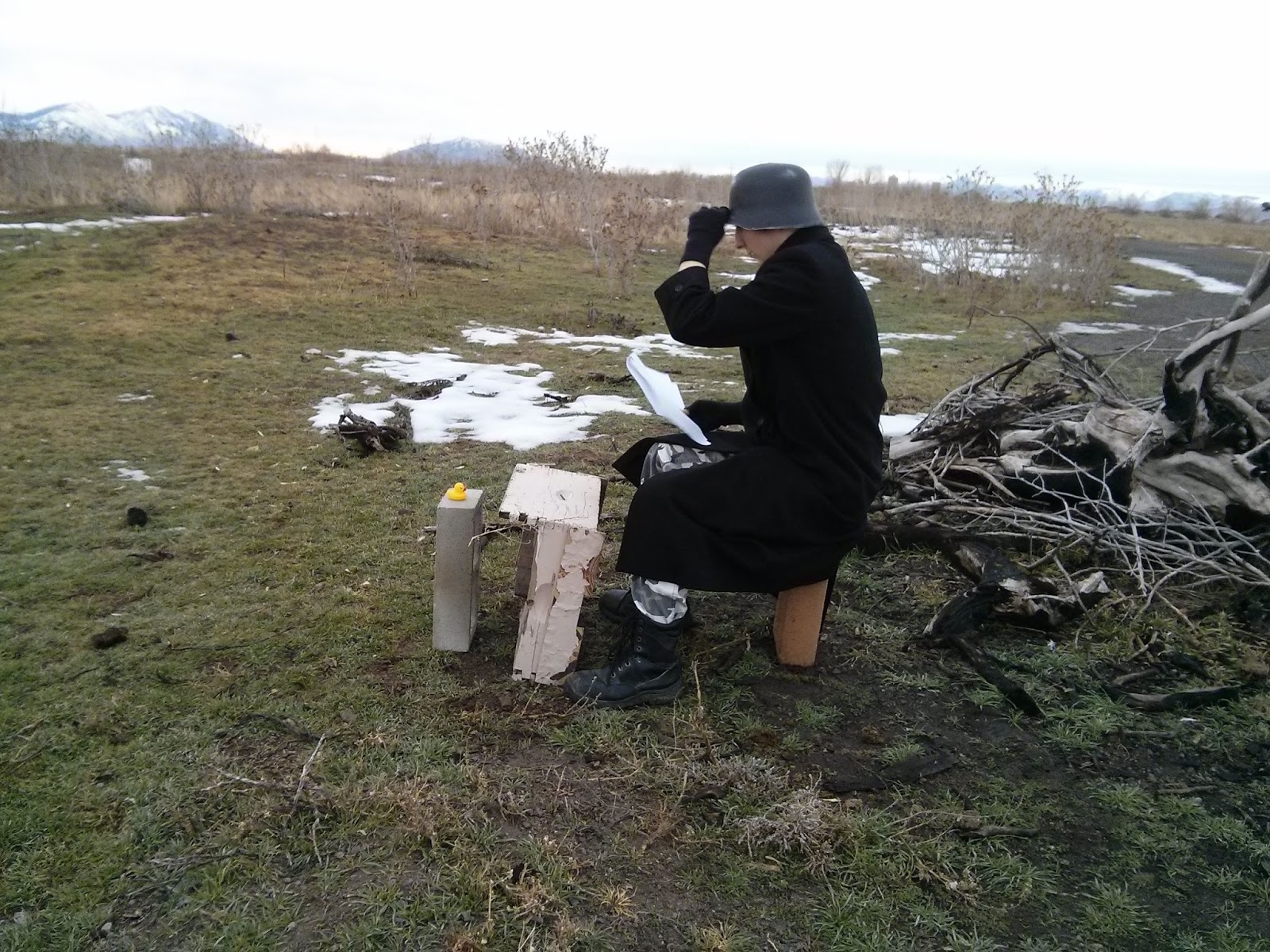
We shot the scene basically chronologically, starting with the German playing cards with the rubber duck. This tells us a lot about his character: he's been there a while, there's not that much action on this side of the war, he's going a little crazy, etc...

Free production value: we found the cinder blocks and the broken drawer on the location.

Josh reviewing the script before we start shooting

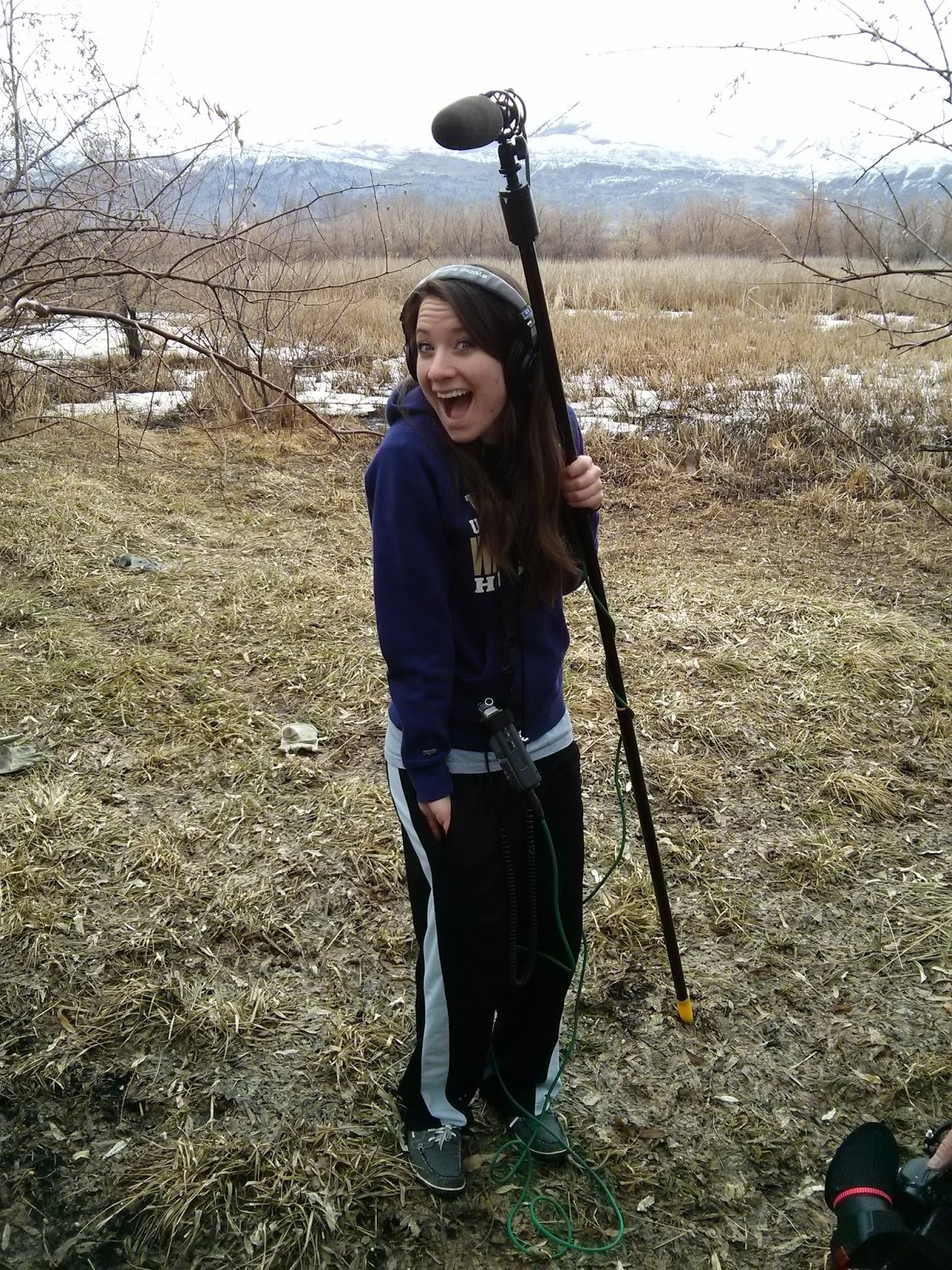
Since I was the one operating the camera, I obviously couldn't be doing the sound at the same time, so my lovely wife once again stepped up and helped me out!

Best boom operator out there! :)

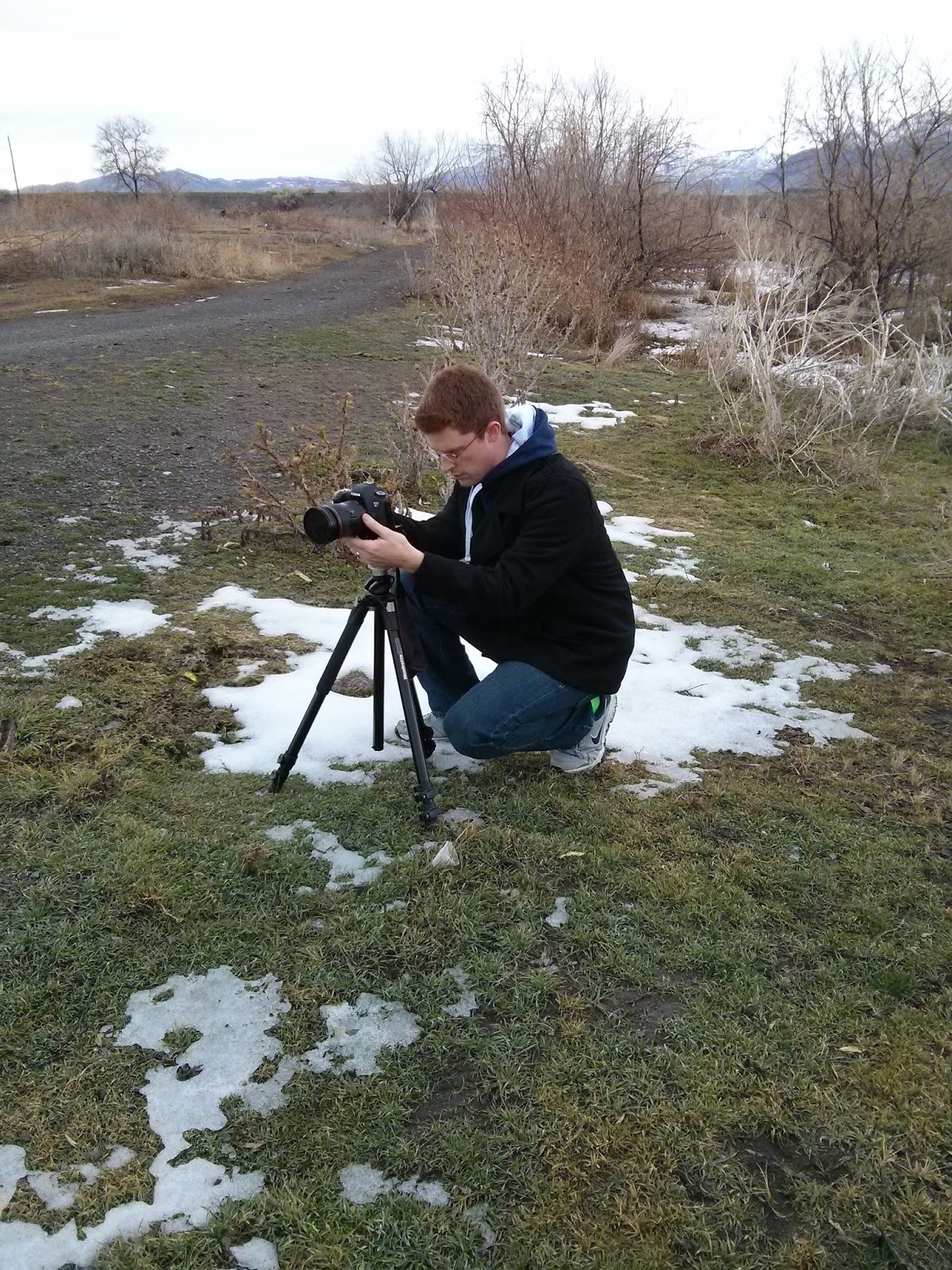
Me, shooting the scene. Notice the green socks. They're my lucky socks I wear on every shooting day.
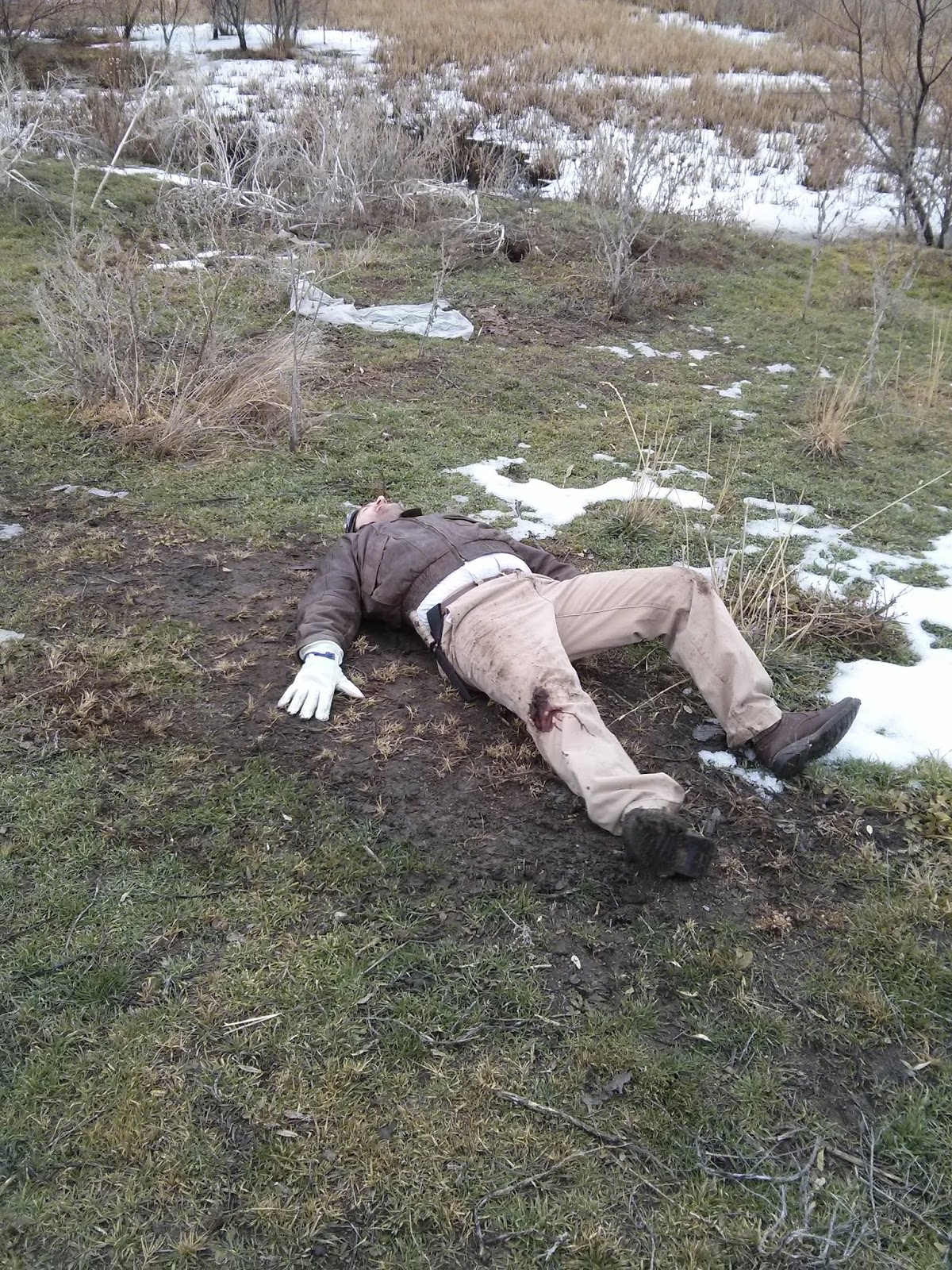
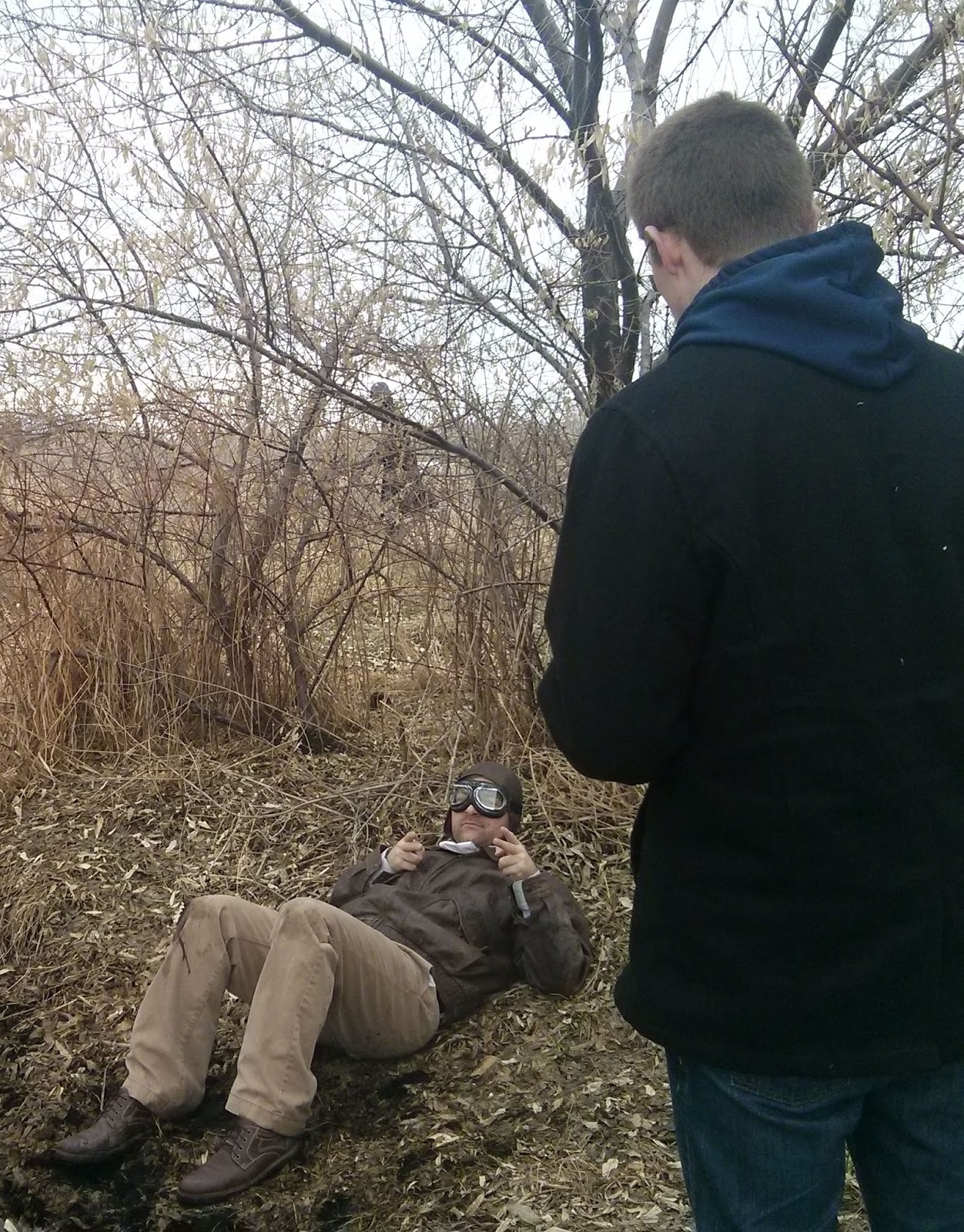
Austin rolled around in the mud to make it look more "authentic". Notice the fake blood on his right knee. A lot was cut from the film to get it down to the 3 minute length required by BYU, but this comes more into play in the director's cut.


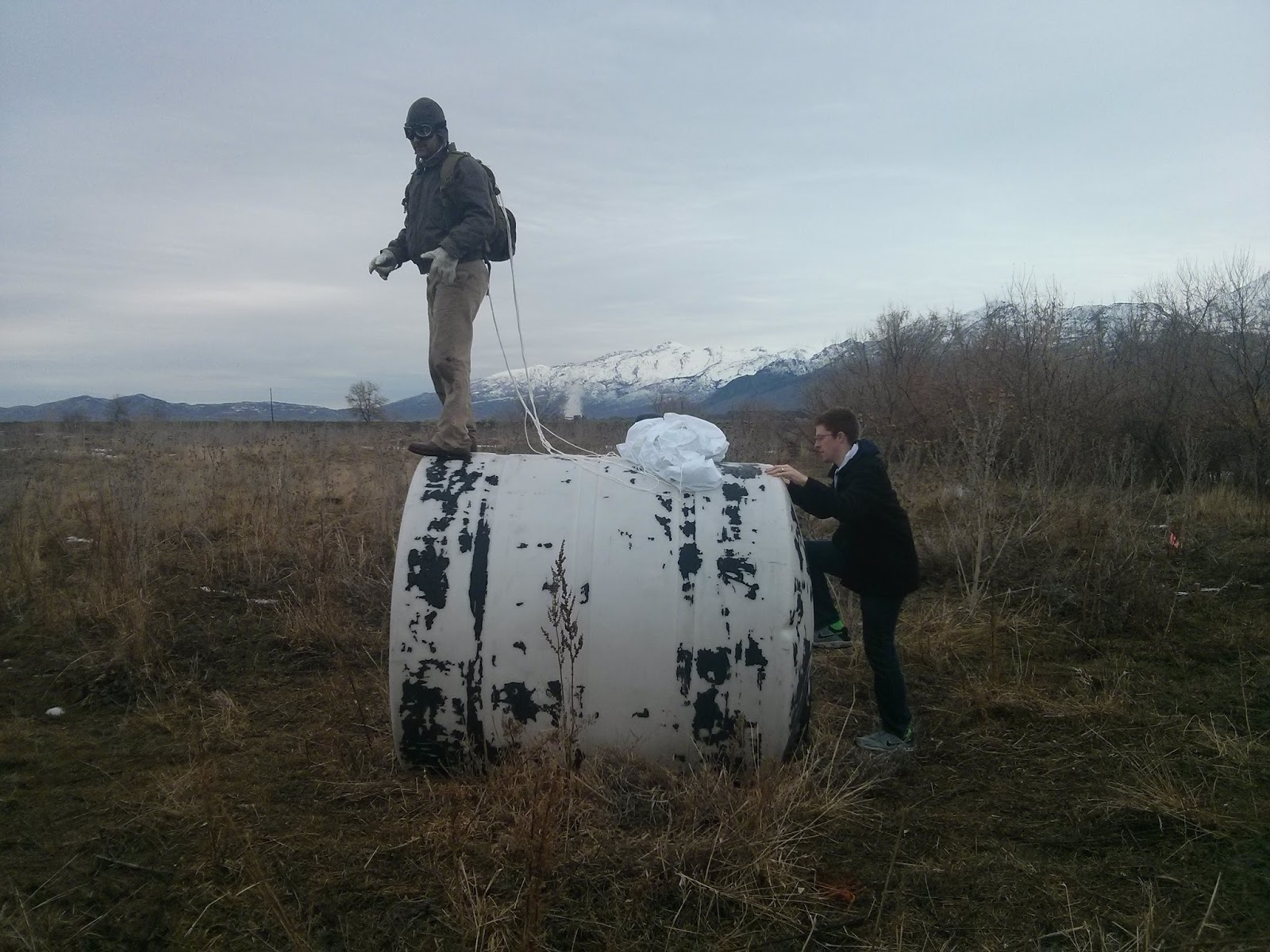
So while we were on the location, we found a 5' water barrel that had been discarded. The script called for Austin to be parachuting to the ground, and so we setup the cameras, climbed up the water tank, and when Austin jumped off, I threw the parachute after him, hoping beyond hope that it would inflate and look decent.

The abandoned water tank. Worked like a charm!
We filmed from 8am to 11:30am, and it was a really, really good time!


Me directing Austin in the scene

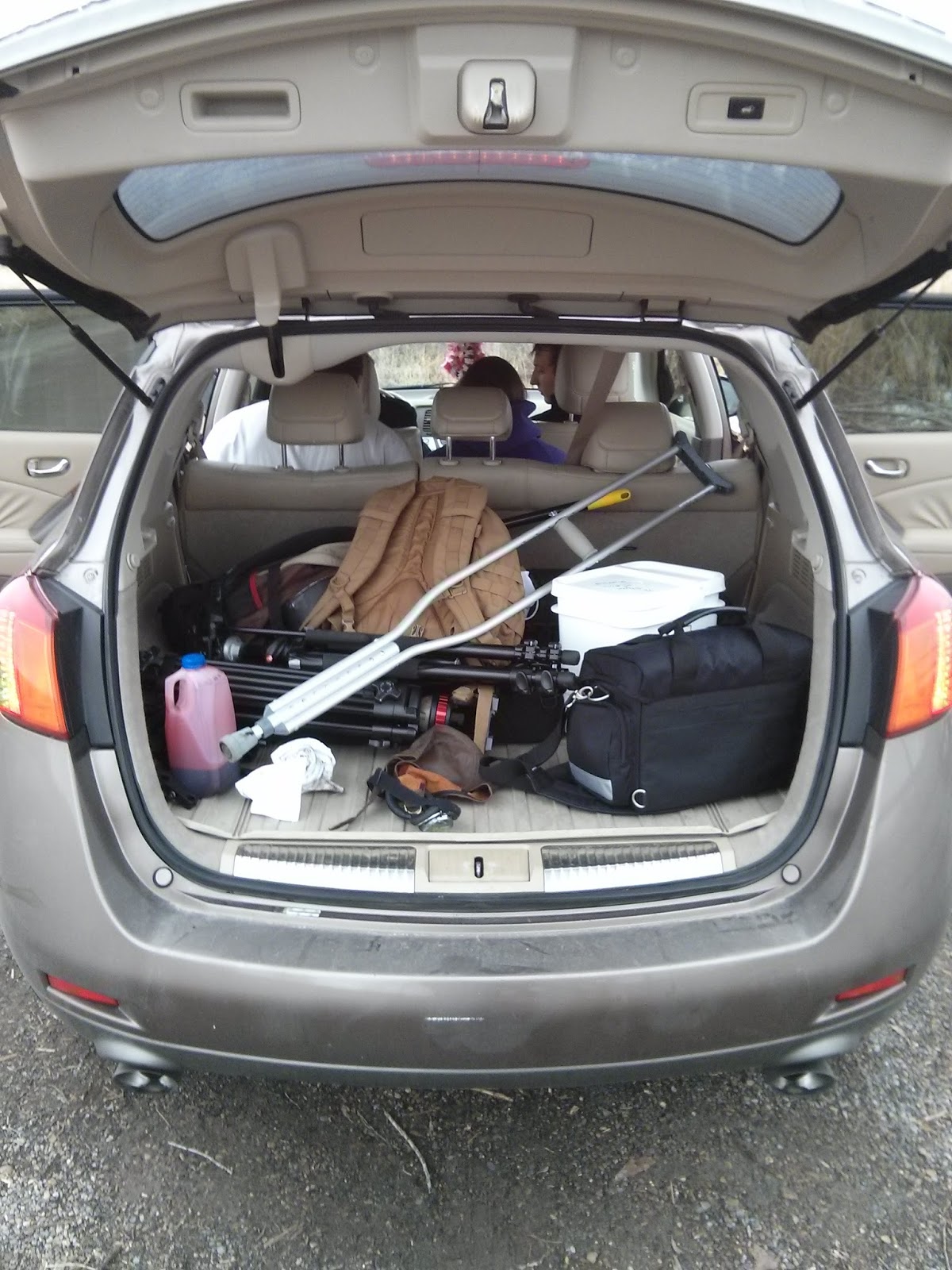
All the props and gear
A note about the external audio recorder that we used: The Zoom H4N is great, but man is it power-hungry! Our batteries ran out about 1/3 the way through filming (I had JUST replaced them a few days prior to the shoot), and luckily Brandon had some spare AA batteries in his backpack for us to use. So if you're planning on recording your audio with the Zoom H4N, then make sure you have extra AA batteries lying around! It's a lesson I almost had to learn the hard way.

The second day of shooting consisted of shooting the beginning and the ending sequences. This is where Brandon fixes the time-watch and then warps back to 1944 Germany, as well as the end scene where he finds out that it didn't work, and so he grabs the Neuralyzer (from Men in Black) so that he can erase his grandpa's memory so that he doesn't go insane after the war.

Originally, Brandon was going to be working on a large, elaborate time-machine, but with the time constraint, I just didn't have the time to build something like that, so it ended up being a fancy watch that transports him back in time. We shot for 2 hours that night.

Shooting the garage scenes
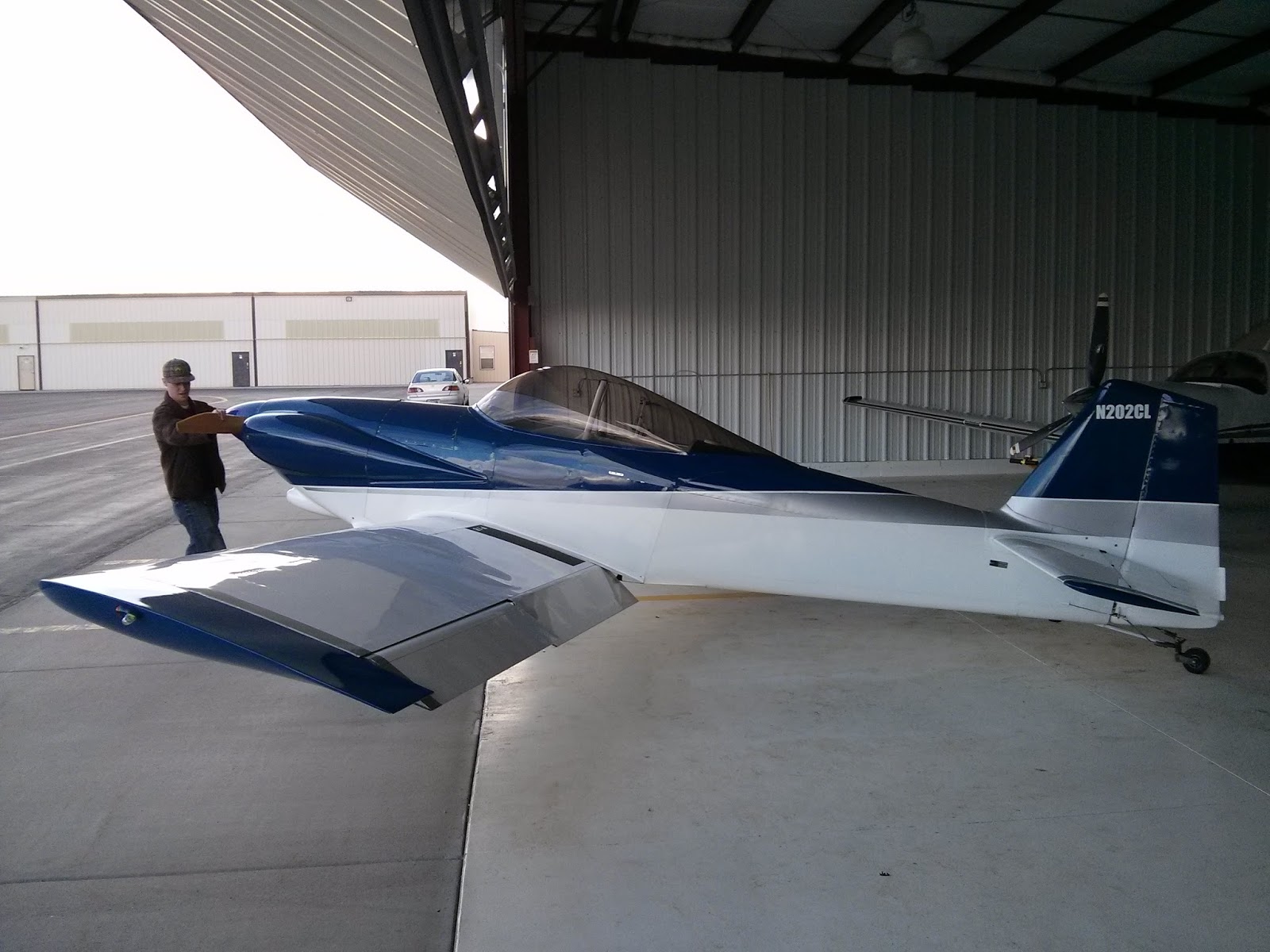
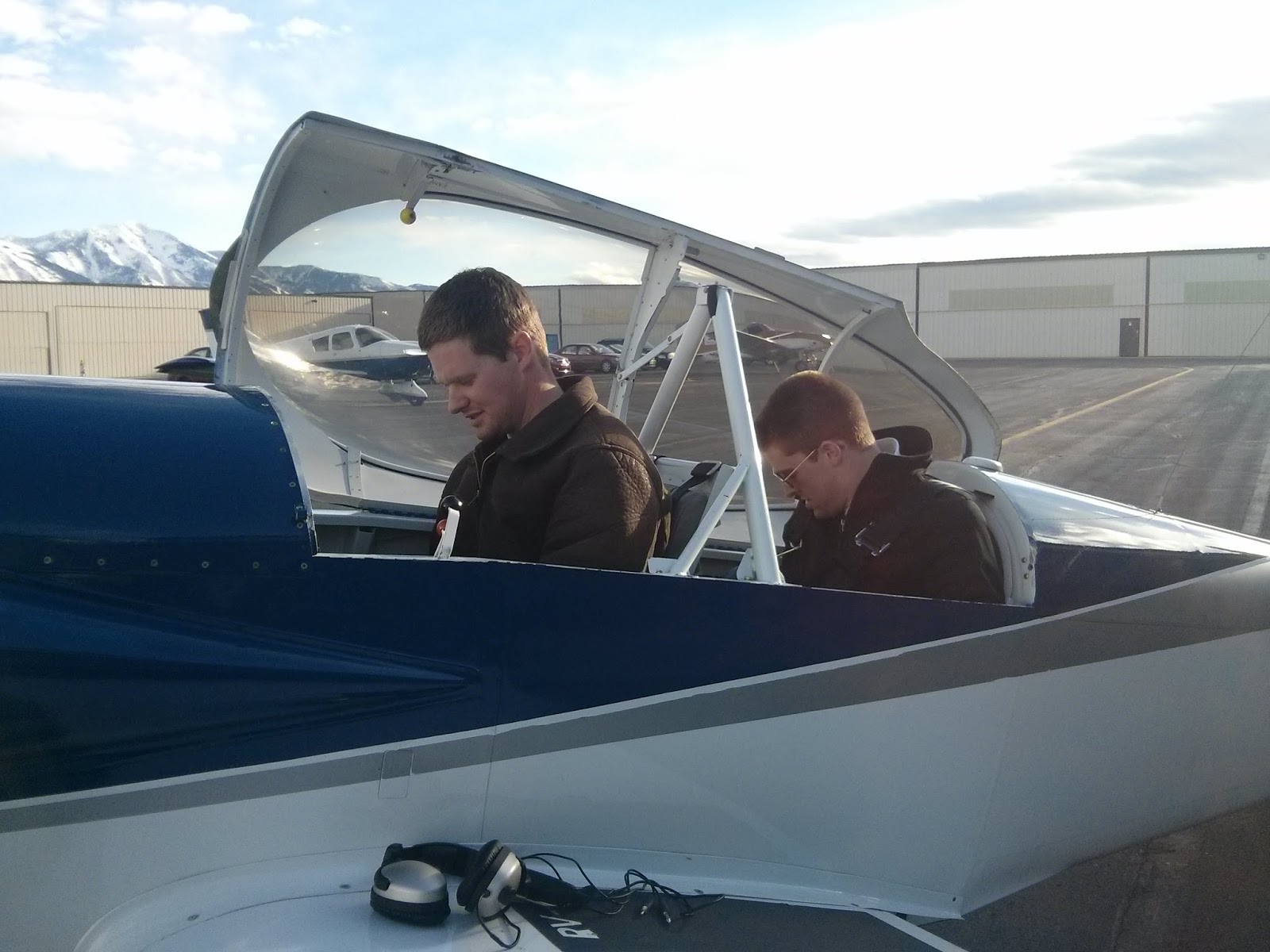
My brother is a part-owner of a small airplane, so I asked him if I could go flying with him and film it for a shot in the cockpit where the airplane is spinning. He loves any excuse to go flying, so we did! Needless to say, after about 3 rolls (we did 3.1 G-force at one point! That's 3.1 times the weight of my body pushing down on me.) I got pretty sick. I didn't end up losing my lunch, but I sure came close!

Huge thanks to Brian for letting me go flying with him! 
Brian in the front, with me in the back, strapping into the 5-point harness


I also recorded audio of his plane doing some high-speed passes, which I pitched down a few levels in post to make it sound more beefy. Turned out pretty good, I'd say.

Post-Production

I edited the short over the course of about two weeks, giving myself time to "sleep" on the edit so that I would be able to see potential problems and work out a way to fix them.

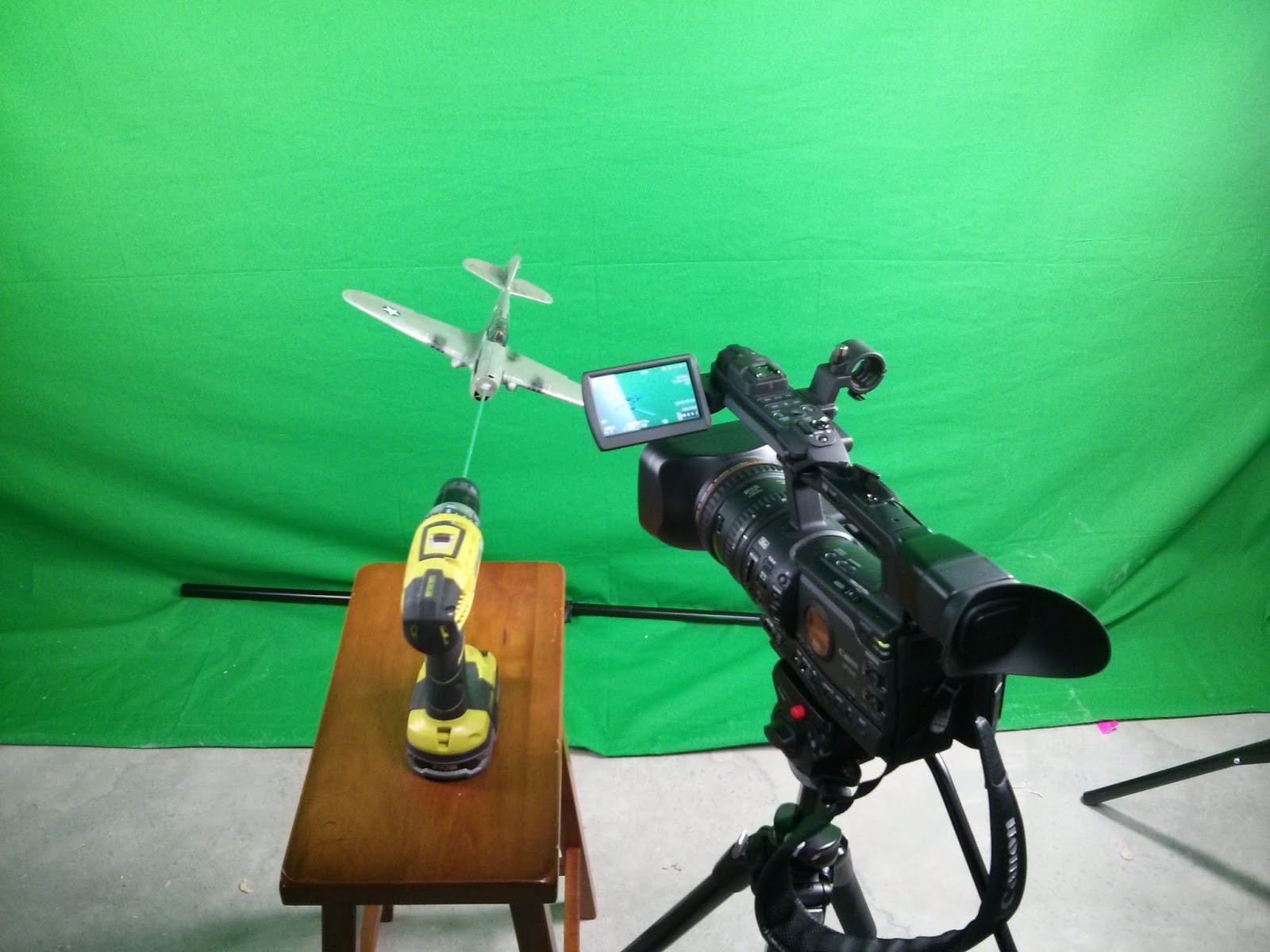
I shot the P-40 model in front of my greenscreen by attaching the steel rod into my drill, and spinning it while filming, so that it would look like the airplane was spinning out of control:
Greenscreen setup in the basement

Filming the model against the greenscreen

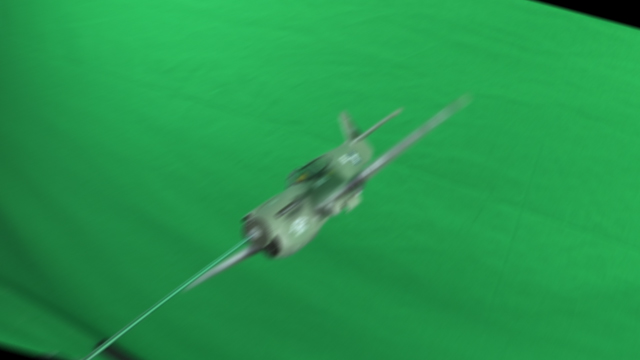
Out of all the things that I DIDN'T think about during pre-production, was painting the model green, and then shooting it in front of a GREENscreen. I really should have caught this earlier, and since I was up against the wall time-wise, I didn't have time (or the money) to get a bluescreen. So what this ended up doing was, if you notice in the final film, the model is actually gray, rather than green. This is because the keyer that I used in After Effects, Keylight, thought that the green color of the plane was due to the green spill from the greenscreen, and it got rid of it. So, note to self: make sure that the object you want to key is DIFFERENT than the color of the greenscreen.

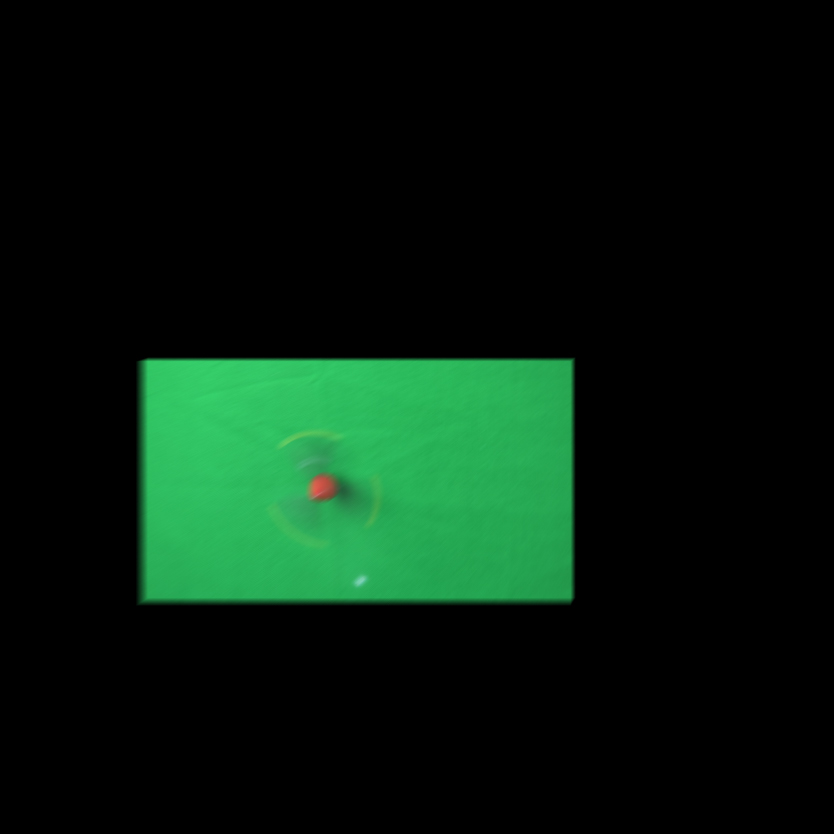
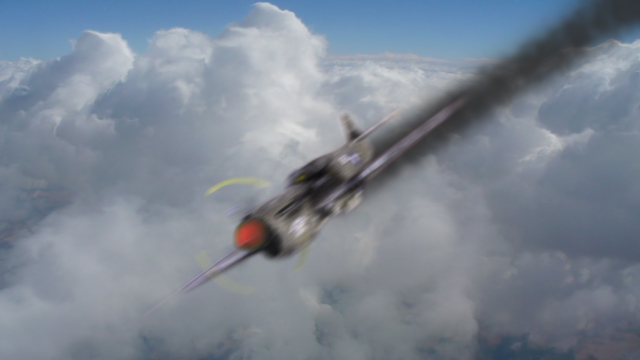
Below is a before and after frame grab. I had to shoot the propeller on a separate pass, and then track and composite that onto the plane in After Effects:

Before

The propeller

Final frame
I made a particle system to look like smoke, and then tracked that onto the plane as well. It's nowhere near perfect, but I think it turned out pretty well for what it is.

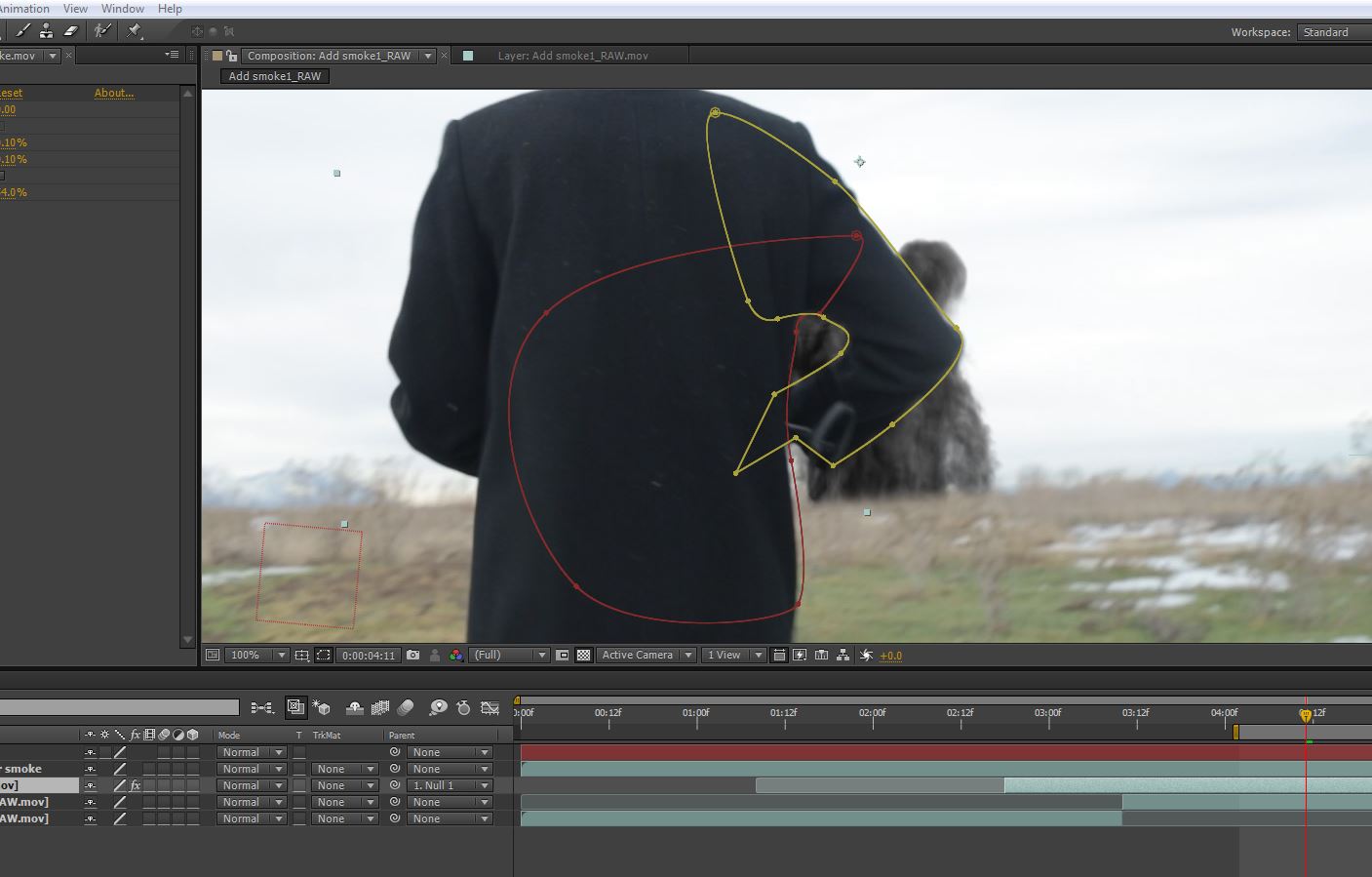
There's a shot in the film where the plane has just crashed, and the German soldier is walking off towards the crash to investigate, and I needed to add in some dark smoke into the background, and that required some more tracking and rotoscoping in After Effects:

Tracking and rotoscoping in After Effects

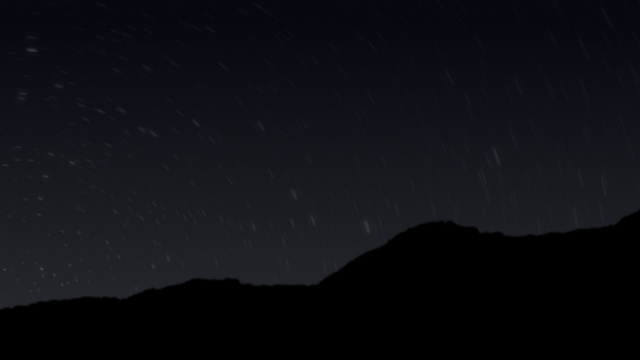
So when Brandon goes back in time for the first time, I wanted to show that visually, somehow. I wanted to show a timelapse of the stars spinning really fast, and then show the earth spinning really fast as well. Well, I did a stars timelapse test outside one night, and it looked terrible. Completely unusable. So I went into After Effects, made a silhouette of a mountain, and then made a starfield using the fractal noise effect, and simply animated the stars to move. It looked great, and that shot is in the film:

A compromise, made completely in After Effects

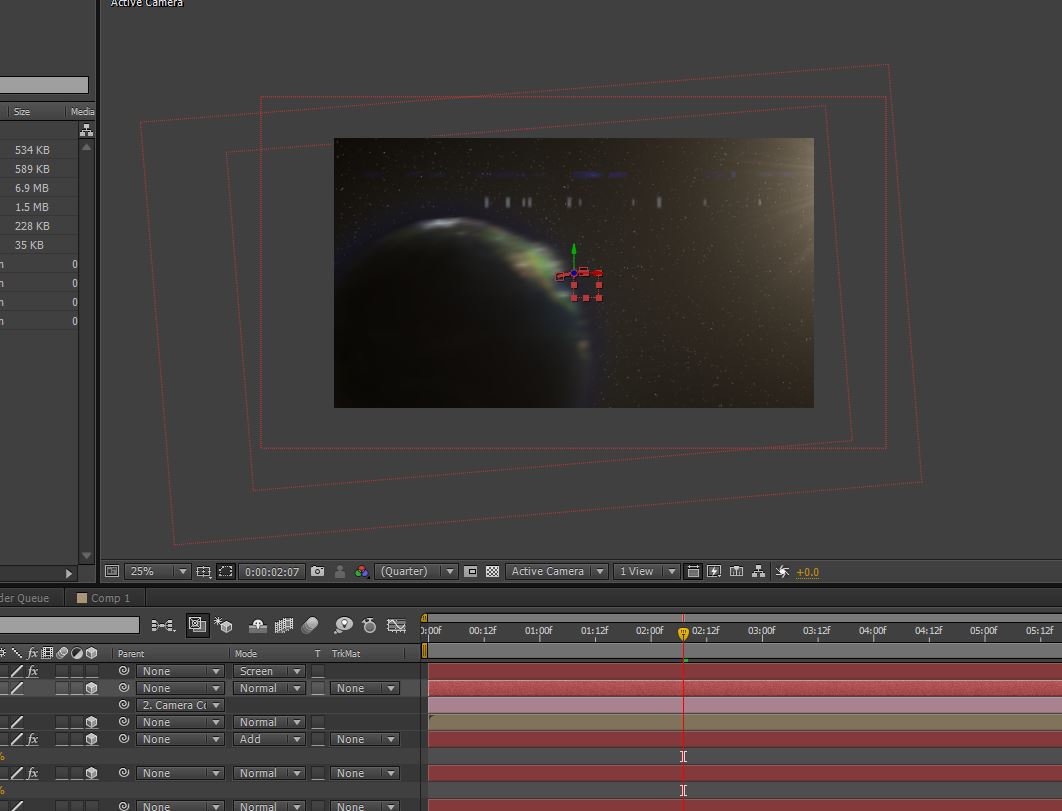
For the earth rotating really fast, I again made a starfield in AE to use as the backdrop, then used the CC Sphere effect in AE to map a 4K Earth image into a sphere, and then simply rotated it really fast until I got the desired effect. I then added a slight camera move, and a lens flare to help sell the effect:

Spinning the globe!
Some of the technical bits: Shot on the Canon 5DIII and the 6D. All audio recorded with a Sennheiser shotgun microphone, using a Zoom H4N recorder. Edited in Sony Vegas, with visual effects and compositing done in After Effects, and then graded in Filmconvert for Vegas.

Conclusion

If you've made it this far, then you're awesome. If there's anything I've learned during this process, it's that you should never give up on pursuing your dreams. If you have a good idea, and you think you can pull it off, then you'd better go for it, and give it all you've got!

 It took a lot of planning and a lot of work to pull this off. All in all, I am pleased with how the final result came out. I couldn't have done it without the support of my wife and my friends who sacrificed their time to help me do this. Also, thanks to my dad and little brother Austin for being my historical/technical advisers, and for letting me pick their brains about model making.

Ultimately, films aren't released, they escape. Thus, since this film escaped today, I will be doing a director's cut shortly, where I can include some more things that were cut due to the 3 minute time constraint. So until then, stay tuned!